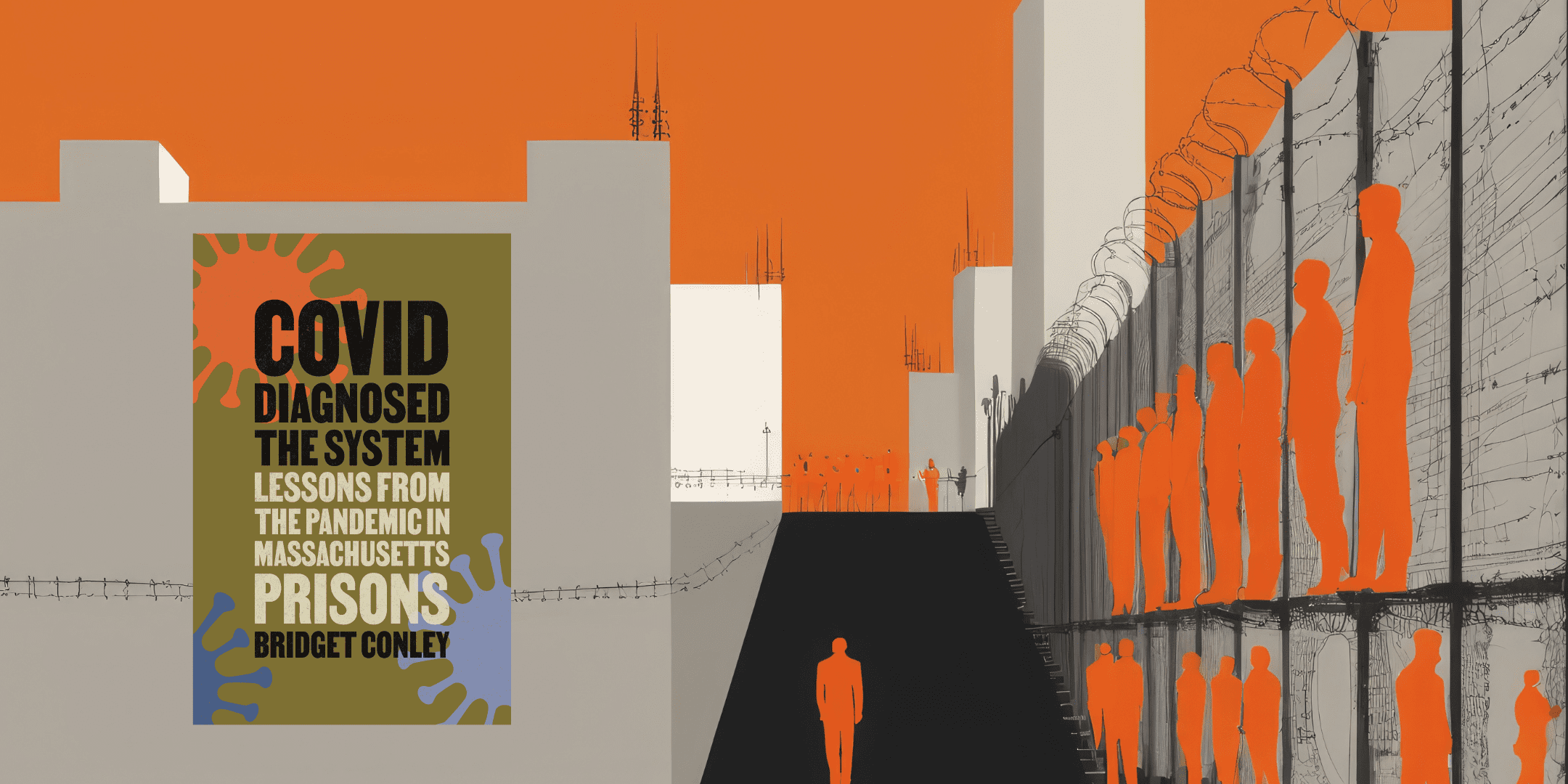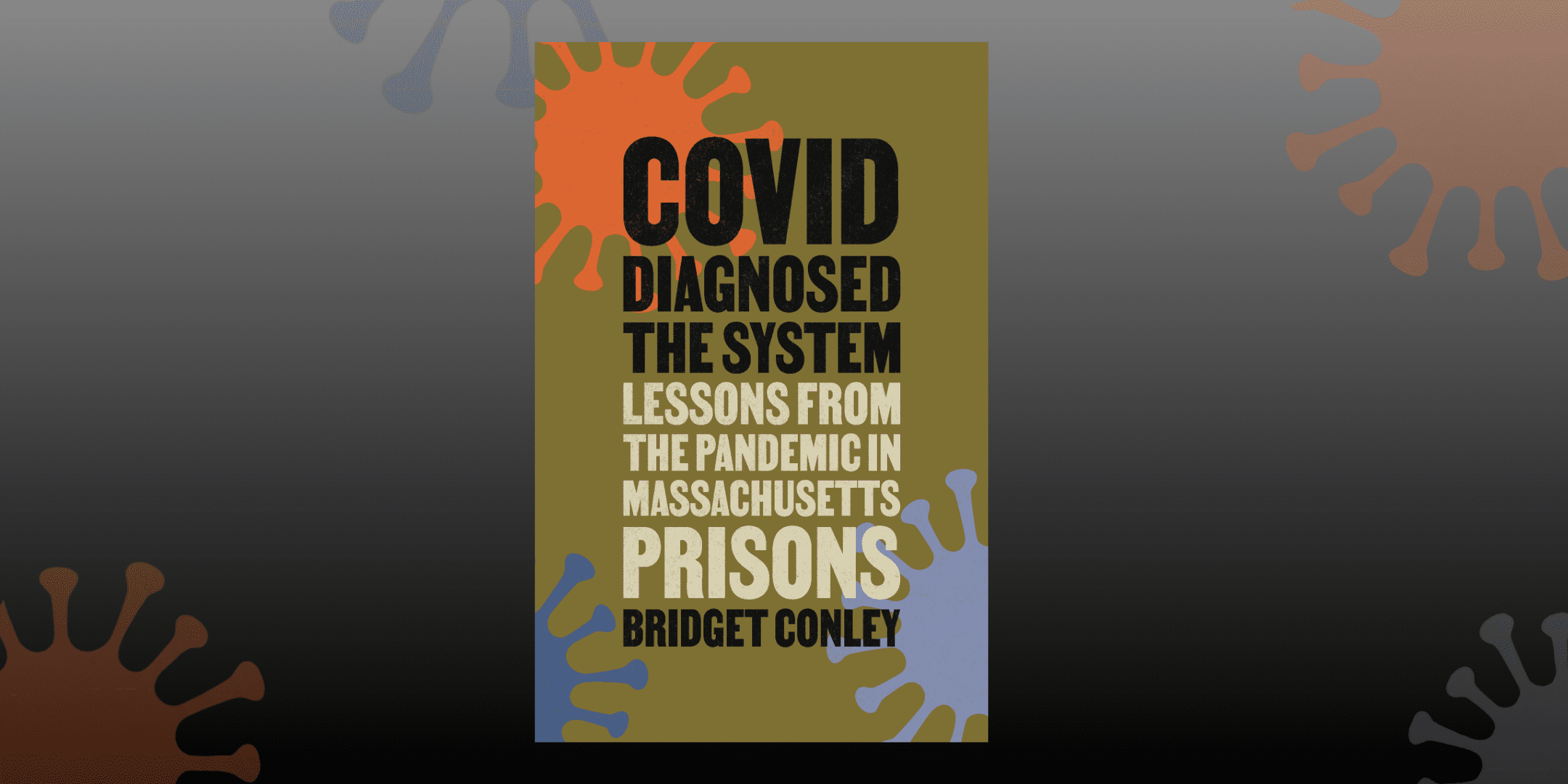
This is the first of a three-part series of essays on the ideas and stories from my new book,COVID Diagnosed the System: Lessons from the pandemic in Massachusetts prisons (Rutgers University Press, 2026) which was released today, May 12, 2026. All quotes below are from the book, unless otherwise indicated.
——
The first year of the COVID-19 pandemic, from March 2020 – February 2021 — when the vaccines began to become available[i] — sits in collective memory as a time apart, a bracketed lapse in normality. My research attempts to understand the relationships of this period to what preceded it and what might (yet) come after it, in the context of American mass incarceration. It pursues these questions by focusing on the first year of the pandemic inside Massachusetts’ state prison system. The book draws on data and statements from state’s Department of Correction (DOC), either publicly released or accessed through a records request; an anonymized dataset from a hotline kept by Prisoners’ Legal Services of Massachusetts; journalists’ and nonprofit organizations’ investigations; the writings of incarcerated people; and interviews with activists, journalists, lawyers, two former DOC staff members, and formerly incarcerated people who released from prison after February 2021.
From the start, the pandemic in prisons was brutal. On March 20, 2020, the state’s DOC announced the first positive test inside a state prison, Massachusetts Treatment Center. The incarcerated person was identified as a Black man aged between forty and forty-four who was serving a life sentence (43). By February 2021, according to the DOC’s information, 21 incarcerated people had died of COVID-related causes (134), and five prisons had test positivity rates in the double digits (129). A team of epidemiologists found that there was a 44% increase in the mortality rate in Massachusetts’ prisons in 2020 as compared to 2019 (Sugie et al, 5). Nationwide, they found that “total [prison] mortality increased by 77% in 2020 relative to 2019. This mortality increase is strikingly higher than the 23% increase in mortality among the general population” (Sugie et al, 7). The pandemic inside prisons is not fully captured in statistics – but statistics provide a clear picture of the centrality of prisons to the overall impact of the virus in the United States. A key argument of the book, which will be discussed further in the second essay, is that prison outbreaks were a central story of the national pandemic experience.
The second major argument is that we cannot understand mass incarceration, what it actually is and how it can be dismantled — let alone the experience of the pandemic inside prisons — without the testimony and analysis of directly impacted people: incarcerated and formerly incarcerated people, and their loved ones. This point is addressed in the third essay of this series.
This essay, in addition to the above broad introduction to the history and arguments of the book, provides insights about the theoretical framework that shaped my analysis. While the book is not heavily theorized, the ways in which it is informed by theoretical discussions is (I hope) compelling. What is more, the theoretical discussion enables me to address the question posed in the title to this essay, why publish a book about the pandemic in prisons now?
To preface the theoretical introduction, I briefly note that pandemic history is entangled in other histories. First, the problems of mass incarceration are structural and far from synonymous with or limited to the challenges of the pandemic. That Massachusetts has one of the country’s smallest prison systems and lowest incarceration rates, does not mitigate the crisis that the policies which created and sustain mass incarceration impose on directly impacted people and their communities. Second, the pandemic arrived in the immediate wake of major criminal justice reform in the state, with a legislative package passed in 2018 that showed the promise and limits of reform as a mode of change. Third, the widespread Black Lives Matter protests in summer 2020 forced attention on the racism within the American carceral system, which includes the policies that under-resource and hyper-surveil Black and brown people and communities, and the specific arms of the criminal justice system, like police, courts, jails, and prison. These issues are addressed in the book, in terms of their intersection with the first year of the pandemic.
Theoretical framework
The starting point for this study is the idea of carcerality, which includes a broad range of state institutions, functions, and activities—as well as some profit and nonprofit organizations—that operate through surveillance and punishment. Carcerality – or carceral logic (I use the terms interchangeably) — also references the social, economic, and political assumptions that reinforce the idea that locking people up, dehumanizing them, and imposing unremittent punishments on them is the best way to create safe and thriving communities. This logic proposes that social harms are the product of individual choices, which can be managed by isolating “dangerous” people from society.
This definition is informed by Michel Foucault’s work, and by research and activism related to American mass incarceration. Foucault is interested in how modern power relations produce subjectivity, and the subsequent disciplining (through a mix of education, training, and punishing techniques) of nonconforming subjectivities. His proposition that “knowledge is power” is important to my analysis. He does not mean that gaining knowledge grants someone more power against oppressive forces; rather, he examines how systems of knowledge are complicit in producing normalized subjectivities. For Foucault, the prison is indicative of disciplining techniques as exist across society.
However, as Angela Davis has argued, in the U.S., carceral logic is fueled by anti-Black racism, and does not so much aim to discipline subjectivities, but to manage social exclusion (warehousing, constant punishments and dehumanization). The result is mass incarceration: the process, starting in the 1970s, and taking off in the 1980s and 1990s, whereby the U.S. implemented policies that incarcerated a greater percentage of its population than any other society in history, and which disproportionately targets Black and brown people. Both racism and the prison predate this period – they have distinct histories – but this period of their melding shapes the American criminal justice system as it currently exists. To localize this claim, I recommend reading “Racial Disparities in the Massachusetts Criminal System,” a 2020 report by The Criminal Justice Policy Program at Harvard University’s Law School, which found that Black and Latinx people had worse outcomes than white people, and the differences cannot be explained by contextual factors (history of the accused, severity of the crime, etc.).
When we look further afield, like in China, as example, we still see mass incarceration, but it is applied against different categories of “difference.” There, the prison system which is on the verge of rivaling the size of the U.S. one, and it disproportionately incarcerates poor people from rural communities who have migrated to urban centers and ethnic minorities, like the Uighurs. The example is relevant to the book, which begins in China with prison COVID outbreaks, to establish the centrality of prisons to the history of the virus. But for now, I emphasize a simpler point: mass incarceration can exist outside of anti-Black racism, and anti-Black racism exists outside of the prison. They are not synonymous.
Carceral logic and racism function together in friction: in the sense of, where the rubber meets the road, allowing for acceleration of both. Here, I draw from anthropologist Anna Tsing’s theorization of “friction” as the “awkward, unequal, unstable, and creative qualities of interconnection across difference” (Tsing, 4). In Tsing’s work, friction describes how “heterogeneous and unequal encounters can lead to new arrangements of culture and power” (Tsing, 5). These new arrangements are not morally predetermined: they can worsen conditions for sustaining life. Just as racism and carceral logic amplify the harms of each.
Nonetheless, friction implies a gap between forces – or logics. The movement to analyze, expose and politicize the racism of the criminal system demonstrates the possibility for exposing the gap between carceral logic and the realities of racism that fuels mass incarceration. Tsing’s argument is helpful in pointing out that no singular logic operates in a vacuum. There are always multiple logics circulating, crisscrossing and mutually reshaping each other. This is not a binary opposition of bad (carcerality, racism) and good (something else) logics countering each other. In the first instance, there is always more than one, two, or even three logics. Second, not all logics have moral content. However, as should be clear by now and uncontroversially, I am attributing moral content to carceral logic and racism: both are bad.
This set-up is necessary to get to my analysis of how COVID disrupted carceral logic. I argue that to understand the impact of the pandemic on prisons, we need to examine viral logic. By this, I do not mean that the virus was self-aware and intentional. What I mean is that we can analyze the pathways of the virus as a logic of contagion that disrupted and exposed gaps in carceral logic. It did this by:
- presenting a fundamental and overwhelming collective threat with no relationship to the moralizing “bad people” theory of social safety.
- redefining perceptions of the source of harm inside prisons; during the pandemic it was clear that risk of harm came from the people who came and went — staff — not the ones who were incarcerated.
- obliterating the myth that carceral systems are entirely separated worlds from “outside” society. Viral logic does not heed the distortion whereby the perimeter walls are imagined as creating an entirely different world, whose meaning and order is jurisdictionally defined. Physical proximity matters during a pandemic. From the book: “Like a contrast dye, the virus exposed networked social relations that did not heed the carceral promises of separation: A cough outside the walls could spill inside, rage through a population of detained people and pour back outside into hospitals and neighboring towns” (2).
- demonstrating that national and local contexts determine the shape of carceral practices. While there was a standard prison pandemic playbook (end visitation, lockdowns, distribute masks) that repeated around the world, national and local variations were determined by distinct social and political understanding of what was acceptable and possible.
Viral logic does not have moral content. As noted in the book, it “cannot be considered a positive force or one that opposed carcerality. Rather, it functioned on a completely different register within the same systems and simultaneously alongside carceral logics…carceral logic held steadfast and even tightened its grip in many instances throughout the pandemic” (33). As examples: systems-wide lockdowns, heightened isolation and the deterioration of already poor food, mental and physical health services.
The third logic that I introduce, alongside carceral and viral logics, is that of anticarceral care which is disruptive through humanization. Anticarceral care should be understood as a wide range of acts that sustain and uphold the unique value and dignity of individual lives. It is not an emotion of love between people, but it requires listening to people and treating their lived experience as expertise. It entails tireless commitment to overcome obstacles and creativity to challenge the carceral system. This is what Hi‘ilei Julia Kawehipuaakahaopulani Hobart and Tamara Kneese describe as a radical form of care. It is “a critical survival strategy” of people facing “immediate crises and precarious futures” (Hobart and Kneese, 2).
Anticarceral care exposes how carceral logic never entirely forecloses relationships. Directly impacted people and those who care for them innovate a praxis of care in the “wake”– to borrow Christina Sharpe’s concept—of carceral institutions designed to deny their humanity. Sharpe is concerned with the “disaster of Black subjection” of the slave trade and the American institution of slavery, which endures in multiple forms, including how racism determines the shape of American carceral systems (Sharpe, 5). The idea of the “wake” exposes continuities across efforts to control, marginalize, and denigrate Black lives. What distinguishes her approach is the challenge to think from within the wake. She asks, “What, if anything, survives this insistent Black exclusion, this ontological negation?” (Sharpe, 14).
Care, she proposes, is a force that does not resolve legacies of violence; it survives inside such histories. She asks, “How can we think (and rethink and rethink) care laterally, in the register of the intramural, in a different relation than that of the violence of the state?” In posing this question, Sharpe demands that we pay attention to the ways that fundamentally different modalities—such as care and carcerality—coexist in time and place. They do not cancel each other out. Care disrupts carcerality from the inside; it is a form of resistance that affirms the humanity and agency of people held in carceral systems. It is not a messianic force that might arrive in some distant future and wipe away the last vestiges of carcerality. Footholds are embedded in already-existing relationships that endure despite prison. If, as Saidiya Hartman noted in her discussion of Sharpe’s work, “care is the antidote to violence” (at 8:44), then the challenge is to recognize, document, expand, and build from the care that is already there. Anticarceral care, as I document it during the history of pandemic, could be politicized into multiple potential activist positions about what should be done to change how the criminal justice system functions. It is not necessarily channeled into abolitionist practices, but it animates that possibility.
During the pandemic, in the space created by anticarceral care, there were increases in public health analyses of prison conditions; in journalistic and investigative attention on the institutional failures of the prison system; in the demands of directly impacted people to make their voices heard; and in the array of tactics that activists — many of whom are directly impacted people – deployed to draw attention to the harms their loved ones experience inside. I do not argue that these experiments all succeeded or that one could reference this time period as an activist success story, that would be patently ludicrous. Rather, the book posits that capturing the record of these efforts is worthwhile. As stated in the book: “This is not a redemption story; it is an effort to document extraordinary efforts to change debates and realize some positive changes” (4).
So how does this matter, now?
Let me start by acknowledging the bad news of the current context. Changes at the Federal level have deepened the country’s racist, carceral embrace. A short list of examples illustrates the point. One of the first announcements the Department of Justice made in the new administration was to expand the use of the death penalty. In April 2026, it authorized the use of firing squads and promised to accelerate implementation of death sentences and reduce rights to review. The Federal government has criminalized civil immigration offences (which also fuels the for-profit prison industry). It has demonized and defunded efforts to advance racial and gender equality, imperative concerns for a criminal justice system that so egregiously disproportionately impacts Black and brown people.[ii] The theatrics of decisively punitive, retributive and coercive exercise of state power gained sway. While electoral polls suggest the winds are changing direction, it is far from clear that they will blow in the direction of sustained change. As has happened repeatedly in US history, periods of possible real reckoning about the racial and economic hierarchies that define this country are met with vicious backlash. As the pendulum swings again, there is rising debate about whether the tithe on stability is yet again to be paid by sidelining racial and economic justice.
I hope that this book joins conversations about stopping the backsliding and advancing the work that creates and bolsters safe communities. The clash of logics that I’ve described here, and which are loosely theorized in the book, hopefully demonstrate how even a disruptive force like the COVID-19 virus which imposed so much suffering, created fractures within the status quo. There are no guarantees that the disruptions or fractures will resolve in either positive or negative ways, but they do expose footholds for change. These footholds are not composed of wishful thinking, or some future utopia. They are already present. The challenge is to heed the expertise of directly impacted people – those who have themselves or whose loved ones have been systems impacted — who know what the system is and are demanding that public resources be used to build from care, rather than from the carceral logic that produces and reproduces harms. Drawing on existing relationships of anticarceral care, these footholds can provide grip for alternative futures.
In the next essay, I’ll review some key points in the historical narrative studied in the book — that of the pandemic in Massachusetts’ prisons. The third essay traces the story of resistance as led by directly impacted people, their loved ones and supporters. A final essay outlines why an organization dedicated to world peace needs to engage with carceral practices.
[i] In Massachusetts, incarcerated people were prioritized to receive the vaccine as soon as it became available.
[ii] See “Holding the Line” (2025) by ABFE and Candid for how federal changes are impacting Black-led nonprofits in the country.