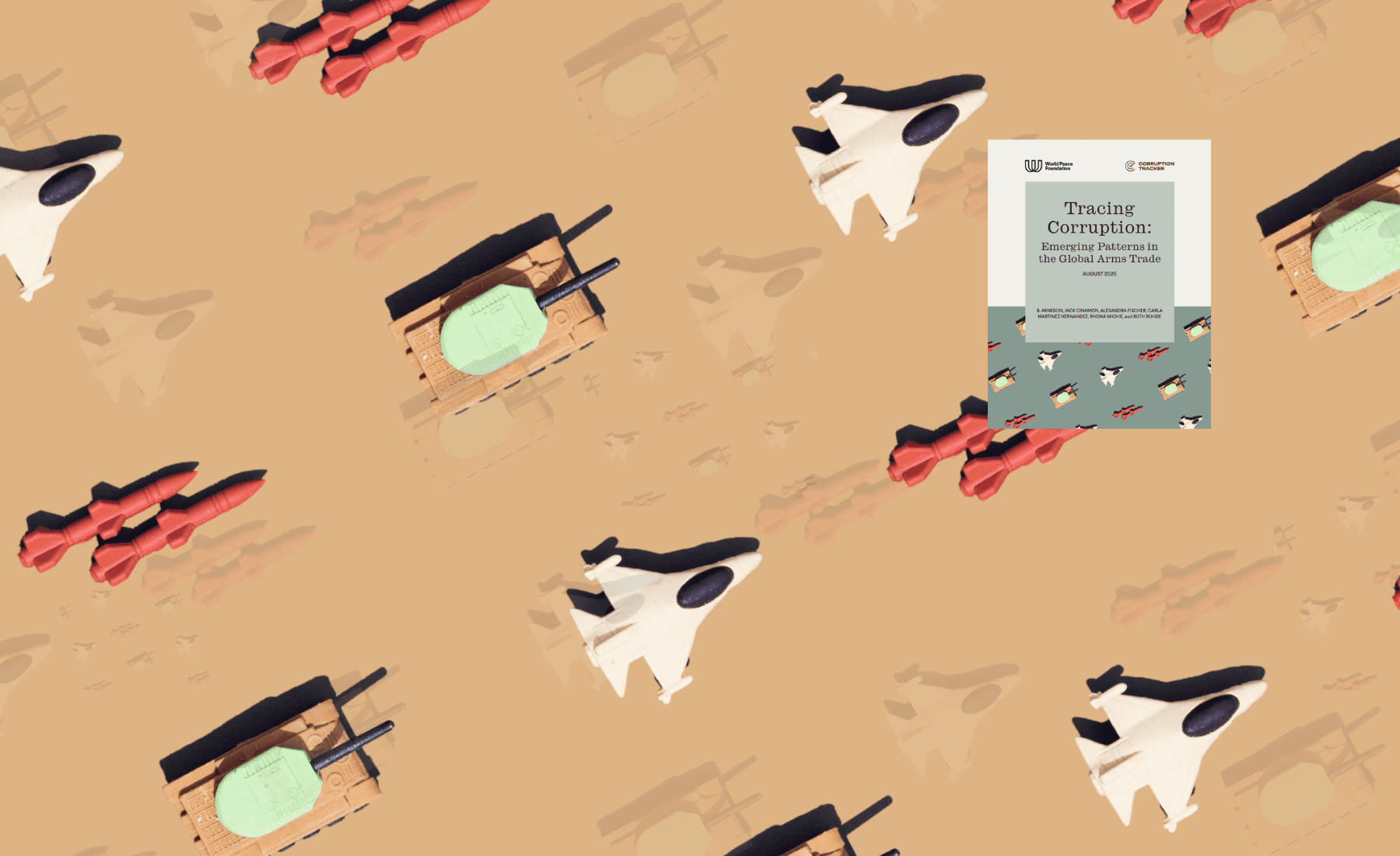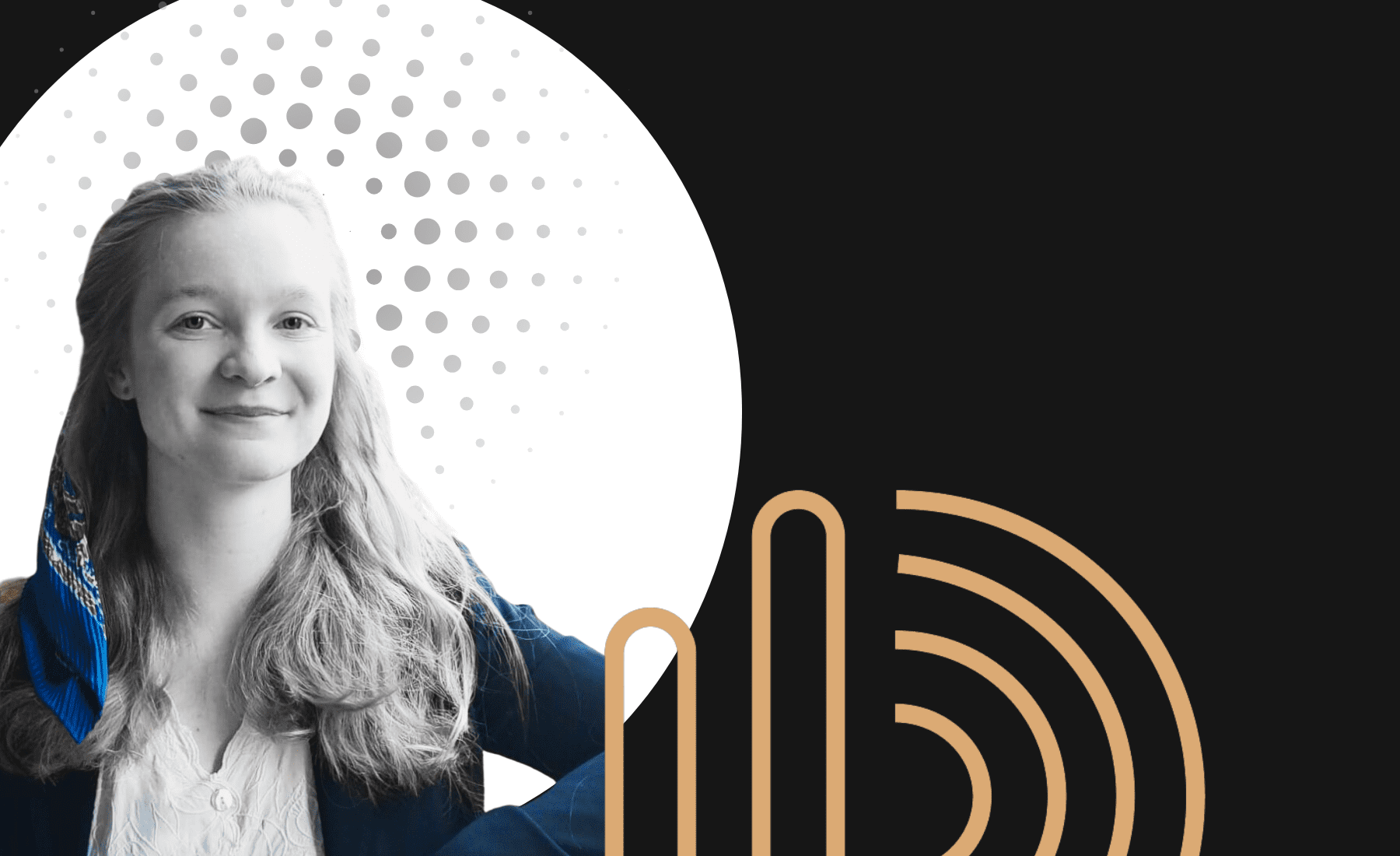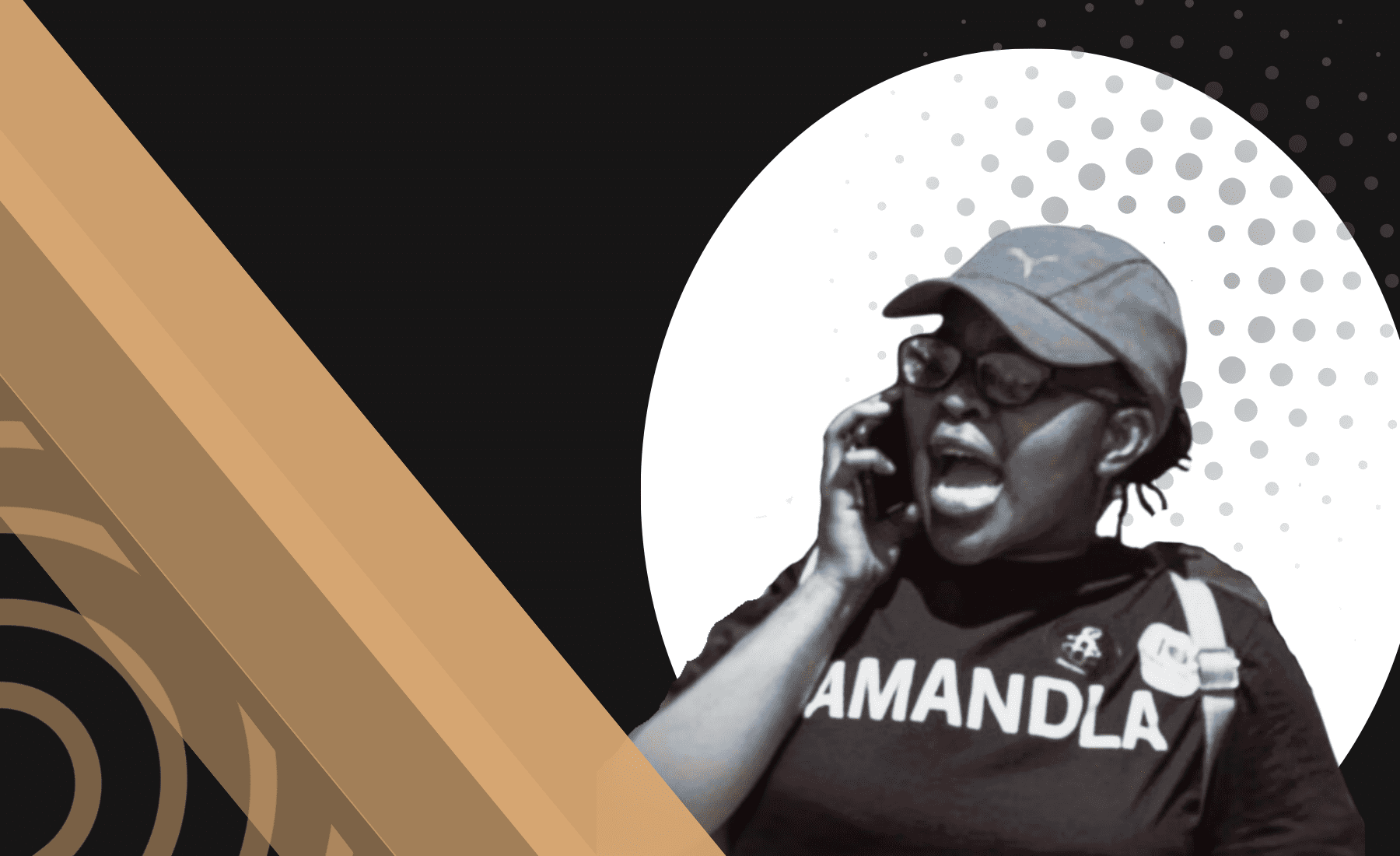
In this interview, WPFs Research Director, Bridget Conley, talks with Alwande Khumalo, who works with our partner organization, the Corruption Tracker, as Campaigner and Investigative Associate. Among her insights, Khumalo discusses corruption in her home country, South Africa, and why she thinks the younger generation is primed to make change.
Bridget Conley: The Corruption Tracker is a woman- and youth-led project that seeks to delegitimize and dismantle the arms trade using the lens of corruption. It aims to collate document and expose information on corruption in the arms trade. By doing so, it hopes to be an invaluable and accessible resource for campaigners, journalists, human rights organizations and researchers working to dismantle the global arms trade.
Within that huge mandate, Alwande, what is your role?
Alwande Khumalo: I do a lot of the social media and the digital advocacy for the team. My current title is social media campaigner and investigative associate. I’ll help out here and there, but mainly I’m behind the screen, curating our graphics and ensuring that our investigations are readable, enjoyable, and as understandable as possible to the ordinary person.
Bridget: How did you get started with the CT?
Alwande: I was interning for Open Secrets, South Africa, and my supervisor was Mamello, who is on the steering committee of the CT. There was a post out for a digital campaigner, and I was like, Oh, that’s so cool. And then I applied and now we are here.
I’ve always been incredibly fascinated about illicit financial crime — not only doing of the acts, but also in the getting away and not being held accountable part of it. The lack of due processes. We were compiling the “Unaccountable” series at Open Secrets South Africa. And I was doing a lot of background work on that at the same time. It’s curating a lot of content for the team and rolling out a campaign there.
Bridget: What issues most concerned you when you began working on the Corruption Tracker? In short: why corruption — what drew you to that issue?
Alwande: I was born in 1997 and have lived in South Africa my whole life. I’m probably going to stay in South Africa my whole life. I’m obsessed with South Africa. I come from a fairly political family, and there’s always been a very huge financial leg of financial misdeeds throughout South Africa; while at least, since I’ve been born. Specifically in the political circles, it is very normalized (and somewhat praised) that you become a household name from having a few dodgy dealings. A lot of them are allegations, but people put two and two together, especially when there’s credible evidence that a lot has happened. I’ve always actually grown up with being surrounded with financial misuse — not from my family directly — but extended members of the family getting into huge financial trouble. I’m going to be completely honest: having a very toxic relationship with finances and mixing that into politics, and what that means for the South African people.
Additionally, I’ve always been very fascinated with the South African policing system. One of the best arms of the police service is our Anti-Corruption Unit, which is known as the SIU: the special investigators unit. They started as a very small project in terms of being watch dogs and ensuring the financial leg of our state is done in an ethical fashion. But because of the scale and the weight of corruption throughout South Africa, they’ve become a permanent state apparatus. They’ve become the go-to place for people to engage with what’s actually happening with money and flowing other finances in South Africa.
I have been very fascinated about that. My sister’s also a Public Interest lawyer. She’s two years older than me, and we’ve always been very close growing up. She’s done a lot of anti-corruption work in her lawyering, and we’ve always had intensive conversations about that. I went on to study politics, because I was really fascinated about it. I focused on the South African police force — now police service — and looking at the cycle of militarization with the South African police service and which is very much still happening to this day and age. How it backtracked, and the financial flow of defense-based — and I’m going to say defense-based on purpose, because I do think there were many defense-based financial proceedings happening within the South African police service. I was interested in looking at the defense-based backing of it, and where all that money is coming from and is going to. How does the money flow in that area of the state, and the presumed unethical nature surrounding it that allows for illicit infiltration. So that’s how I’ve been really fascinated with corruption.
Bridget: You’ve talked about the longer trajectory of your interest, has anything changed in terms of the issues that concern you as you’ve been a part of the CT?
Alwande: I definitely think something has shifted, especially with me personally. I’m going to be completely honest, I was incredibly naive when I went into the work. I’ve always known that I’ve wanted to be in the political arena. I don’t mean traditional politics, but the watchdog space, specifically, from a Southern African point of view. And I was like, Okay, we have these fantastic state institutions, a brilliant constitution, ethical judicial systems, ethical governance and all stuff in theory, but why is what is happening, happening? So, it’s been a really fascinating political story to have witnessed and been a part of it. I thought the world was split into two different types of people, good and bad, right? I mean, that’s what you’re taught from a young age. You grow up, and you usually see those separate camps. I thought that by virtue of people holding such positions of power, they were automatically for the good, right? I thought we all saw the world from a single perspective, from a linear and the same perspective, but it turns out that we just don’t and that the world is a lot more complicated than that
I realize now that corruption has been normalized and emboldened. And I don’t know if that’s just a coming of age for myself where I’m like, Hold on is this how things are done here? Or if it’s only starting to be normalized. Because I think our political story is literally being marinated with corruption, specifically from our peace and security architectures in South Africa – both historically and in present-day. The peace and security space is, I would argue, one of the most corrupt spaces that we have across the continent. That is a huge statement, but I’ll stand by that. And it’s even more corrupt and unethical in the larger international system of states.
I think we have corruption fatigue, but also that we have a very interesting younger generation that is so fed up with how things are going. So, it is this weird psycho-social dichotomy that is consistently at play. Frustration has the power to set things onto the proper course. For me, as a young person who is incredibly invested in the South African story, I’m just completely destroyed with how normalized being corrupt is — specifically in South Africa, right? And I think dreaming and thinking about an alternative and fighting for that alternative just seems so exhausting and so far-fetched, right? And this is the world we live in, and we have to keep our heads down and get things done.
South Africa also has a very interesting story, because in post-apartheid South Africa, we still don’t have a lot of liberties on the ground. We are separated into the ‘haves’ and the ‘have-nots.’ There’s a huge separation between the two. A lot of the ‘haves’ have gotten their assets through corruption and state-based corruption. A lot of state capture, but also other low forms of corruption. You are ridiculed if you don’t hide it well, as opposed to you are ridiculed with the fact that it’s completely unethical, and the fact that you are doing it. We’re getting frustrated that we see our leaders not even care about lying to us properly. That has been probably the most shocking thing that I’ve seen since I’ve been at CT. At the same time, I have been in absolute awe with the fact that young people have largely been at the center of holding this seemingly unaccountable system to account
I would also double that up today, a lot of learned individuals who are in the South African political space actually don’t understand the arms trade in general. They see it as this crazy monster — which it is — but in a very stereotypical, fictitious way. We don’t realize that it actually has very real implications for our everyday lives and impacts us all. It’s been incredibly fascinating to see and fascinating to uncover, how emboldened corruption has been and normalized in South African society. But it is also incredibly fascinating to see what a charged group of young people will do for justice.
Bridget: That’s such a sad comment: it’s not only that the ‘haves’ are corrupt, but they’re shameless. There are a few CT cases on South Africa, obviously, some big ones, but there are also cases from all over the world, right? Did that shift your perspective at all, suddenly becoming involved that in all this geographically diverse array of corrupt cases?
Alwande: Absolutely. I don’t want to do oppression Olympics, because that’s not where anyone’s energy should go, but there’s something to be said about the fact that a lot of my bias is going to be towards South Africa. I’m obsessed with our story. I’m going to see things mostly through that lens, right? And even the work that I’ve done in the past has been largely South African focused. What was really interesting for me joining the CT was to realize — I know this is going to sound absolutely ridiculous to say – that corruption isn’t unique to South Africa. That is a highly important fact to remember. It’s also not unique to post-apartheid South Africa, which I think is really important to say. It is incredibly historical and globalized. I’ve yet to see a state or a territory that isn’t involved in some form of corruption.
What’s really fascinating about the CT, is how we compiled investigations in a very succinct manner that’s gripping for the everyday person. Before we roll out a campaign, I redact a lot of the information, and then share it with friends who have similar interests, but aren’t necessarily working directly in this field. I’m ask, What do you think of this? Is this something that you would read? And I would say 70% of the time, they are incredibly fascinated with it. Incredibly fascinated, specifically with corruption in the context of the arms trade. What we’re seeing in the anticorruption space is that our work is only reaching a small group of people. A lot of the time you’re preaching to the choir, right? And I ask, how can we maximize this outreach so that it reaches the ‘hard to reach’ people, so it reaches a diverse array of people? On top of that, I want people realize that corruption affects us. It affects you, too. It’s your money, it’s your world. It’s people stealing from your pockets too, and in very shameless manners. Drawing that link has been incredibly fascinating.
In drawing that link, it’s been so pertinent that it is not just painting the African story as being completely corrupt and completely like militarized. Actually, this is more about financial gains, as opposed to like stereotypes and cultural racist based stereotypes. You would be so fascinated to see who is corrupt and who are the perpetuators of that corruption, and who are the victims. A lot of our energy and our effort need to be focused on is holding them to account and really diversifying the way we understand corruption.
Bridget: What would you like the impact of your work with the CT to be? What looks like success for you?
Alwande: I’m smiling, because I’ve been speaking to Rhona, Ruth, and Jack and the entire CT team about this recently. Obviously, having the responsibility of being a digital campaigner, I would say digital outreach first and foremost, because it is a digital tracker. That holds so much weight, the fact that it’s live, and it’s just there forever. I hope that it will be a go-to classic in the near and far future. But also maximizing our orthodox outreach, as a credible household name, at the ground level. It will be really fascinating if we can become a more household and credible name. Because I think the information and the work that goes into the Tracker is so easily accessible and so enjoyable, fascinating to read and dissect and really important. When you look at it at first, on a rudimentary level, it can be very intimidating: corruption in the global arms trade, that seems exhausting, right? That’s not light reading. It can be like incredibly scary, but I think it’s really important to confront that and ignoring it is never the solution.
The Corruption Tracker has made sure that the language that we use is a lot simpler than academic sources. Our campaigning strategy is that you are not going to reach people on corruption in the global arm trade if you’re using heavy, weighted, exhausting and traumatic language. People don’t want to be consistently forced to confront illicit ills. The impact of the Tracker can be that credible high-level, go-to asset for both those in power, but more importantly to those on the ground. It has the potential to become a globalized watchdog of corruption throughout the arms trade.
If we answer just simple questions: what is happening? Why is it happening? Who’s benefiting from conflicts? And then, most importantly, how is it affecting you and how is it affecting your people? I think that is such a such simple starting point. If we can truly make that connection between people, planet and profit we really can uncover such pertinent truths.
I’ve jumped around quite a bit in my professional career. I’ve told myself and I’ve told my mom, I’m giving myself my 20s to figure my life. I’ve been very grateful to [have worked] in these spaces: with Amnesty International, with United Nations, Open Secrets and others. I met some really cool and commendable people in these spaces. And I will say unequivocally, the Corruption Tracker has probably been the coolest and most important form of action-based or collective action-based work. It’s probably been the most impactful group of people that I’ve had the privilege of working with, to date, because everyone has a personal stake in what we are building. Everyone is charged by the mandate. I’m used to just being in rooms where I’m the most frustrated, and then I feel like this is not the right space for me. And I’ve never, ever, ever felt like that at the Corruption Tracker. It’s hard to have a remote team be so unified and to have that frustration and use that frustration to fuel impact and actual change. [We can all agree that] just because these this group or these countries haven’t been brought to account, doesn’t mean the story isn’t worth telling. It is one of the most impactful and powerful campaigning tools I’ve seen – and been a part of – in the past six years.
Bridget: That leads directly to my last question. The CT is self-proclaimed youth and women-led organization. And so how do you think these two traits influence the way the CT works?
Alwande: We’re very new. We can still grow, and there’s all a lot more that we have to learn and to do. But, in the short time that we’ve been around for, I would say we are as efficient and as effective as we have been because of the strong foundation that we have built.
I used to work directly with young people, specifically on a youth peace and security project. My focus was young people, and I made that transition to working on youth development. I thought, if you want to educate people, obviously have to get them when they’re young. On top of that, young people are very serious about impact. Young people are very impact driven, and they are not diplomatic in a lot of the things that they want to do. I feel like our generation is embodying the approach of, this change has to happen now and nothing else matters. There’s actually no in between. And I think young people have had the privilege of doing that because of previous generations who were fighting for so many other things and have laid a very solid foundation for young people.
The fact that the CT team has an incredibly linear structure is fairly radical and exciting. It’s still hierarchical, but it’s also very linear in our decision making and such, and it’s very youth-led. We’ve had incredibly charged discussions where we really challenge each other and challenge our thoughts and our norms. We will sit in meetings that take so long. And we’re all on a part time basis. Everyone has their bread and butter, and then comes back to the CT. So you’re absolutely exhausted. You usually do it either in the early hours of the morning or in the evening, being frustrated over how unfair the world is. I don’t think people realize how difficult that can be and how emotionally taxing it is, but also how empowering and powerful it can be because of those very difficulties. We are here because of how important this work is.
If the CT wasn’t as young and wasn’t as women led as it is, I don’t think it would look the way that it looks today. This is a huge generalization, but I think women lead in a very specific way, and we can take a few notes on that. And young people also lead in a very specifically disruptive and weirdly beautiful way. So together, it becomes like beautiful marriage for impact.
I’m using our youthfulness to our advantage. Obviously, doing digital campaigning, 80% of my work, is curation of graphics. I think we underestimate the power of making things aesthetically pleasing to the eye. I know that it’s like such a lame thing to say, but if something isn’t bold, isn’t catchy — from fonts to placements, to the usage of color, to the usage of quirky sayings, you’re not going to grip people, especially in this digital age that we live in. The information isn’t going to reach people. That’s really, really important.
We do have our honorable gents, our Jack for instance, who is probably the most protective of safe spaces in terms of how a guy can be in a woman-led team. Jack has perfectly embodied knowing when to speak up and when to take a step back. It is wonderful to see someone who is truly a colleague on that level and has never practiced or exercised patriarchy. Especially in the patriarchal society that we live in, that’s not the norm. Once again proving that there really are amazing alternatives that exist. It has also been fascinating, being young and women in a very male and old, dominated space such as the peace and security space. I think who we are is in essence very impactful and empowering. We’re also realizing how to harness that expertise and calling ourselves, ‘emerging experts.’ The CT is such an awesome example of, how, if you equip young people with the proper tools, we really can contribute to society in meaningful ways.
Bridget: I’m on the Board, so I try to stay on top of the work, but the I encounter the CT most regularly through Instagram. It’s through your work. You achieve those goals, you make the work really beautiful and dynamic, and it makes you want to click through. So thank you.
Alwande: Thanks, Bridget, I appreciate that. Thank you so much.