This blog is part of our “Famine Voices” project, that intends to bring diverse perspectives on famine, with a particular emphasis on the voices of victims, survivors and those who are closest to them, to wider debates on the understanding of famine, including measurement, policy, theory and accountability.
My story is about Lainya, a county in Central Equatoria state. Lainya borders Kajo-keji County to the South-East, Morobo County to the South-West, Yei River County to the West and Juba County to the North-East. It also has a narrow border with Uganda to the South.
Central Equatoria, like Western Equatoria, is part of a zone whose rains provide two harvests a year. Many people still produce the food which they eat – FAO says that about half of household staple food is home-grown. But Lainya’s rich farmland no longer produces grain surplus. At the 2024 harvest, this county of about 120 thousand people only produced half the cereals which the population needs (FAO 2025:23). The IPC said about half the population is facing crisis levels of food insecurity next year.
The IPC has thresholds for different levels of food insecurity. Crisis level food insecurity does not amount to a famine, according to its analysis. But the Pojulu language spoken in Lainya – part of the wider Bari group of languages – does not have words corresponding to IPC thresholds. The word for ‘famine’ or ‘hunger’ is jang. It can be used to refer to famine, or to seasonal grain deficits – the months after June, when the last grains in household granaries are all planted or eaten. People say it’s the time when you don’t allow visitors to come to your house.
Avoiding jang was part of the Lainya work ethic. I learnt the word from my late grandmother. She said that if you are not hard working, you are likely to starve during pre-harvest jang. There’s a word in Pojulu for a lazy person who goes hungry: munye. If you’re a munye, local singers might compose songs against you. They might even mention your clan, which will become known as a munyeka, or lazy, clan. Families reject marriage proposals from munyeka clans because they don’t want their daughters to starve in their marital homes. They want their daughters to marry into hard-working families, kakitak. My mother trained me from early age to start farming because she does not want to be ashamed of me when I grew up. Jang was like a curse that happened to people who failed to meet work commitments.
But this jang narrative has changed. Famine is no longer described as curse from God but rather a political crisis that resulted from political violence, economic crisis, unattended environment changes, and infrastructural challenges especially roads connect and nationwide insecurity.
This narrative began changing when South Sudan’s war reached Lainya in 2016. During my university holidays that year, my mother and I planted an acre of cassava. My mother had to abandon her crop when the war came. She fled to a refugee camp in Uganda, where she lived with the memory of that cassava. In the refugee camp, food was measured out in rations, and she would say that this is not the culture of Pojulu people, who work hard for their food.
Conflict and displacement are changing Pojulu experiences of hunger. Since the current war began in 2013, farms have been attacked, and farmers flee their crops. Many people can no longer produce food for themselves.
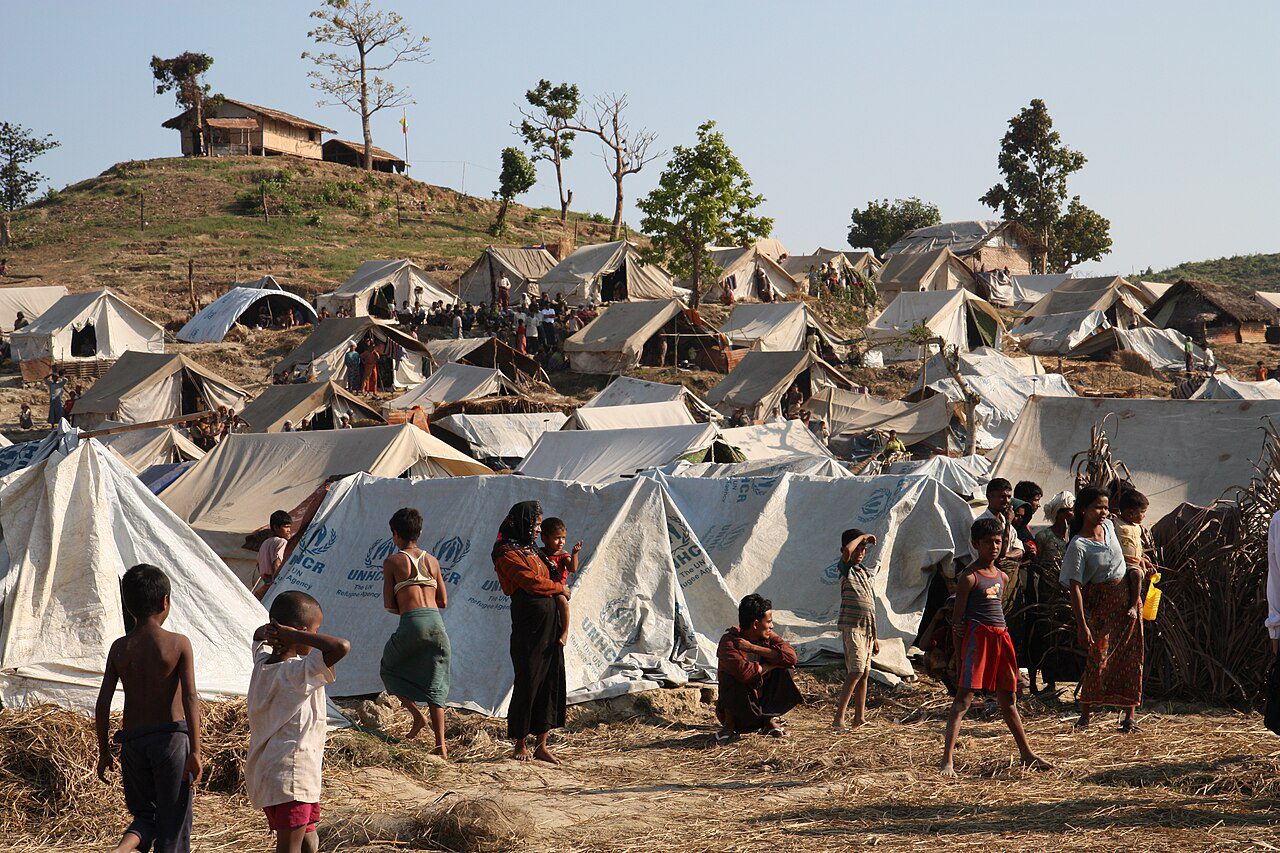
Many refugees from Lainya end up in Uganda. Uganda gives South Sudanese refugees in Uganda land to cultivate. But that land is not enough to feed a family. Refugees supplement their own production with rations from WFP. But donors are cutting back on these rations.
The difficult food situation in Uganda pushes Central Equatoria people to return home. In 2021, I met people returning from Uganda to farm in Morobo county, just south-west of Lainya. They aimed to cultivate food for their families in Uganda. One farmer told me that he was ready to come back permanently with his family if security improves.
However, when I contacted the farmer recently, he said that he had cultivated a big piece of land and then was re-displaced to the Uganda camps. He left everything and ran for his life. In July this year, even more people were displaced when the armies of Uganda and South Sudan exchanged fire in Kajo Keji, another county neigboring Lainya.
This disorienting, back-and-forth displacement is affecting many parts of South Sudan. Thousands of refugees and returnees from Sudan have moved to South Sudan: the Sudanese army has been forcing its own refugees to move from Sudan’s cities to its borders. In the Sudd wetlands, over a million people are affected by floods which have resulted from the climate catastrophe. Cattle keepers have lost their cattle to water and to rural violence. Farmers have lost their crops and cultivable land. I visited Bentiu, in Unity state, in 2023, and people were living on wild foods. Women spent hours in the flood waters, collecting water lily to eat.
Displacement and migration, even forced migration, used to be one of the ways in which people coped with famine. They moved to places where cultivation was possible, or to places where humanitarian agencies or markets could provide food. But now, people are now migrating from one food crisis to another.
Lainya people are having to deal with changing experiences of displacement. And displacement is also changing the way that food is produced. Communities which once relied on their own productive efforts are turning to markets to feed themselves.
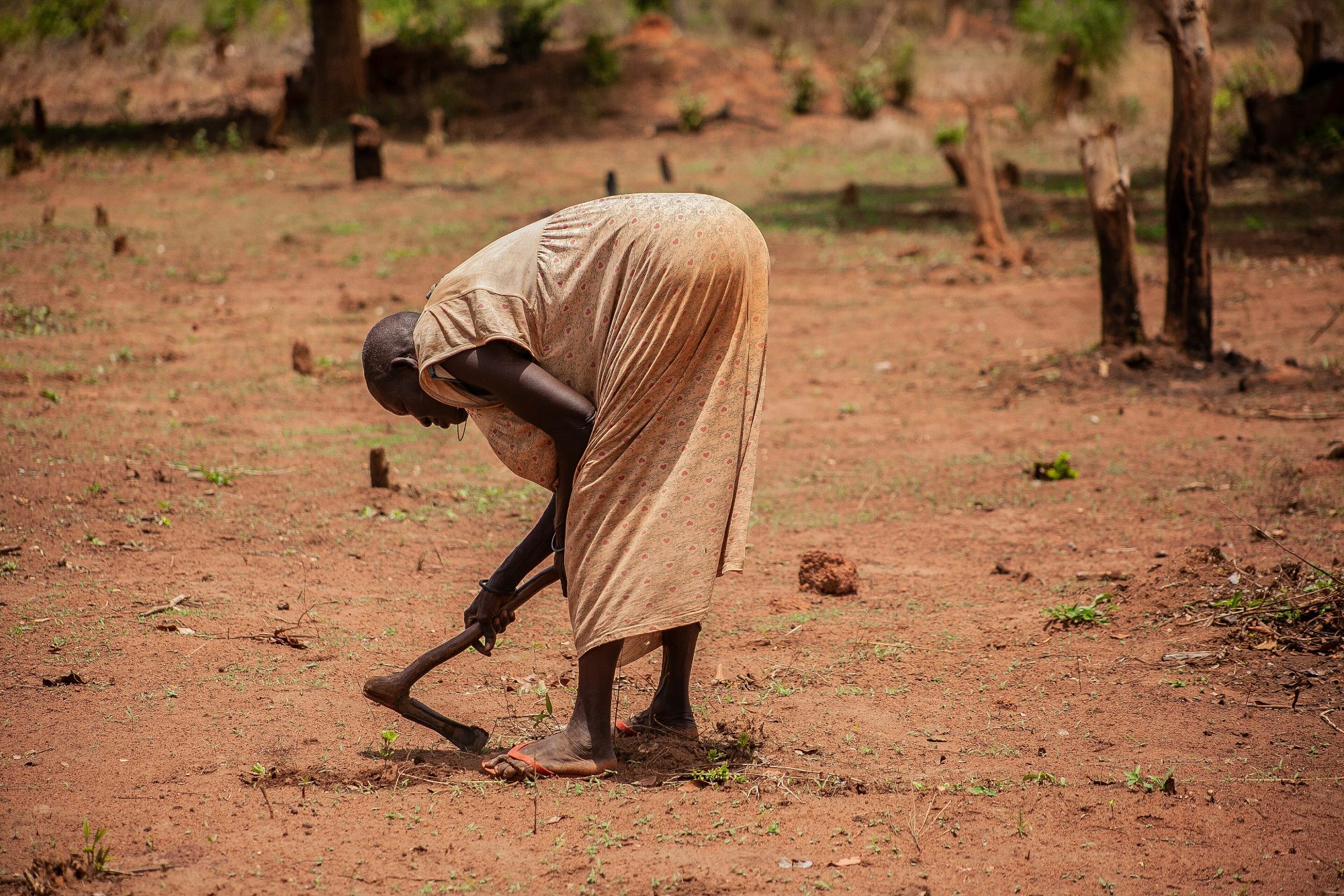
When I was a boy, my mother’s farm depended on the unpaid labour of us children, and our farm fed us. Central Equatoria and Western Equatoria are the two states in South Sudan where own-production still accounts for most food consumed. But own-production is changing too.
In 2005, I withdrew my labor from my mother’s farm so that I could study. I moved to Yei, a nearby town and educational centre, and I started to work as a farm labourer, to raise money to pay for my school fees. I’d learned from my mother how to work in vegetable nursery beds.
In Yei, I lived with my maternal aunt. My sister also moved in. I worked as a wage labourer and she sold groundnuts, so we could pay our school fees. We didn’t give our aunt any of our earnings: my mother persuaded my aunt to feed and shelter us for free. We were benefiting from her own household’s production, but not contributing to it.
My family was able to survive when I withdrew my labor from their farm, in order to raise money for my education. But withdrawing labor from subsistence agriculture runs the risk of further eroding a food system which managed the fear of jang through a work ethic.
This post was made possible in part by a grant from Carnegie Corporation of New York. The statements made and views expressed are solely the responsibility of the author.