This essay is part of Ways of working for more peaceful futures: A global health humanities roundtable, an effort through the Future of Peace program to bring perspectives from global health humanities into conversation with questions of peace. Read Michelle E. Anderson’s introduction to the series, or explore the full roundtable paper bringing all six contributions together.
Within many African Indigenous traditions, personhood is understood relationally: humans exist in relationship with one another, their environments, and the spiritual world, with those relationships shaped by place, history, and context. This does not imply a single or homogeneous African worldview; relational understandings of humanity take different forms across contexts, expressed through concepts such as Ubuntu in South Africa, Obuntu Bulamu in Uganda, and Sankofa in Ghana. Across these differences is a recognition that no human being exists in isolation, we exist in community. From this perspective, violence, displacement, or trauma experienced by one person or community implicates a wider shared humanity.
What does this mean for peace missions/the future of peace?
“Although despised by the materialistic science, the pragmatic spirituality of different peoples is the basis of the wisdom that produces meanings and builds bridges between the outer and the inner sides, the immanent and the transcendent, the thought and the affection.”
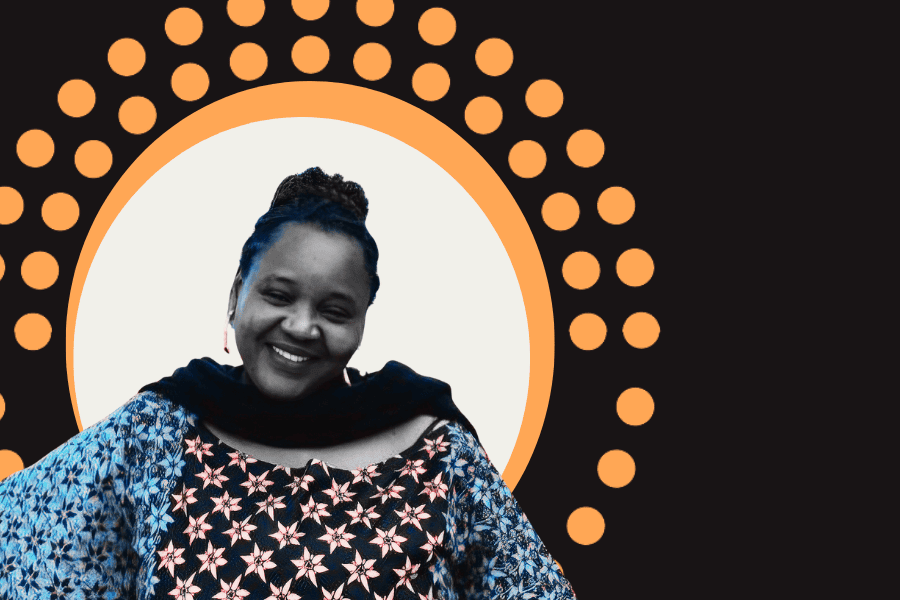
This quote by Marcelo Firpo de Souza Porto captures the relationality embedded within the work we do in different spaces of the globe. My work within indigenous communities is focused on a sociocultural and spiritual understanding of wellbeing and its influence on the experiences of health and wellbeing. My work is influenced by Ukulungisa- seeking a balanced relationship that supports wellbeing. I primarily work with people with disabilities, traditional healers, and traditional birth attendants. This sense of a shared humanity influences the work I do. I enter communities with a knowing that there is connectedness that makes me not the ‘other’ but ‘a part of’ the community. That is for me, where the strength lies. I realise that this connection exists on a spectrum, every encounter is unique, and although grounded in the same value system, each project requires a shift, a spiritually informed re-positioning of myself in recognition of the unique attributes of that specific space, the people and their history.
I have learnt that every context is different. This means that I do not impose previous knowledge even from a similar context. I listen to every context. This makes me not finalize even a research proposal without input from the context of implementation. I meet with the community and present my intentions, asking for their input. I ask questions, seeking to understand, and find mutual agreement, rather than filling the space with my own assumptions, training and knowledge. This helps build respect, trust, and a sense of ownership. In this way, we begin to build community around the research focus, of which I also become a part; however, the intent is that the people within the context must lead the conversation. I have learned that people align more with what they help to build. For example, birthing is often seen as the primary area of women. Still, we seek the voices of men, building together so that women are supported holistically by their men, which supports a shared, sustainable outcome.
Building community is hard work, and I have experienced challenges and opposition because the political, and the institutional, co-exist with our personal ideals when we work. My spirituality allows me to be this, but also that, always seeking middle ground (Ukulungisa) within myself while building community with people and place.
People working towards more peaceful and just futures must learn that community is not built once, but is ongoing around each mission, each intent. Community, although girded by a similarity of values and shared humanity much like peace, is not static. We must be ready to re-learn, re-position, show humility, and build together every time we engage.
Although international rules and legislation remain important, they cannot substitute for engagement grounded in people, place, history, and the spirituality that binds us all together. Neither global health practice nor peace can be reduced to a checklist; it depends on how we relate to and work with one another. In this way, I am because they are, and they are because I am; without them, I cannot be.