This interview is one of a series, produced as part of the Future of Peace program, that explores how thinkers and practitioners are making sense of a changing world and what that means for the future of peace. The series aims to surface different ways of thinking about the challenges, tensions, possibilities, and uncertainties that lie ahead.
The below is an edited transcript of a conversation that I had with Peter Quaranto on July 15, 2026.
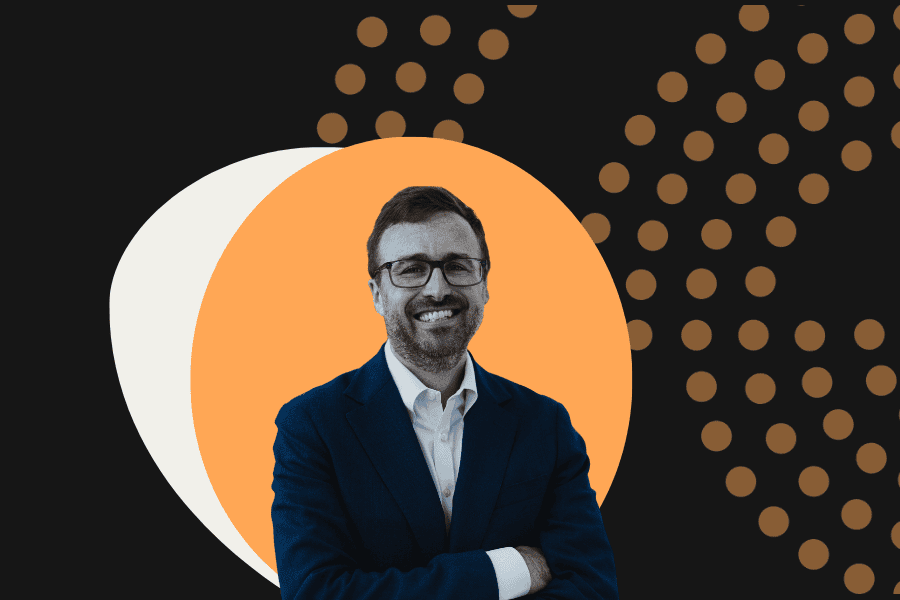
Peter J. Quaranto is Senior Fellow for the Future of Peace and Security with the Alliance for Peacebuilding and a Visiting Professor of the Practice at the University of Notre Dame’s Keough School of Global Affairs. He was the lead organizer of a March 2026 conference entitled “American Peacebuilding at a Crossroads: Lessons, Risks, and the Road Ahead,” and has published multiple recent articles in Just Security about the future of U.S. government peace capacities. Previously, over the past two decades, Peter worked in various roles at the U.S. Department of State, White House, Congress, and with civil society to elevate peacebuilding and conflict prevention in foreign policy efforts.
The transcript was originally generated using Zoom transcription software and has been edited for accuracy and readability. I have added hyperlinks.
Michelle Anderson: Peter, thanks for taking the time to do this. Just to set us up a bit first, one of the things that’s really struck me in developing the Future of Peace program here is that so many people recognize the need for significant rethinking of how we are pursuing peace in the current moment, but it’s happening in vastly different spaces and ways. I’m excited to include your perspective in part because of your work leading the Future of Peace and Security Project and Coalition at the Alliance for Peacebuilding, and within that, your efforts to think about issues of peace with a long-term view, while being adjacent to and somewhat embedded in a U.S. policy space. With that context, could you start by saying a bit about your work right now?
Peter Quaranto: First of all, thank you, Michelle, and thanks to the World Peace Foundation for facilitating these thoughtful dialogues. I think we need, in this moment, to have more space and more platforms where we’re engaging in conversations about how the landscape is changing, the tools we need to meet the challenges of the future, and how we all come together to drive change.
A little over a year ago, I was working at the U.S. Department of State. I was one of the leaders of the State Department’s Bureau of Conflict and Stabilization Operations. Our bureau was supporting colleagues across the government to be more effective in anticipating, preventing, and responding to conflict. We were part of an ecosystem of specific expertise, capacities, and institutions grappling with issues of violence and conflict within the context of U.S. foreign policy, including the U.S. Institute of Peace and USAID. That system was inadequate and insufficient to meet the moment, but we were trying to grapple with these issues, and we were trying to innovate. All of that changed with the decisions made by the current administration. Those entities were, of course, eliminated. With so many of the people I’ve worked alongside, we found ourselves asking: what comes next? In a moment where the world is facing such record-breaking levels of violent conflict, how do we apply and adapt our expertise?
Over the past year, I have been part of an effort with the Alliance for Peacebuilding and its leadership, and a growing coalition of partners, to start thinking about how we regroup, how we reimagine our efforts to constrain global violence and build up peace capacity, and how we build broader support for this work for the future. We launched the Future of Peace and Security Project. This is a coalition effort bringing people together across different sectors, areas of focus, places across the United States, to consider the policies, the institutions, the capacities that the United States needs to be a trusted partner in the work of peacefully resolving conflict and constraining violence worldwide, and how to mobilize support for that agenda.
MA: Thank you for that background. It’s a challenging time, but I’m glad that you have found and created a space for this displaced expertise, especially at a time where it feels like we really need it. I appreciate your framing of your work as thinking about the policies, institutions, and capacities needed in the current moment; it’s interesting given that here, we have been talking about our work in terms of institutions, networks, and ideas. I think that is a useful point of reference for thinking about how approaches might align and diverge in useful ways. Could you say a bit more on the capacities part of your framework?
PQ: First of all, I think we face a fundamental question right now from a political standpoint: do we believe we should invest deliberately in having systems and expertise to peacefully manage conflicts, to try to diffuse violence, to try to build peace over time?
We are likely facing a future world where conflicts are going to become even more widespread, with the strains created by new technologies, artificial intelligence, and the associated changes to economies and the environment. Part of the challenge, I believe, is building resilience to manage conflicts that we can’t yet fully foresee, but which are going to require us to be adaptive, dynamic, and creative. We need dedicated policies, norms, and expertise for peace, but we also need a different mindset and systems that are flexible and dynamic to meet the evolving challenges as they take shape in the future.
MA: That feels like a big thing to take on, because arguably, in the U.S. and probably globally, government is better at being responsive or reactive than it is at being forward-looking or focused on resilience. Given that, how do you navigate the balance between the interest in addressing current issues with long term priorities?
PQ: We invest and innovate so relentlessly in research, development, and innovation for the future of war, anticipating and preparing for the wars of the future. Why are we not doing the same for peace and peacemaking? Why are we not creating incentives, dedicating money, dedicating space to think about what we need at all levels of society to anticipate and peacefully manage conflicts of the future? There’s a part of this work that is really about a paradigm shift, imagining and creating space for the systems of the future, at the same time as we confront the significant violence that is manifesting today. I don’t have an easy answer for how we do that, but I think a lot of us are coalescing around the fact that we’ve got to be able to do both of these things simultaneously. To me, it comes back to this fundamental question of, as a society, as a people, how committed are we to the endeavor of building peace for the future? I think we’re in a moment of reckoning where we’ve got to address that question head-on.
MA: As you think about this paradigm shift and your work, how do you see the concept or language of peace functioning within that? Where does it feel useful, insufficient, constrained, contested, and is that part of the paradigm shift, in convincing people that working toward and investing in peace is important?
PQ: I think an increasing number of people are focused on the need for peace. Certainly, the ongoing war with Iran has shown the real effects that prolonged war can have, not just for those that are on the front lines of those wars, but for all of us, given the interconnections that exist in our economies, in the environment, and so forth. I think we’re at this moment where an increasing number of people are yearning for peace. Our challenge is how to connect that yearning for peace with a vision for how peace is possible and how it can be achieved.
This is where I think we need some paradigm shifts. There’s been a long-running debate about negative peace versus positive peace. How do we move from thinking about peace not just as the absence of or the limits on violence, but also creating conditions that allow people to flourish, to problem solve, to engage in political and economic and social life without the fear of violence? That’s a really important thing to be grappling with at this moment. Often, when I was in government, we thought about peace as a state to strive for. I think we’re collectively starting to realize more and more that peace is really about processes, and how you put in place processes by which people can begin to come together and transform relationships that have become violent into something that’s more cooperative and constructive for the future.
I’ve been reflecting a lot on the need to be more participatory as we build a vision for the future of peace and security. I think about that in a few different respects. We need to bring a lot more diverse voices and perspectives to the table to shape the agenda of the future. I think that the work of war prevention and peacebuilding has become more professionalized and more technical over the last several decades, and less connected in some ways to the citizen movements and networks, the grassroots that gave rise to this field in the first place. As we move forward, I think we need a vision of peace that involves the participation of a wider set of actors and members of society. I wonder: are there ways that we could be better utilizing the energy, the passion, the skills of a wider set of citizens to be engaged in this work of preventing and stopping wars? I think this is especially important at a time when so many people feel cynical, isolated, and mistrustful of institutions of government.
MA: That brings up a few different questions, but to start, I’m curious if you have a vision for what, ideally, a more participatory version of U.S. policymaking should look like, and how that forefronts peace as a process rather than a state to achieve.
PQ: First and foremost, I strongly believe that we need a foreign policy that is more democratic, more accountable to ordinary working people, and in which people have a voice. Of course, I’m coming at this primarily from the standpoint of an American citizen who is focused on U.S. foreign policy, but I think the same is true in other countries around the world. I think we need ways for a wider set of people to participate in shaping what our foreign policies are, bringing ideas forward, and holding accountable leaders that are carrying out foreign policies. We see a real disconnect today in decisions that are being made about war and peace, and where it seems like most citizens’ preferences are and what they want to see from their government. Bridging that gap and bringing more accountability, democracy, and participation to the foreign policy-making process is crucially important and very relevant for the future of peace and security.
At the same time, I also think about how we can create more on-ramps for people to be part of gaining expertise, gaining skills, being part of capacities and initiatives to do work of building peace. We need that to be done at local levels, and so many people are engaged in that work. I also think about what people are doing through programs like the Peace Corps, where we send mostly young Americans to different parts of the world to build relationships, engage with communities, and be involved in mutual learning. I wonder, are there ways that Peace Corps volunteers, for example, could be more involved in supporting peace processes or peace programs overseas? Are there ways that more Americans could be contributing to the work of the UN and multilateral bodies? I think there are creative ways that we could get more people involved in this work. By doing that, I think we will build a more durable base of support for future peace policies and initiatives. And I think it will make those initiatives more effective because we have learned that more inclusive and more whole-of-society initiatives are more likely to succeed.
MA: I appreciate the reflection on what’s already happening and how those structures might be leveraged more or in different ways. Relatedly, and you’ve touched on this already a little bit, but are there any institutions, relationships, or forms of cooperation that you think will or should become more important in the future that we should be thinking about?
PQ: In addition to the work that I’m doing with the Alliance for Peacebuilding, I’m also a visiting professor of the practice with the University of Notre Dame’s Keough School of Global Affairs and Kroc Institute for International Peace Studies. Part of the work I’m doing with Notre Dame is about how academic institutions, institutions of education and learning, can create space for the kind of reckoning, imagination, and co-creation that we’re talking about for the future of peace and security.
In March of this year, the Keough School hosted a major conference along with the Alliance for Peacebuilding and other partners focused on U.S. peacebuilding at a crossroads, reflecting on how the field and the work that we were engaged in has evolved over time, the current risks that we face, and what could be the road ahead. We had some 400 people participate in person or online. There was a tremendous amount of energy. That conference would not have been possible without the support of a university. I think there’s a really important role that academic institutions can play, whether that’s Notre Dame or Tufts, to create space in this moment for thinking about the long term and the trajectories of where we’re headed.
At the same time, I think about the broader education sector. There’s a whole realm of peace studies programs at high schools, colleges, and universities that have played a really important role over the years in educating people, but also changing the communities in which they operate. How are we engaging them and tapping into their expertise?
There’s also a lot that can be done with technology, and we need people who understand technology, understand how AI is evolving, are thinking deeply about questions of AI governance, safety, and different features.
I could go on. It’s going to take all of us, in some ways, if we’re going to find ways for humanity to manage and transform the many conflicts that are ahead of us. It’s going to require new ways of thinking, new ways of relating to one another, and new connections to realize a future of peace and security.
MA: Definitely. So then, as someone situated within an academic institution, working on creating space for discussions and new connections, as I think about what those discussions should look like, what do you think is currently missing right now from discussions around peace and its futures?
PQ: We still have a long way to go in creating more inclusion and diversity in the range of voices and perspectives that are part of these conversations. It is still too often the same people who are talking to one another about these issues, and we’ve got to create more opportunities for a wider set of people to be part of these conversations about the future of peace and and security. That includes, in particular, people who have proximate experience to conflict and to building peace within their communities. Their experiences, their creativity, their resilience– we can learn a lot, and it should guide us as we think about the future.
One of the other things that I’ve been reflecting a lot on is something that one of my longstanding teachers, John Paul Lederach, calls the “art and soul of peacebuilding.” John Paul and others have done important work to highlight that, at the same time as we focus on scientific or material solutions to conflict challenges, we should also not lose sight of the way in which more creative, less conventional approaches can unlock new possibilities, can make unlikely relationships suddenly possible, and can tap into our moral imagination. At this time, when a lot of us feel pretty stuck, I think we’ve also got to create more opportunity to be engaging in the art and soul of peacebuilding. As part of that, we need to be thinking about how individual transformation and community transformation are related to political transformation and the changes we want to see on a global scale. I think we’re going to need a lot more focus on our collective spirits and our collective well-being.
MA: I agree, we need to be thinking differently about the words ‘expert’ and ‘expertise,’ thank you for bringing that up. You mentioned creative approaches. What efforts have you come across that you feel are engaging in really generative and interesting thinking around the current challenges we are facing?
PQ: I am finding inspiration these days from a lot of different sources. There are many wise teachers and thinkers among us that are pointing the way toward new ways of thinking and seeing the world that open up new possibilities. I’ve been trying to learn more about indigenous ways of thinking about building peace, about interdependence, about resilience. I think we can learn a lot from communities that have been marginalized for far too long, in terms of webs of care, of survival, of adaptation. Part of what I’m trying to do, I’m hoping to do, is more listening and learning.
I also think there are some really innovative models of peacebuilding that are happening around the world that we can draw inspiration from. For example, I’m connected to an organization called Invisible Children that has long worked with communities affected by violence in parts of Central Africa. Invisible Children has worked with local peace committees throughout Sudan, South Sudan, the Central African Republic, and the Democratic Republic of Congo to set up an expansive early warning and early response network in which communities organize themselves and then connect with others to share information and strategies for how to deal with armed actors that are threatening them. It’s basically mutual aid in its best forms, happening in some of the most remote parts of Central Africa, where violence is a lived reality every day. I wonder: are there opportunities to replicate, learn from, and scale something like this early warning and early response network — not just for other parts of Africa or the Global South, but even in the United States, where we’re dealing with threats of violence and conflict? There is generative thinking, experimentation, and innovation happening all over, and we need to find ways to be open to it, to lift it up in this moment, and to draw inspiration from it.
MA: Thank you. To wrap up, what makes you skeptical about more peaceful futures, and what, if anything, gives you hope that more peaceful futures remain possible?
PQ: I think the challenges that we are facing, the real threats to world peace today and on the horizon are overwhelming, daunting, and are not going to be easily reversed. I think we are going to face more significant challenges in the years ahead than I’ve experienced at any time in my professional life, and I don’t think there are easy solutions. I don’t think we can just quickly turn the ship in a different direction, and that suddenly we’re going to have a highly functioning UN or a renewed set of norms limiting the use of force, or a broad-based peace movement that is operating across societies and across countries. I think that what we’re talking about is a long-term endeavor, and we have to think in terms of longer-term horizons. That’s not to say that there isn’t important work that can be done and important achievements that can be made in the short term that matter a lot for all of us, and certainly for the people who are on the front lines of so many of the ongoing wars. But, I’m skeptical that that there are any short-term solutions to the kind of meta level challenges that we are facing,
I’m also skeptical about the role that artificial intelligence is going to play in shaping this landscape, and I am really concerned about the ways in which military and security actors are integrating AI so quickly within their systems, and moving so quickly to explore the automation of the use of force. That, coupled with all the other disruptions that AI is likely to bring, is going to make the work of future peacebuilding that much more difficult. At the same time, I try to stay hopeful because we all should stay hopeful.
MA: I would assume you are, because I think this would be a tough job to have if you didn’t have hope in there.
PQ: It helps to be doing the work! There is hope that is generated through participation and being part of processes that are trying to reckon and renew and rebuild. On a personal level, I am finding a great deal of hope by being connected to tremendous colleagues at the Alliance for Peacebuilding, our broader coalition, many of the people I’ve gotten to connect with over this past year, and being inspired and learning from them.
I will also say that I think more people are talking about the need for peace plainly and directly than any time that I’ve been working. Early in my career, I would bring up peacemaking or peacebuilding as something that we should put in a speech or highlight within a particular policy, and I was often told, “Oh, we don’t say that,” or, “use other terminology, that is more security oriented.” But I think there’s a growing recognition right now that the types of conflicts at all levels of society are mounting, and if we don’t find ways to more constructively deal with problems and constrain violence, the effects on humanity are going to be catastrophic.
We see voices from all over that are recognizing this. I’ve been really inspired by some of the things that Pope Leo has been saying prophetically about peace, as well as other faith leaders. Business leaders are speaking out about the need to constrain violence and manage conflicts. And even within our U.S. political system, we see bipartisan leaders coming together to at least recognize the imperative of peacemaking in some form. I will note that even the National Security Strategy that President Trump’s administration put out last year actually elevated the importance of “stopping regional conflicts” from becoming global wars. Of course, I have a certain amount of skepticism about that based on all that it’s transpiring today.
But overall, I do think there’s a growing recognition that we’ve got to get this right, and we need to figure out new ways of living together and of relating together, and that creates a huge opportunity. I think the work that all of us are engaged in right now is: how do we channel that anxiety, that energy, that longing that so many of us have into movements and processes and ideas that can compel real political and policy change for the future?
In the long arc of this work, I am hopeful that using the learning that we have garnered so significantly over many years, with the thinkers and organizers that care about this, there’s tremendous potential. I’m excited for what we’re going to be able to do with the Future of Peace and Security Project. We are eager for more people to be part of this effort. We want to build a broad, diverse coalition of traditional and non-traditional actors and organizations. I would encourage people that are concerned, anxious, and are grappling with these questions to join us in the work that is ahead. This coalition effort is one slice of what needs to be a broader transformation at all levels, but I think it can be catalytic within the United States. And if we can make a difference in the United States, that will not only make an important impact here, but I think it can also have a positive influence on global affairs and what people are trying to do in other parts of the world.