Famine Voices seeks to bring the perspectives of people directly affected by famines into conversation with policy-makers and the public. What follows is a historian’s invitation to consider how the world hears and responds to those voices. My particular angle draws from the study of famines in French colonial history, including in Algeria, sub-Saharan Africa, and south-east Asia. At a time when our technical knowledge of medicine, public health, and logistics is more sophisticated than ever, this helps us look to the politics of responsibility to explain why famines continue to occur.
I propose we consider famines in a slightly unorthodox way: through the concept of “providence” and its close cousin “foresight.” Tracing the changing connotations of providence through time helps us analyze the ethical and political drivers of famines alongside the material ones. In France’s colonial empire of the 19th and 20th centuries, providence was often used to answer the question: “who is it that’s supposed to foresee, prevent, and respond to famines?” We still don’t have a completely satisfactory answer.
Providentia Dei was originally a theological concept designating God’s control over the universe. In the 19th and 20th centuries, providence transformed to become an attribute first of rational individuals engaging with the free market, and later of the welfare states protecting their citizens from chance accidents – what the French still call the état-providence, or provident state. The location of responsibility for misfortune moved from God, to individuals, to society. But as the provident states began to be constructed after World War I, provision in the colonies remained the burden of what many Europeans believed were irrational, improvident colonial subjects.
This history of providence suggests three paradigms for understanding responsibility for famine in the modern era. In the providential paradigm, famines are thought to be inevitable, resulting from the mysterious workings of Divine Providence. In the free market paradigm, famine is the result of the supposed inability of improvident individuals to plan ahead. In what we might call the welfare paradigm, subsistence and nutritional health are the responsibility of state and society. However, European empires never took this responsibility seriously in the colonies. Imperial responsibility for famine blurred the distinction between politics and humanitarianism, between provision and charity, between law and pity.
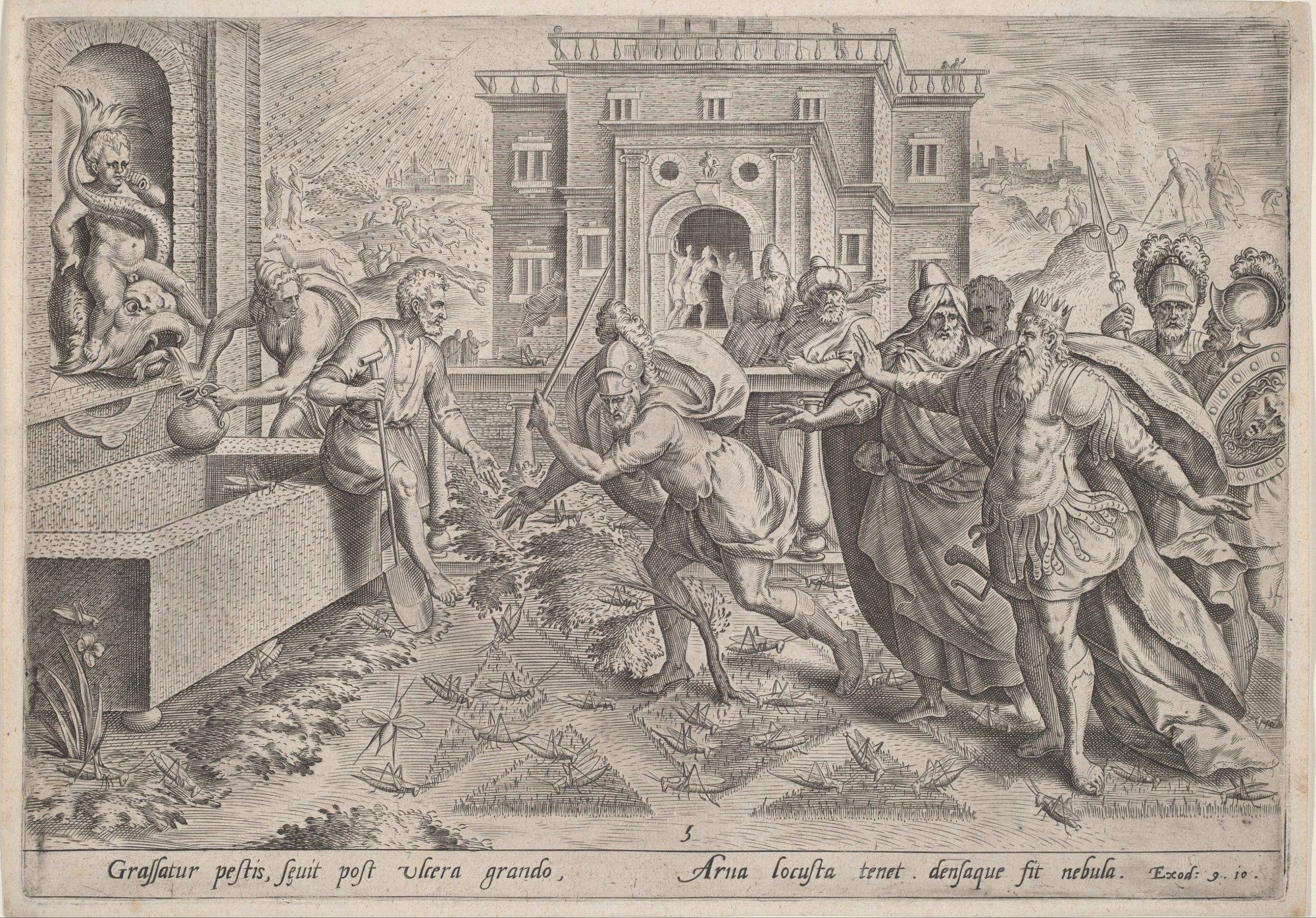
A comparison of two major famines in the French Empire gives a sense of how these paradigms function. In 1867, swarms of locusts destroyed crops throughout French Algeria, leading to a famine in which hundreds of thousands died. The indigenous population fell by a third. With clear biblical parallels, Divine Providence justified famine as a punishment for those who did not follow God’s law. But if the providential mindset helped excuse the famine, it was also one of the only forms of care linking economic capacity to need. In the words of a French priest, “After having humbly recognized the action of Divine Providence, which tests or punishes, by natural means as well as by supernatural means, because it is equally mistress of the laws of nature and the laws of grace… our duty is to think of coming to the aid of the numerous victims of the curse.” The Catholic Church raised alms to provide relief. However, the Church made no secret that its ultimate aim was the salvation of souls as much as the relief of suffering.Only Christians, or potential Christians, were included in the Church’s “circle of concern,” to borrow a phrase from the philosopher Martha Nussbaum.
This religious submission to providence coexisted with a newer, secular use of the term as a human characteristic. For economic liberals, the future was in the hands not of God, but in those of provident individuals who had inherited His faculty of foresight. Here I’m drawing on the philosopher Francois Ewald’s classic study of social responsibility, The Birth of Solidarity, in which he calls foresight “the liberal virtue par excellence.” As far as solutions, the Christian and liberal points of view suggested the same one: charity, but not too much of it so as not to reward improvidence.
In 1931, over half a century later, a famine in Western Niger that caused between fifteen and sixty thousand deaths was the first time that colonial administrators were held responsible for a food crisis in the French Empire. The governor of Niger held fast to a racial determinism that characterized colonial subjects as lacking the foresight needed to prevent famines. He believed that African men, paralyzed by “this indifference, this apathy, this improvidence, this extraordinary fatalism,” had failed to foresee the impending famine. This time, however, superiors in France responded that foresight was the responsibility of the French Empire and could not be unloaded onto individual subjects. Famine, the French Minister of Colonies chided, was no longer “an inevitability against which nothing could be done.”
The fundamental questions of care raised by the history of providence remain relevant. In the West, food security became the responsibility of the welfare states – the provident states – which are now everywhere being eroded. In the ideal form of these welfare states, it’s not necessary to foresee particular adverse events, just as insurance companies can’t foresee the particular claims they’ll have to pay; the mechanism of the welfare state relying on the actuarial mathematics of the population foresees for all of us, just as God did in previous eras.
In what is now called the Global South, care across borders falls to nations overseen by an international community. Colonization and then decolonization led to the severing of responsibilities and capabilities. Today, famine relief is among the most high-profile issues facing the international community in the form of humanitarian NGOs, the foreign policies of wealthy countries, and the United Nations. But the ultimate responsibility for famine falls on the countries and people affected. This bifurcation of capacity and responsibility is worth thinking about. One of the functions inherited by the international community is foresight, to avoid the sin of improvidence, encapsulated in the name of FEWS NET, the U.S. Famine Early Warning Systems Network – which has survived the felling of USAID and continues to advise the government. FEWS NET is effective at predicting famines. But once famine is foreseen, who is responsible?