In its violence and pervasiveness, hunger does many things. Its consequences are severe, and often communicated as large-scale phenomena, with vast, eye-catching figures for malnutrition, thousands of deaths imminent or happening, thousands of hospital admissions, millions of dollars in aid distributed and still needed. We know hunger produces large societal effects – like when it drives conflict, displacement, and migration, deepening longstanding inequalities and creating new ones, or when it affects election outcomes, reshaping the economic and political landscapes of entire regions. And as important this data might be, we know hunger colours and fundamentally reshapes every dimension of life, and that it does so in ways often more subtle, less easily captured in the data on which humanitarian programming intervention and political decisions are based. We know for example how hunger impacts gender relations, family structures, and community mutual aid systems over generations, shaping the social, affective, and cosmological experiences of the world for people whose everyday life it affects.
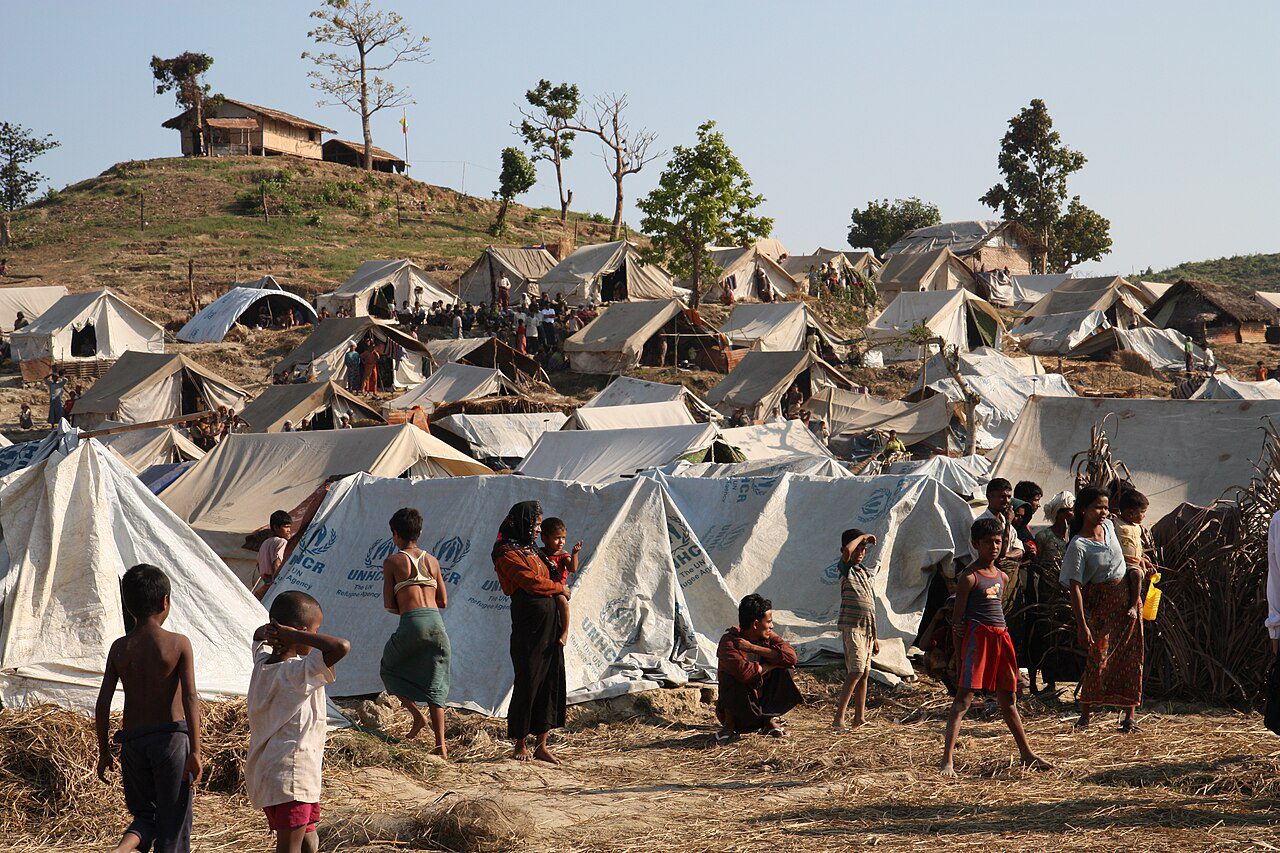
Here, I want to bring your attention to one consequence of hunger, one which is rarely discussed and remains often invisible, but which – as I will try my best to convince you – deserves more attention due to its devastating potential, particularly in the Global South. This is the interaction of hunger with medication for chronic and non-communicable conditions – and in particular, with psychiatric medications, prescribed for specific mental health conditions. In this presentation, I draw upon my PhD fieldwork, during which I lived for 15 months in Palabek refugee settlement, northern Uganda, between 2019 and 2020. At the time, around 54,000 people lived in the settlement; today, that number is closer to 97,000. Initially, most residents were South Sudanese refugees from the Acholi language group, fleeing violence in Eastern Equatoria. Many followed from other regions, fleeing war and often hunger. But in Uganda, life was far from easy. Sure, safety was better than in South Sudan; but, between the corruption and inadequacy of the Ugandan refugee response, the barren land allocated to refugees, and the lack of employment opportunities in and around the settlement, for many people, as one man put it, life in Palabek was like ‘[being] in a cage without walls’.
Already at the time, the situation around food was dire. Aid workers and government officials often blamed refugees for not being ‘self-reliant’; yet humanitarian assistance was scarce, opportunities for income generation rare and unreliable, and the plots of land given to refugees could at most grow enough food to fill the gaps of insufficient humanitarian aid. Food cuts were frequent and merciless. The phrase ‘The food is not enough’ (‘Cam nok’, or ‘Cam pe romo’ in Acholi) was heard everywhere in the settlement – from clinics to distribution centres, to community meetings. It populated gossip between neighbours, fuelled jokes and small talk at market stalls, hovered over family discussions, and even entered children’s games.
People were resourceful, of course; many engaged in forms of causal labour known as ‘leja-leja’ (for example, tending to the gardens of Ugandan citizens) in order to earn a small and unreliable income. They did so despite considering this work deeply humiliating; having to beg for work, weeding or digging up gardens that they were not allowed to keep the food grown in were all harsh reminders that they did not own land that they could use to imagine and build a future in Uganda. On top of that, a day’s salary (between 2,000 and 3,000 Ugandan shillings, approximately 0.57-0.85 US$) would hardly cover a family’s food needs for a day. “When they see you walking with your hoe on your back, they will say ‘This man has nothing’”, one young man explained. Other people sold their belongings or borrowed more money than they could afford to repay, falling in cycles of debt that became increasingly harder to get out of when, at each food distribution, a part of the insufficient rations had to be sold to grind or repay creditors. Those who felt capable went back to South Sudan to work their land, despite the violence which was ongoing and often deadly. Even so, the reality was that the majority of refugees would go hungry on a regular basis, with even usually rose-tinted governmental surveys showing that most people were eating once a day at most.
It is not difficult to imagine that these circumstances produced widespread suffering – so much so that, in 2019, Uganda became the first refugee-hosting country in which UNHCR began collecting data on attempted and completed suicides. Food and hunger were central in refugees’ distress. As explained by a psychiatric nurse working in Palabek, who regularly attended to both South Sudanese and local Ugandan patients:
“There is a big seasonal difference between mental illness in refugees and in [Ugandan] nationals. For the nationals, in dry season they are less stressed, they associate with others more often because all the funerals and celebrations are happening then. They can visit people and get money by selling part of their harvest. […] But for the refugees it is the opposite. Here during dry season, you will see many people with stress disorder and major depression. It is strongly food-related: the food given is little, and you have to sell some of it to buy things like salt, whereas in rainy season people can plant some things and at least change diet.”
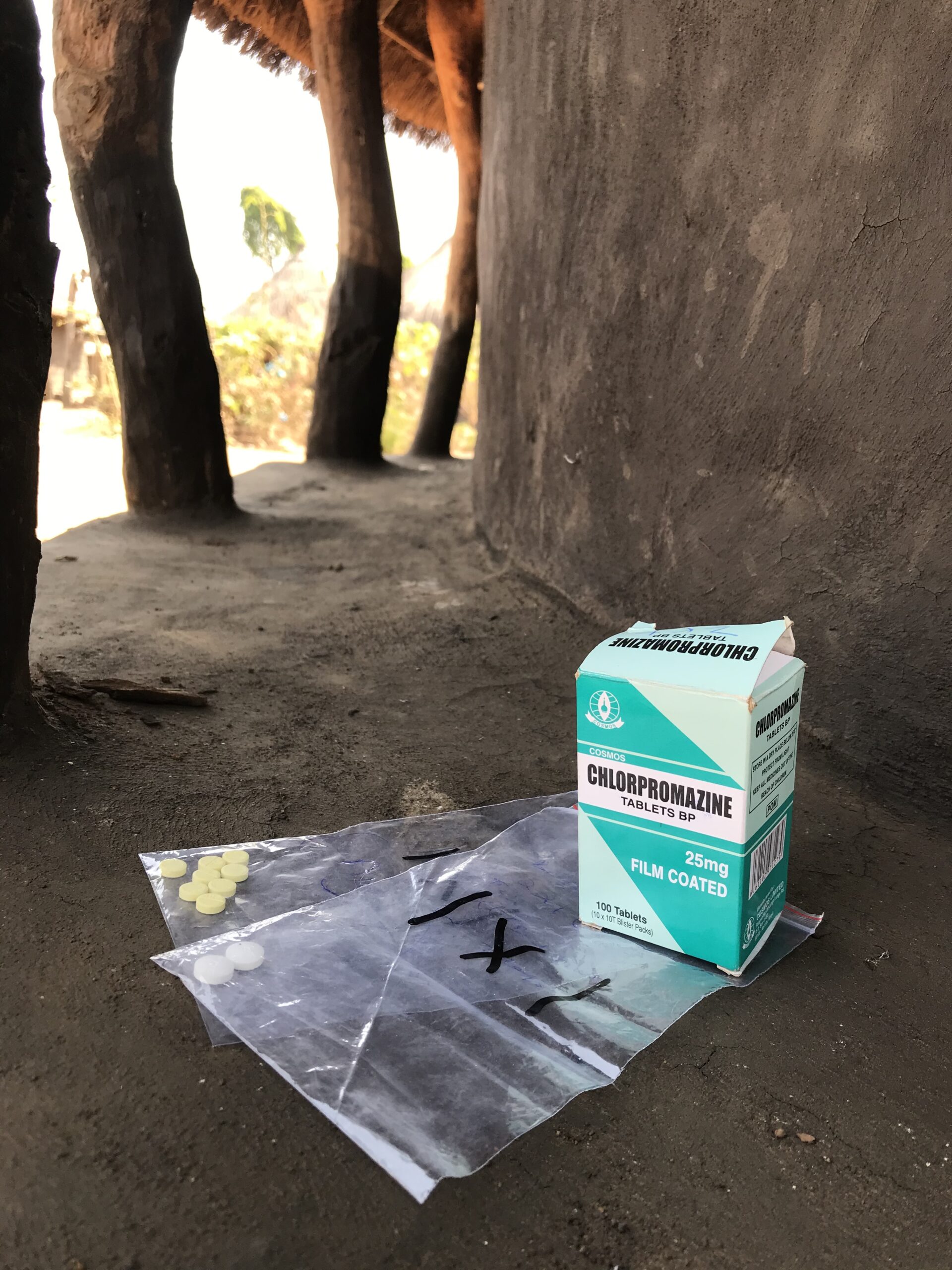
This, while disturbing, is in itself not surprising (there is a lot of evidence from Uganda, South Sudan and other contexts that shows that hunger and scarcity cause or exacerbate mental health conditions) – and also extended to other conditions other than depression; even refugees living with schizophrenia said that food was the main source of their distress. What I want to focus on here is that food and hunger were not just a part of the cause of refugees’ profound suffering, but they are also, crucially, at the root of cycles of treatment interruption, psychiatric relapse and worsening of symptoms that had devastating consequences on people’s lives. Mental health interventions were a major component of the humanitarian response in Palabek – as they have been in most humanitarian settings for at least 30 years. As part of the refugee response, psychiatric officers and nurses operated at lower-level health centres and routinely prescribed free psychiatric medications, particularly for depression and schizophrenia. Doctors lamented, however, that people frequently stopped taking treatment and often did not return to the health centre at all – especially those prescribed the antipsychotic chlorpromazine. Indeed, most of the people I followed over the course of my research who were prescribed psychiatric medication interrupted treatment abruptly and against medical advice, even when they reported that the drugs were working and that many of their symptoms – such as hallucinations – had diminished.
Doctors often explained this widespread interruption as a matter of ‘culture’ or ‘lack of awareness’. But what people described, repeatedly and in detail, were side-effects. In the case of chlorpromazine, – a drug that, it is important to note, it is hardly used anymore in the Global North due to its heavy side-effects, but which is often prescribed in humanitarian emergencies – these are routinely summarised as ‘weight gain’. This formulation is well known – but as patients and many clinicians know all too well, it is deeply misleading. In reality, the actual side-effect of this drug is not weight gain, but ‘appetite increase’. In food-secure settings – largely in the Global North, where these medications are developed and tested – this appetite increase may well translate into weight gain. But in Palabek, where food was scarce and unpredictable, it translated instead into low blood pressure, dizziness, and a debilitating weakness that forced people to lie down, sleep for long hours, and abandon daily activities – especially searching for work. Far from being marginal, these effects reshape everyday life; they force people to give up on performance of gender roles, on the search for work, they made becoming ‘self-reliant’ even more unthinkable; much like leja-leja, theyforced people to live in a constant, relentless and futureless present.
As one young man explained: ‘Those tablets, they require so much food. I have been working in the garden these days, but I have to eat from morning up to 1pm if I take them.’ The strain this placed on his household was unbearable; because there was not enough food for him to stay in treatment at his mother’s house, his uncle (who made charcoal using the land of a Ugandan man he had befriended, and thus had more resources and food available) took him in, leaving his mother heartbroken. Another man described a different but related calculation: ‘It makes me sleep too much. I stopped taking it because I was just sleeping. It’s like the doctor wants you to have no life.’ A third person explained: ‘If I want to work late, I will skip it. It makes me too hungry, and if I sleep too much, where can I get soap? The UN is not giving soap.’ One NGO worker explained to me: ‘Caregivers complain that their relatives need more food [when on treatment], and yet what they get from UN is already too little’. These accounts and experiences clearly show that, in contrast to mainstream clinical narratives, refugees’ non-compliance was not driven by ignorance, let alone ‘lack of insight’ – it was abundantly clear to people I spent time with, that if they discontinued the medication, the symptoms would come back. But in the face of treatment that simply could not be sustained, non-compliance was a rational, often carefully weighed, and sometimes inevitable response to hunger, exhaustion, and responsibility towards one’s family.
What followed was painfully consistent, with many of the people I followed over time often becoming significantly worse. As the consequences of abruptly interrupting psychiatric treatment are widely known to be particularly severe, and to have ramifications that deeply affect people’s lives, it is highly likely that these repeated interruptions played a significant part in their symptoms resurfacing. For many of them, relapses became more frequent and more severe, and each forced return to treatment came after a period of greater deterioration. They grew hopeless that they could ever really feel better, or be able to work, get married, and help their families build a future.
It is crucial to emphasise that this is not only a story about psychiatric medication – the point that I have made about medications needing more food is often cited in relations to several other medications for chronic conditions, including also antiretroviral medications for HIV/AIDS and tuberculosis treatment. It is a story about the interaction between hunger and treatments for chronic conditions more broadly, and about what happens when care is delivered without the material means that make it sustainable. Humanitarian programmes tend to imagine complex phenomena like hunger or mental health as discrete phenomena, and medication as a standalone, technical solution: pills can be distributed, adherence can be measured, outcomes can be quantified. But medication is never just pharmacological. It reorganises daily rhythms, demands rest or food, constrains work, and redistributes care and resources within households; it needs to be understood as an active social agent, interacting with the context in which it is introduced, and particularly with the forms of structural and epistemic violence that characterise it.
To conclude, when food aid is insufficient, irregular, or continually cut, the burden of managing chronic illness is shifted onto those least able to carry it. The result is a cycle of interruption, deterioration, and emergency re-intervention that is not only clinically counterproductive but ethically troubling. What this shows us is something that people whose lives are shaped by the unintended results of unsustainable interventions know well: care that cannot be sustained risks becoming harmful, not because the medications themselves are ineffective, but because they are deployed in conditions that make their use untenable. If hunger reshapes every dimension of life, as it does in Palabek, then any meaningful response to chronic illness must take this fact seriously. Otherwise, the risk is that humanitarian care will reproduce the very suffering it seeks to alleviate.