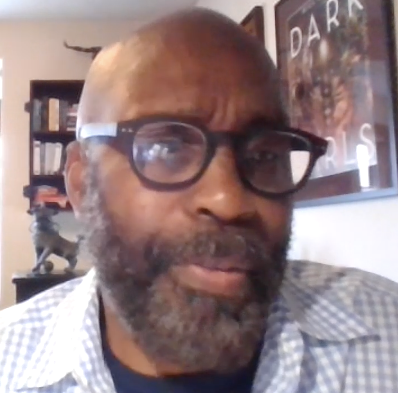
Arthur Bembury is the Executive Director of Partakers, which supports Massachusetts prison education by coordinating teams of volunteers who mentor incarcerated women and men as they pursue higher education through the Boston University Prison Education Program, the Tufts Prison Initiative and the Emerson Prison Initiative.
He is the recipient of the Noam Chomsky Award by the Justice Studies Association and has been associated with Partakers for more than 15 years; first as a student in the Boston University PEP program, and subsequently as an employee. His business and prison experience make him uniquely qualified to interact with Massachusetts correctional institutions, the Boston University Prison Education Program and our more than 400 Partakers mentors. Arthur is the co-founder of several residential treatment facilities for disadvantage youths in Southern California and has an extensive history in commercial and residential real estate. His experience with the challenges facing marginalized populations drives his ambition to find practical and innovative solutions to reducing recidivism, changing lives, and strengthening communities. Arthur serves on the Board of Directors of The Criminal Justice Policy Coalition, is an Honorary Board Member with UU Mass Action, and is on the Advisory Board of The Petey Green Program. Arthur is a graduate of Boston University’s Questrom School of Business Non Profit Management and Leadership Program
In this 23-minute video interview, Bembury explains what Partakers does and who its volunteers are. He discusses the importance of interacting with people while they are incarcerated, the simple conversations that enable someone to grow as a person, and of how these relationships serve as bridges that help incarcerated people when they leave prison and return home. He also addresses the impact of COVID-19 on Partakers’ programs. Given the centrality of person-to-person exchanges, the program was seriously hurt by the lockdown. For incarcerated people, the extended period of the lockdown, he continues, increased anxiety and depression—an experience compounded by the uncertainty of not knowing when conditions will change. He discusses what he and the volunteers he works with have heard from people in prison in Massachusetts. Coming home during a pandemic, he explains, introduces entirely new challenges to an already difficult process. He also discusses Partakers’ partnership with the Tufts University Prison Initiative of Tisch College.