This blog is part of the Sexual and Gender-Based Violence and Starvation program, which probes the intersection of the law of starvation and SGBV, with the goal of sharing expertise across currently siloed research and policy arenas. We aim to develop new ways of understanding, documenting and analyzing, preventing, responding to and punishing actors who perpetrate these harms.
The following text is taken from two previously published Human Rights Watch reports: Extermination and Acts of Genocide: Israel Deliberately Depriving Palestinians in Gaza of Water, published in December of 2024; and “Five Babies in One Incubator:” Violations of Pregnant Women’s Rights Amid Israel’s Assault on Gaza, published in January of 2025.
Extermination and Acts of Genocide documented Israeli authorities’ deliberate obstruction of access to water to Palestinians in Gaza between October 2023 and September 2024. The report includes detailed analysis of the health impacts that Israeli authorities’ deprivation of water had on Palestinians in Gaza, including specifically the impacts on pregnant and breastfeeding women, as well as on infants. “Five Babies in One Incubator” finds that Israel’s blockade of Gaza and its military’s conduct of hostilities resulted in deaths and injuries to pregnant women and girls and deprived them of consistent access to health care. The report provides further details on the impacts that Israeli authorities’ use of starvation as a method of warfare and deprivation of water have had on pregnant women.
This essay presents excerpts from both of those reports, specifically as they relate to Israeli forces’ deprivation of water to the civilian population in Gaza—a form of starvation—and the impact that this deprivation has had on pregnant and breastfeeding women. The essay specifically covers the combined time periods covered in the report—October 2023 to December 2024—and doesn’t address more recent developments.
According to the World Health Organization (WHO), a person needs between 50 and 100 liters of water per day in order to ensure that their “most basic needs are met.”[i] In protracted emergency situations, the minimum amount of water required is 15 liters of water per person per day for drinking and washing.[ii] Pregnant and breastfeeding women are recommended to have access to an additional 7.5 liters of water per day for drinking and sanitation compared with non-pregnant and non-breastfeeding people.[iii]
Yet, between October 2023 and September 2024, Israeli authorities’ actions deprived the majority of the more than 2 million Palestinians living in Gaza of access to even that bare minimum amount of water. For many in Gaza, much or all of the water they had access to was not suitable for drinking.
Namely, Israeli authorities and forces cut off the water supply piped into Gaza from Israel and later restricted the supply, cut off the electricity supply from Israel to Gaza that was needed to operate water pumps, desalination plants, and sanitation infrastructure within Gaza, and blocked and restricted the fuel needed to run generators in the absence of electricity. They also blocked United Nations agencies and humanitarian aid organizations from delivering critical water-related materials and other humanitarian aid from entering Gaza, damaged, and in some cases, deliberately destroyed water and sanitation infrastructure, including where Israeli forces were in control of the area, and prevented repairs by blocking imports of nearly all water-related material. Some Israeli strikes killed water utility workers as they were trying to make repairs, while others destroyed the main water-utility warehouse in Gaza which housed spare parts, equipment, and supplies critical to water production.
These policies likely contributed to thousands of deaths, in addition to the tens of thousands of Palestinians who have been killed directly in attacks in Gaza. These policies also had additional consequences for pregnant women and their fetuses, breastfeeding women and their infants, and menstruating women.
Background
The Israeli government has occupied the Gaza Strip since June 1967. During this time, Israeli authorities have maintained overarching control over the Gaza Strip, including over the movement of people and goods, territorial waters, airspace, the infrastructure upon which Gaza relies, as well as the registry of the population.[iv]
Eighteen years ago, Israel also imposed a closure on Gaza, which making Gaza almost entirely dependent on the Israeli government for access to fuel, electricity, medicine, food, potable water, and other goods and services essential to human rights.[v]
Before the hostilities, Israeli power lines supplied up to 120 megawatts of power to the Gaza Strip and Gaza’s sole power plant produced around 70 megawatts, when the Israeli government allowed sufficient fuel imports for it to operate.[vi] The Israeli government thus retains crucial control over the Gaza Strip’s supply of electricity, which is required to operate most water and sanitation infrastructure.[vii]
In the absence of electricity from power lines, the civilian population of Gaza is largely dependent on fuel for the electricity needed for survival, including to run Gaza’s power plant, and the smaller backup or emergency diesel generators that hospitals, neighborhoods, and some water and wastewater facilities rely on.[viii] Fuel is also needed to produce and deliver drinking water, irrigate crops and deliver food, and for rescue efforts.[ix]
The sale and entry of fuel into Gaza is controlled by Israel.[x]
Cutting Off, Restricting Water and Fuel Post-October 7, 2023
In the days and months after the Hamas-led attacks in southern Israel, Israeli government officials made unambiguous statements about cutting off water as well as electricity and fuel, which are crucial for operating water and sanitation infrastructure, to the entire population of Gaza, and blocking humanitarian aid, including objects required for the production of potable water.[xi] Authorities proceeded to take actions that were consistent with these statements, indicating a clear intent to deprive Gaza’s civilian population of water.
On October 7, 2023, Israeli authorities cut the electricity that it supplies to Gaza.[xii] As of September 2024,[xiii] Israeli authorities continued to block electricity to Gaza.
On October 9, authorities cut off all water entering Gaza through the three Mekorot pipelines.[xiv] They later reopened the pipelines, but continued to restrict the water entering the pipelines through September 2024.
Starting on October 7, 2023, the Israeli government also began blocking, and then significantly restricting the entry of fuel into Gaza.[xv] The power plant ran out of fuel reserves on October 11, leaving most major infrastructure, including wastewater treatment plants, desalination facilities, and hospitals without power and plunging Gaza into darkness.[xvi]
According to many people Human Rights Watch researchers spoke with, the restriction and blocking of fuel supplies has been the most significant factor in the denial of access to adequate water to the population of Gaza.[xvii] In the absence of electricity, most water and wastewater facilities became inoperable once there was no fuel available to operate the back-up generators many of them are connected to.[xviii]
In addition to cutting off and restricting water and fuel entering Gaza, Israeli authorities have also blocked United Nations agencies and humanitarian aid organizations from delivering critical water-related materials and other humanitarian aid from entering Gaza; they have damaged, and in some cases, deliberately destroyed water and sanitation infrastructure, including where Israeli forces were in control of the area; and they have obstructed repairs by blocking imports of nearly all water-related material, and by attacking water workers attempting to make repairs. Some Israeli strikes have killed water utility workers as they were trying to make repairs, while others have destroyed the main water-utility warehouse in Gaza which housed spare parts, equipment, and supplies critical to water production.
Lack of Access to Adequate Water and Sanitation
Combined, Israeli forces’ and authorities’ actions resulted in a widespread lack of access to adequate water and sanitation for Palestinians in Gaza.
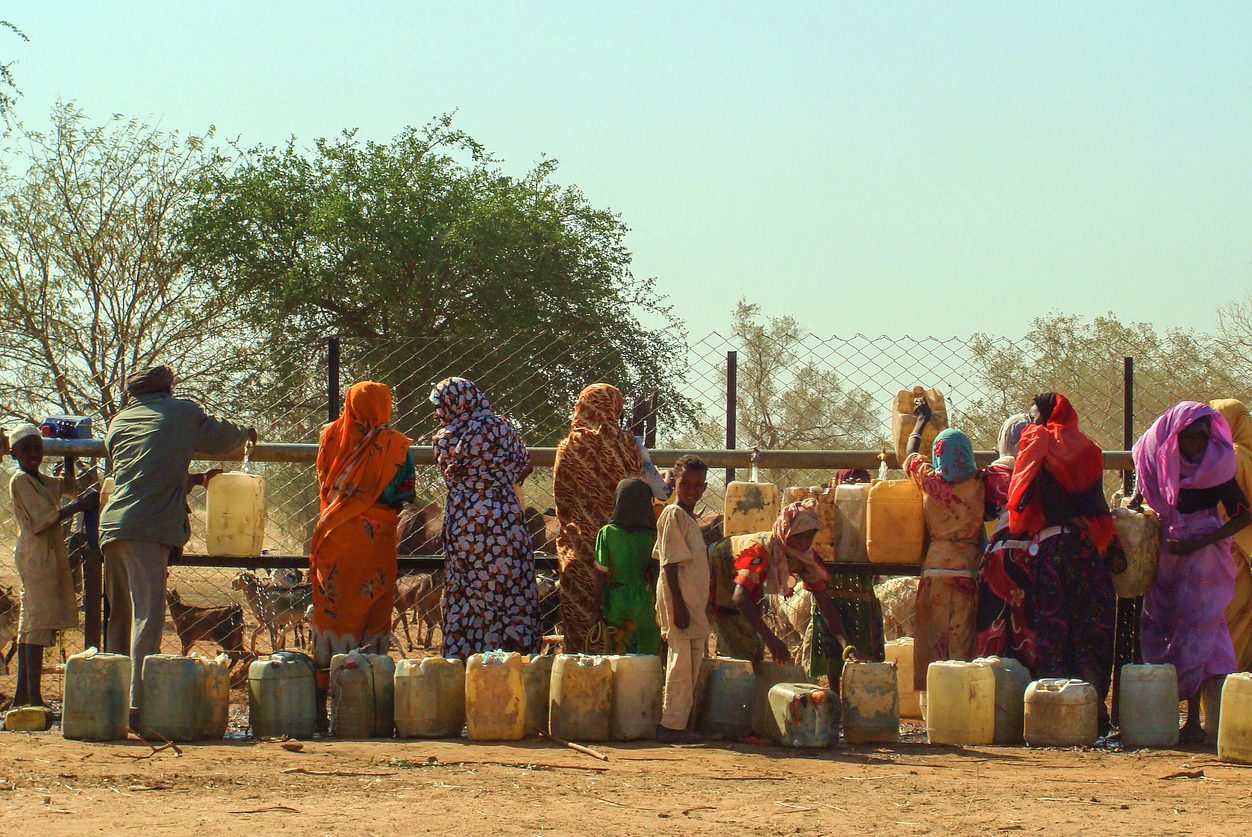
Between October 2023 and August 2024, the WASH cluster and UN agencies reported various estimates of average water access ranging between 2 to 9 liters per person per day, far below the 15 liters needed for survival according to international standards.[xix] In December 2023, the United Nations Children’s Fund (UNICEF) reported that recently displaced children in southern Gaza were “accessing only 1.5 to 2 litres of water each day.”[xx] According to OCHA and the CMWU, there was no access to potable water in northern Gaza between November 2023 and April 2024.[xxi]
Israeli authorities’ deprivation of water to the population of Gaza have likely contributed to thousands of deaths, in addition to the tens of thousands of Palestinians who have been killed directly in attacks in Gaza. These policies have also had additional consequences for pregnant women and their fetuses, breastfeeding women and their infants, and menstruating women.
Impacts on Women and Infants
Pregnant women
Limited access to safe water is a major problem for pregnant women in Gaza. Pregnant and breastfeeding women require more food and water than the average person.
Many pregnant women have reported dehydration and some have said they are only able to access highly saline water. Others spoke of being unable to wash themselves throughout their pregnancy. The lack of access to adequate nutrition, water, and sanitation has serious health consequences, particularly for pregnant women and girls and their children. Many health conditions may be caused or significantly worsened by such deprivation, including anemia, eclampsia, hemorrhage and sepsis, all of which can be fatal without proper medical treatment, which has been very hard to access in some parts of Gaza.
One man, interviewed in November of 2023, described how challenging it was for him to get water for his pregnant wife and four surviving children while his wife was in the hospital due to wounds from a missile attack that destroyed their home and killed one of their children.[xxii] “There was no water —we were buying water for example US$10 for a cup,” he said. “It was not drinkable sometimes. Sometimes it was from the bathroom and sometimes from the sea.”
Ridana Zukhra, 25, described her own journeys to get water while she was in her third trimester of pregnancy. “I would have to go daily, 2-2.5 hours walking just to get water… Sometimes I walked for 1 or even 3 hours and didn’t even find any water.”[xxiii] She said on most days during the war in Gaza while she was pregnant, she did not have access to water to wash herself or even her hands.[xxiv] She spent about a month at Shifa Hospital as a caregiver to her injured mother who was a patient there. She said the limited water at the hospital was restricted for medical purposes and for the medical workers and patients to use.
Insufficient and inadequate water and sanitation also contributes to the spread of water-borne diseases, viruses, and infections from unsanitary facilities like toilets, which can be particularly dangerous.[xxv] Dr. Naela Masri in Khan Younis said many pregnant patients of hers had contracted hepatitis A due to poor sanitation.[xxvi] She said they showed symptoms including severe vomiting, which she suspected in some cases had led to miscarriage.
Samira Hosny Qeshta, the midwife at al-Helal al-Emirati maternity hospital in Rafah, told the United Nations Population Fund (UNFPA) in early 2024: “Most of the women come with infections. The bathrooms are shared, and infections are easily transmitted. They can’t even change their underwear, and all of this contributes to infections.”[xxvii] One pregnant woman told a Canadian media outlet that she had caught infections from unsanitary toilets in the area to which she had fled.[xxviii]
One woman said that she spent 120 days while pregnant sheltering in a school in Tal al-Sultan refugee camp soon after the hostilities began.[xxix] During that time, she said she lived in a classroom with at least 50 other people, in a school that was housing thousands, with only one bathroom for everyone in the school. During those 120 days, she could never wash herself. She said that every four or five days, a vehicle with a tank of non-potable water would come to the school and people would buy any water left in the tank. Shaima said this was often the only water they had to drink, leading many, including her, to suffer from diarrhea and vomiting.
An emergency room nurse who volunteered in Gaza in May 2024, Abeerah Muhammed, stated that she had many patients she treated who had “toxic shock or septic shock because they had a disease and malnutrition and dehydration.”[xxx] She said that to treat toxic shock, the first course of action is usually to “give [the patient] a massive amount of fluids to flush out the toxins,” but that this “just wasn’t possible with the resources we had.” She also added that when they monitored the baby’s heartbeat in these cases, it would often be very slow, and that the mothers often also had low blood pressure, which she said were both indicators of dehydration.
Post-partum women
Médecins Sans Frontières (MSF, Doctors Without Borders) also described some of the challenges that pregnant and breastfeeding women in Gaza are facing in maintaining personal hygiene without access to adequate water or sanitation.[xxxi] “Dealing with post-partum bleeding, which can last for many weeks after birth, is a further difficulty for women living in displacement sites, where water is scarce and maintaining personal hygiene is a challenge,” the organization said in a report in April 2024.
Breastfeeding women & infants
In extreme cases, breastfeeding mothers did not have the ability to breastfeed due to malnutrition and dehydration, leaving them to feed infants formula mixed with dirty water.[xxxii] Nurse Muhammed also described seeing many pregnant women who were dehydrated, causing their fetuses’ heartbeats to slow down.[xxxiii] She said that many pregnant women also came in with toxic shock or septic shock due to a combination of disease and malnutrition.
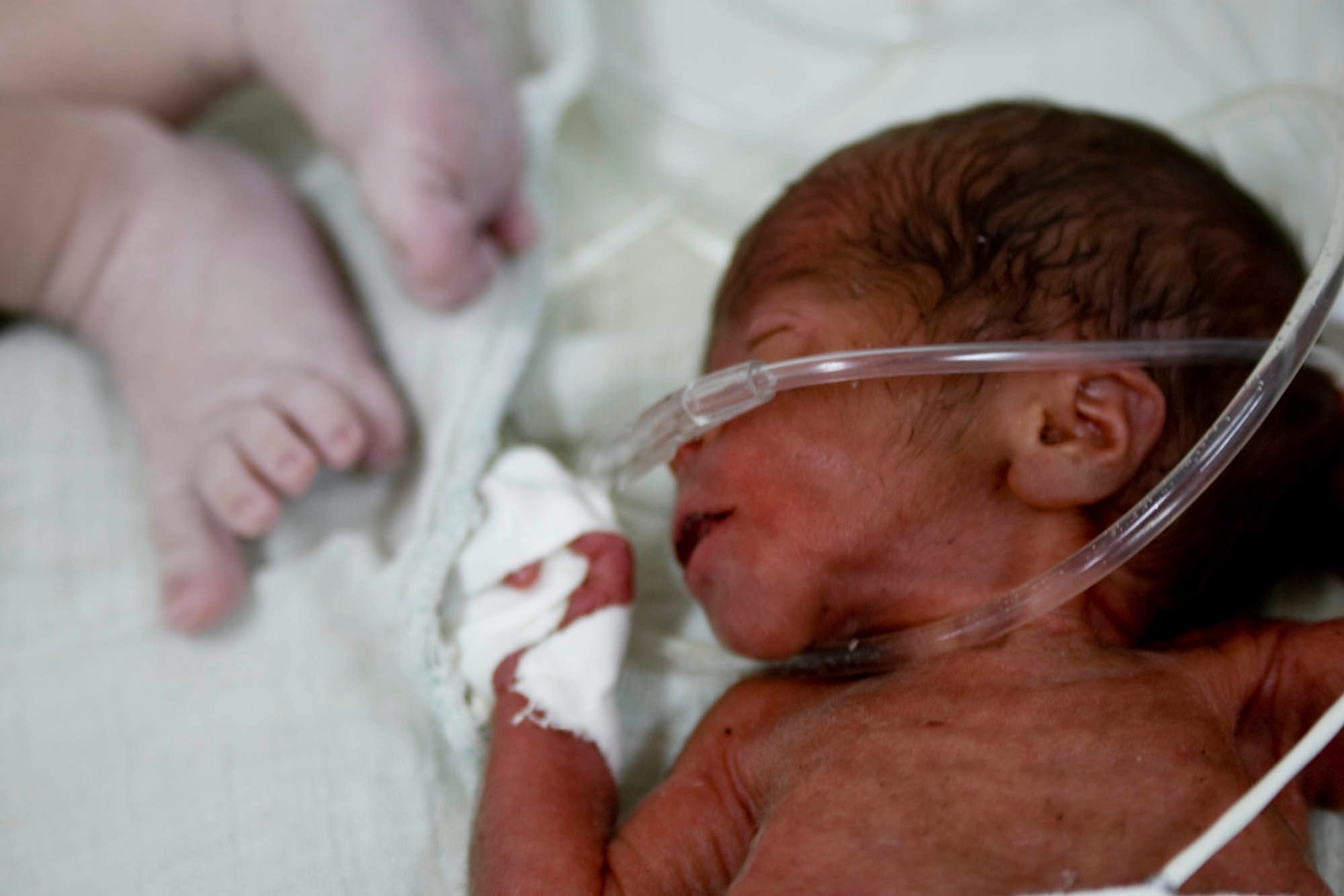
Several doctors and nurses described seeing large numbers of infants suffering from malnutrition, dehydration, and infection within their first few months of life, in some cases leading to death.[xxxiv]
In their April 2024 report, MSF discussed the challenges that the lack of clean water presented to women who were feeding their children formula due to difficulties breastfeeding, stating “formula milk is not easily available, nor is drinking water to mix it with or to properly clean the bottles.”[xxxv]
The report also stated that the lack of clean water in Gaza as well as the low availability of formula meant that feeding babies formula was “extremely precarious.”
One man described this problem, saying that his sister had to feed her 1.5-year-old daughter with formula mixed with water that was dirty and making the rest of the family sick. He said that the formula simply “wouldn’t mix” with the water.[xxxvi]
In an October 2024 letter to the Biden administration, 99 American healthcare workers who had volunteered in Gaza stated that they “watched malnourished new mothers feed their underweight newborns infant formula made with poisonous water.”[xxxvii]
Taha was one of these healthcare workers. She described in the letter seeing babies die “every day.”[xxxviii] “They had been born healthy. Their mothers were so malnourished that they could not breastfeed, and we lacked formula or clean water to feed them, so they starved.”
Menstruating women
Access to water and to safe sanitation facilities is essential for women and girls managing their menstrual hygiene. When those needs are unmet it can lead to serious infections, including hepatitis B and thrush.[xxxix]
According to UNFPA and UN Women, as of January 2024, there were 690,000 menstruating women and girls in Gaza, “all of whom [were] facing limited access to menstrual hygiene products in addition to inadequate WASH facilities.”[xl] UN Women reported in April 2024 that overcrowded shelters with inadequate WASH facilities “exposes [menstruating women and girls] to reproductive and urinary tract infections as a result of being unable to adequately wash or keep hygiene products clean.”[xli] They added that “Daily trips in search of a bathroom and toilet poses protection risks, as women look for a minimum of water, privacy and dignity.”[xlii]
Violations of International Law
Human Rights Watch found that Israeli policies to deprive Palestinians in Gaza of water amount to the intentional creation of conditions of life calculated to bring about the destruction of part of the civilian population of Gaza. Israeli authorities were responsible for the deliberate destruction of water and sanitation infrastructure, the prevention of repairs to damaged water and sanitation infrastructure, and the cutting off or severe restrictions on water, electricity and fuel, which have likely caused thousands of deaths, that is, a mass killing, and will likely continue to cause deaths into the future. As a state policy, these acts constitute a widespread or systematic attack directed against a civilian population. Israeli officials are therefore committing the crime against humanity of extermination.
Human Rights Watch found that Israeli authorities’ policies also amount to an “act of genocide” under the Genocide Convention of 1948.
[i] UN-Water Decade Programme on Advocacy and Communication and Water Supply and Sanitation Collaborative Council, “The Human Right to Water and Sanitation,” Media Brief, n.d., https://www.un.org/waterforlifedecade/pdf/human_right_to_water_and_sanitation_media_brief.pdf (accessed September 28, 2024).
[ii] World Health Organization, “How much water is needed in emergencies,” July 2013, https://cdn.who.int/media/docs/default-source/wash-documents/who-tn-09-how-much-water-is-needed.pdf (accessed November 14, 2024); see also “Water Supply, Sanitation and Hygiene Promotion” in Sphere Handbook, “Humanitarian Charter and Minimum Standards in Humanitarian Response,” 2018, https://handbook.spherestandards.org/en/sphere/#ch006 (accessed November 26, 2024).
[iii] Action Aid, “Pregnant women in Gaza deprived of food and water as mothers unable to feed their newborn babies,” December 21, 2023, https://actionaid.org/news/2023/pregnant-women-gaza-deprived-food-and-water-mothers-unable-feed-their-newborn-babies#:~:text=Yet%2C%20in%20addition%20to%20the,themselves%20and%20their%20babies%20healthy (accessed August 29, 2024); UN Women, “Scarcity and Fear: A Gender Analysis of the Impact of the War in Gaza on Vital Services Essential to Women’s and Girls’ Health, Safety, and Dignity – Water, Sanitation and Hygiene (WASH),” April 2024, https://www.unwomen.org/sites/default/files/2024-04/gender-alert-gender-analysis-of-the-impact-of-the-war-in-gaza-on-vital-services-essential-to-womens-and-girls-health-safety-en.pdf (accessed August 30, 2024).
[iv] Human Rights Watch, Israel-Palestine–A Threshold Crossed: Israeli Authorities and the Crimes of Apartheid and Persecution, April 17, 2021, https://www.hrw.org/report/2021/04/27/threshold-crossed/israeli-authorities-and-crimes-apartheid-and-persecution.
[v] Human Rights Watch, Israel-Palestine–A Threshold Crossed: Israeli Authorities and the Crimes of Apartheid and Persecution, April 17, 2021, https://www.hrw.org/report/2021/04/27/threshold-crossed/israeli-authorities-and-crimes-apartheid-and-persecution.
[vi] OCHA, “Today’s top news: Occupied Palestinian Territory,” July 25, 2024, https://www.unocha.org/news/todays-top-news-occupied-palestinian-territory-12 (accessed September 12, 2024).
[vii] OCHA, “Electricity in the Gaza Strip,” n.d., https://www.ochaopt.org/page/gaza-strip-electricity-supply (accessed August 28, 2024). Egyptian power lines provided 5 megawatts beginning in 2006, and up to 28 megawatts until 2018, when electricity supply to Gaza was cancelled.Sara Seif Eddin, “Gaza siege: years of darkness,” Mada Masr, November 24, 2023, https://www.madamasr.com/en/2023/11/24/feature/politics/gaza-siege-years-of-darkness/ (accessed September 3, 2024).
[viii] Gisha, “The Gaza electricity crisis – FAQs,” June 19, 2017, https://gisha.org/en/blogs-the-gaza-electricity-crisis-faqs/ (accessed August 28, 2024).
[ix] Rachel Wilson, Lou Robinson, and Amy O’Kruk, “Fuel is a vital lifeline in resource-strapped Gaza. Here’s why,” CNN, October 30, 2023, https://www.cnn.com/2023/10/30/middleeast/fuel-gaza-crisis-map-dg/index.html (accessed August 28, 2024).
[x] Gisha, “Hands on the Switch,” January, 2017, https://gisha.org/en/blogs-hand-on-the-switch/ (accessed August 27, 2024).
[xi] Emanuel Fabian, “Defense minister announces ‘complete siege’ of Gaza: No power, food or fuel,” The Times of Israel, October 9, 2024, https://www.timesofisrael.com/liveblog_entry/defense-minister-announces-complete-siege-of-gaza-no-power-food-or-fuel/ (accessed August 26, 2024); Hadas Gold, Eyad Kourdi, Jonny Hallam, Ibrahim Dahman, Helen Regan, Tara John, “Israeli defense minister orders ‘complete siege’ of Gaza, as Hamas threatens hostages,” CNN, October 9, 2024, Israeli defense minister orders ‘complete siege’ of Gaza, as Hamas threatens hostages | CNN (accessed August 26, 2024); “‘Barely a drop to drink’: children in the Gaza Strip do not access 90 per cent of their normal water use,” UNICEF, press release, December 19, 2023, https://www.unicef.org/lac/en/press-releases/barely-drop-drink-children-gaza-strip-do-not-access-90-cent-their-normal-water-use#:~:text=According%20to%20humanitarian%20standards%2C%20the,is%203%20litres%20per%20day
(accessed September 12, 2024); Universal Declaration of Human Rights (UDHR), adopted
December 10, 1948, G.A. Res. 217A(III), U.N. Doc. A/810 at 71
(1948); “Interview: Building the Evidence for Crimes Committed in Israel on October 7”, Human Rights Watch interview, January 31, 2024, https://www.hrw.org/news/2024/01/31/interview-building-evidence-crimes-committed-israel-october-7.
[xii] Tal Schneider, “Israel cuts electricity supply to Gaza,” The Times of Israel, October 7, 2023, https://www.timesofisrael.com/liveblog_entry/israel-cuts-electricity-supply-to-gaza/ (accessed August 28, 2024)
[xiii] The end of the research period for the report, Extermination and Acts of Genocide, for which this research was conducted.
[xiv] UNRWA, “A matter of life and death: water runs out for 2 million people in Gaza,” October 14, 2023, https://www.unrwa.org/newsroom/official-statements/matter-life-and-death-water-runs-out-2-million-people-gaza (accessed August 28, 2024).
[xv] Gisha, “Timeline of restrictions on entry of fuel into Gaza,” December 26, 2023, https://gisha.org/en/graph/1-timeline-of-restrictions-on-entry-of-fuel-into-gaza/ (accessed August 28, 2024); Rachel Wilson, Lou Robinson and Amy O’Kruk, “Fuel is a vital lifeline in resource-strapped Gaza. Here’s why,” CNN, October 30, 2023, https://www.cnn.com/2023/10/30/middleeast/fuel-gaza-crisis-map-dg/index.html (accessed August 28, 2024).
[xvi] OCHA, “Hostilities in the Gaza Strip and Israel | Flash Update #25,” October 31, 2024, https://www.ochaopt.org/content/hostilities-gaza-strip-and-israel-flash-update-25 (accessed August 28, 2024). See also Amnesty International, “Israel/OPT: Israel must lift illegal and inhumane blockade on Gaza as power plant runs out of fuel,” October 12, 2023, https://amnesty.ca/human-rights-news/israel-opt-israel-must-lift-illegal-and-inhumane-blockade-on-gaza-as-power-plant-runs-out-of-fuel/ (accessed August 28, 2024); Ruby Mellen and Szu Yu Chen, “See how Israel’s siege has plunged Gaza into darkness and isolation,” The Washington Post, October 30, 2023, https://www.washingtonpost.com/world/2023/10/26/gaza-israel-siege-blackout-isolation/ (accessed August 28, 2024).
[xvii] Human Rights Watch interviews with Lama Abdul Samad, Oxfam International, via Microsoft Teams, January 11, 2024; two WASH response actors (names withheld), via Microsoft Teams, January 24, 2024 and February 12, 2024.
[xviii] OCHA, “Hostilities in the Gaza Strip and Israel | Flash Update #39,” November 14, 2023, https://www.unocha.org/publications/report/occupied-palestinian-territory/hostilities-gaza-strip-and-israel-flash-update-39 (accessed August 28, 2023).
[xix] Oxfam, “Water War Crimes: How Israel has weaponised water in its military campaign in Gaza,” July 18, 2024, https://oxfamilibrary.openrepository.com/bitstream/handle/10546/621609/bp-water-war-crimes-180724-en.pdf?sequence=1 (accessed December 2, 2024); State of Palestine WASH Cluster, “The National WASH Cluster Minutes of Meeting,” April 17, 2024, copy on file with Human Rights Watch: “3-7 liters [of water[ is the median to average available water per person daily for IDPs in Rafah/Gaza;” State of Palestine WASH Cluster, “Notes: WASH Situation Update May 31st,” May 31, 2024, copy on file with Human Rights Watch: “Currently, water availability ranges from 2 to 9 liters per capita per day, a significant reduction from the pre-October level of 85 liters per day;” OCHA, “Humanitarian Situation Update #199 | Gaza Strip,” August 2, 2024, https://www.ochaopt.org/content/humanitarian-situation-update-199-gaza-strip (accessed December 2, 2024): “Field observations and site visits by WASH partners suggest that the range of water availability and consumption in the Gaza Strip is between two and nine litres per capita per day;” WHO, “How much water is needed in emergencies,” July 2013, https://cdn.who.int/media/docs/default-source/wash-documents/who-tn-09-how-much-water-is-needed.pdf, (accessed November 14, 2024). As a result of challenges due to the hostilities and Israeli restrictions placed on humanitarian access, as well as the continuous forced displacement of the population, UN agencies and INGOs focused on providing water and sanitation were unable to conduct a comprehensive study to assess water access across the whole of Gaza between October 2023 and August 2024.
[xx] “‘Barely a drop to drink’: children in the Gaza Strip do not access 90 per cent of their normal water use,” UNICEF, press release, December 20, 2023, https://www.unicef.org/press-releases/barely-drop-drink-children-gaza-strip-do-not-access-90-cent-their-normal-water-use (accessed November 26, 2024).
[xxi] Human Rights Watch interview with CMWU employee 1, via phone, January 16, 2024. According to OCHA, there was “no access to clean water in northern governorates” as of November 13, OCHA, “Hostilities in the Gaza Strip and Israel – reported impact | Day 38,” November 13, 2023, https://www.ochaopt.org/content/hostilities-gaza-strip-and-israel-reported-impact-day-38?_gl=1*1g83ujd*_ga*OTMxMDE3MDkuMTcwODk1NTQ3Mw..*_ga_E60ZNX2F68*MTcwOTczMDUxOS42LjEuMTcwOTczMjM3OS4yOC4wLjA (accessed August 27, 2024); OCHA, “Hostilities in the Gaza Strip and Israel – reported humanitarian impact, 12 April 2024 at 15:00,” April 12, 2024, https://www.unocha.org/publications/report/occupied-palestinian-territory/hostilities-gaza-strip-and-israel-reported-humanitarian-impact-12-april-2024-1500 (accessed November 14, 2024).
[xxii] Human Rights Watch interview with Omar (a pseudonym), via phone, November 21, 2023.
[xxiii] Human Rights Watch interview with Ridana Zukhra, Qatar, June 28, 2024.
[xxiv] Human Rights Watch interview with Ridana Sabaa Rajab Zukhra, Doha, June 28, 2024.
[xxv] “Impossible choices in Gaza: ‘Women are giving birth prematurely because of terror,’” UNFPA, February 23, 2024, https://www.unfpa.org/news/impossible-choices-gaza-%E2%80%9Cwomen-are-giving-birth-prematurely-because-terror%E2%80%9D (accessed October 30, 2024).
[xxvi] Hepatitis A is an inflammation of the liver caused by ingesting food or water that is contaminated with the feces of an infected person. Human Rights Watch remote interview with Dr. Masri, head of nursing and primary care, Nasser Hospital in Khan Younis, Sept 24, 2024.
[xxvii] “Impossible Choices in Gaza: ‘Women Are Giving Birth Prematurely Because Of Terror,’” UNFPA, February 23, 2024, https://www.unfpa.org/news/impossible-choices-gaza-%E2%80%9Cwomen-are-giving-birth-prematurely-because-terror%E2%80%9D (accessed October 29, 2024).
[xxviii] Chris Brown and Mohamed El Saife, “Women in Gaza Giving Birth Without Enough Painkillers, Clean Water or Food,” CBC, March 15, 2024, https://www.cbc.ca/news/world/women-gaza-birth-pregnancies-1.7143489 (accessed October 30, 2024).
[xxix] Human Rights Watch interview with Shaima Suhail Abu Jazar, Doha, June 28, 2024.
[xxx] Human Rights Watch interview with Abeerah Muhammed, via Microsoft Teams, August 14, 2024.
[xxxi] MSF, “Gaza’s Silent Killings: The destruction of the healthcare system and the struggle for survival in Rafah,” April 2024, https://msf.org.pt/wp-content/uploads/sites/4/2024/04/MSF-GazaSilentKillings-Full-Report_ENG_April-2023-1.pdf (accessed August 29, 2024).
[xxxii] Human Rights Watch interviews with Asma Taha, via Microsoft Teams, August 9, 2024, and MSF employee, via Microsoft Teams, August 16, 2024.
[xxxiii] Human Rights Watch interview with Abeerah Muhammed, via Microsoft Teams, August 14, 2024.
[xxxiv] Human Rights Watch interviews with Asma Taha, via Microsoft Teams, August 9, 2024; Abeerah Muhammed, via Microsoft Teams, August 14, 2024; Dr. Hussam Abu Safiyeh, Kamal Adwan hospital, via phone, August 13, 2024; MSF employee, via Microsoft Teams, August 16, 2024.
[xxxv] MSF, “Gaza’s Silent Killings: The destruction of the healthcare system and the struggle for survival in Rafah,” April 2024, https://msf.org.pt/wp-content/uploads/sites/4/2024/04/MSF-GazaSilentKillings-Full-Report_ENG_April-2023-1.pdf (accessed August 29, 2024).
[xxxvi] Human Rights Watch interview with Abdulhafith Faisal al-Khalidi, Doha, Qatar, June 25, 2024.
[xxxvii] Gaza Healthcare Letters, “Letter to President Biden and Vice President Harris,” October 2, 2024, https://www.gazahealthcareletters.org/usa-letter-oct-2-2024 (accessed November 29, 2024).
[xxxviii] Ibid.
[xxxix] World Bank Group, “Menstrual Health and Hygiene,” May 12, 2022, https://www.worldbank.org/en/topic/water/brief/menstrual-health-and-hygiene (accessed September 12, 2024).
[xl] UNFPA, “UNFPA Palestine Situation Report #5 – 24 January 2024,” February 2024, https://www.unfpa.org/resources/unfpa-palestine-situation-report-5-24-january-2024 (accessed September 13, 2024); UN Women, “Scarcity and Fear: A Gender Analysis of the Impact of the War in Gaza on Vital Services Essential to Women’s and Girls’ Health, Safety, and Dignity – Water, Sanitation and Hygiene (WASH),” April 2024, https://www.unwomen.org/sites/default/files/2024-04/gender-alert-gender-analysis-of-the-impact-of-the-war-in-gaza-on-vital-services-essential-to-womens-and-girls-health-safety-en.pdf (accessed September 13, 2024).
[xli] UN Women, “Scarcity and Fear: A Gender Analysis of the Impact of the War in Gaza on Vital Services Essential to Women’s and Girls’ Health, Safety, and Dignity – Water, Sanitation and Hygiene (WASH),” April 2024, https://www.unwomen.org/sites/default/files/2024-04/gender-alert-gender-analysis-of-the-impact-of-the-war-in-gaza-on-vital-services-essential-to-womens-and-girls-health-safety-en.pdf (accessed September 13, 2024).
[xlii] Ibid.