Modern famines are man-made. That’s a simple maxim. But when did it become true and why?
The World Peace Foundation’s historic famines dataset points us to some explanations.
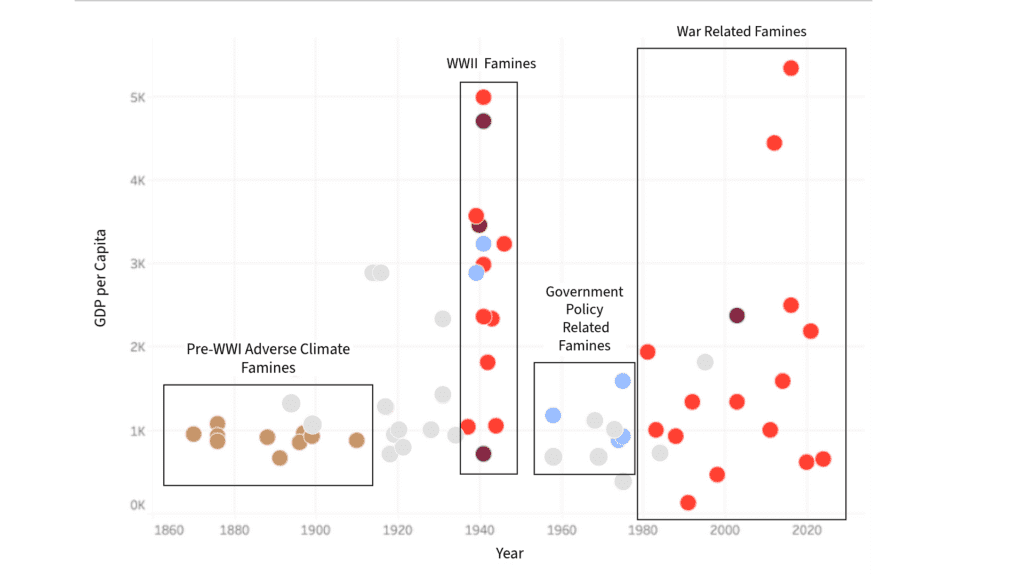
Figure 1 plots the famines in the dataset from 1870 to 2025 by GDP per capita (US$ at 2011 prices). They are color-coded according to their principal cause (the immediate trigger): adverse climate or other natural factors (16 cases), armed conflict (36 cases), government policies (11 cases), or genocide (5 cases).
Figure 1: Main proximate causes of famine 1870-2025 by GDP per capita

Sources: WPF famines dataset; GDP figures from World Bank, Our World in Data and Statista. Note that 11 famines are missing from the earlier period where GDP estimates aren’t available.
We can see several trends and patterns in the data: the predominance of natural disaster as a major cause in the years before World War One; the big cluster of World War Two famines; government policy famines in the middle part of the 20th century (mostly caused by communist collectivization); the recent predominance of war-related famines.
Figure 2: Proximate causes clusters of famine 1870-2025 by GDP per capita
Zoom in more closely on those caused by adverse climate and something else becomes clear.
Figure 3: Natural calamity-caused famines 1870-2025 by GDP per capita

Sources: as above.
There’s a cut-off. While most famines (of all causes) strike poorer countries, all of the natural calamity famines struck countries with a GDP per capita (in 2011 US$) below $1100.
Of the 220 countries that have good official data for GDP per capita today, all have surpassed this threshold. The exceptions include Somalia (approx. $650), South Sudan ($250) and Yemen ($350), all of which are chronically on the edge of famine.
There’s a simple lesson from this: economic growth over the last 100 years has pulled almost every country above the line where famines are triggered by natural calamity.
The worldwide tipping point for countries passing the threshold was in the 1980s; the last famines triggered by drought struck that decade. That’s history. But now in some countries, war and misgovernment have pulled some countries down into the danger zone.