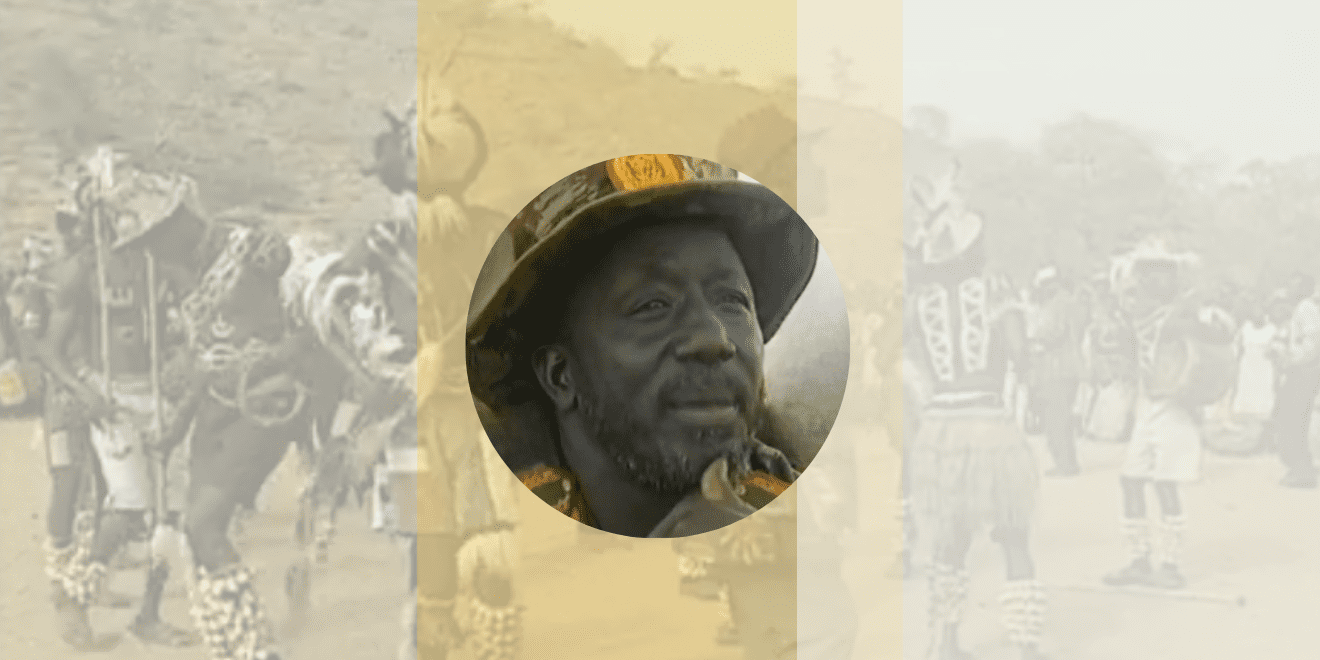
Twenty-five years ago today, Yousif Kuwa Mekki died in a hospital in Norwich, UK, of cancer. He was fifty-five years old. For 15 years he had led the division of the Sudan People’s Liberation Movement in the Nuba Mountains, just north of the internal boundary between northern and southern Sudan. Yousif did not live to see the 2002 ceasefire and the 2005 Comprehensive Peace Agreement, which opened a too-brief period of calm and the promise of peace with respect for the Nuba peoples.
The Nuba are an embodiment of diversity in a country that was, under successive ethno-nationalist and Islamist governments, trying to impose a monolithic identity on Sudan. Consisting themselves of about 40 different ethnicities, with greater diversity among the indigenous languages than the entirety of Africa south of the equator, including followers of traditional spiritual beliefs, Islam and Christianity, practitioners of spectacular cultural traditions including music, dance, and body art, the Nuba were justifiably proud of themselves, but also the target of chauvinist, supremacist values from those in power.
Yousif was an embodiment of another tradition also political activism among students, professionals and military cadets. Sudan’s first nationalist movement – the White Flag League of the early 1920s – had been birthed by young non-commissioned officers who argued that the country was entitled to the right of self-determination, enshrined in the Covenant of the League of Nations. Its leader, Ali Abdel Latif, was the child of a Nuba father and a Dinka mother, who disavowed tribalism. The heirs of this tradition agitated for independence, for an end to military rule, for peace in southern Sudan, for respect for Sudan’s diversity – and for its identity as an African country.
Yousif was among them. He was a student activist, and part of a generation that joined the armed movements fighting against the autocracy in Khartoum. They took up the gun because they saw no alternative, and because they believed that practicing a liberation struggle could in itself be part of emancipation. This was a generation prepared to sacrifice, its members united in their confidence that there was a bright future for a transformed nation. Yousif had a profound personal identification with his own people.
Yousif’s values — love of his people, belief in a cause, faith in Sudan’s future —now seem all but extinguished in that country’s turmoil and bloodshed.
What remains today are military machines fighting for position in the ruins of a country, their commanders distinguished not by what they believe in but by what they are prepared to destroy.
Along with other students, Yousif founded a cultural organization, Komolo, to give the Nuba pride in their traditions. As a candidate for elected office in the early 1980s, he traversed the mountains on foot and bicycle, winning a seat in the regional assembly in El Obeid and soon after being elected deputy speaker – despite getting 24 votes more than the speaker, an Arab. This foray into political life, he said, was ‘very disappointing. We saw there was no headway. On the contrary, we were accused of being racist. I joined the SPLA for an equal share of wealth and power’ – and to struggle for a New Sudan: democratic, multiethnic, secular, dedicated to bettering the lot of the marginalized.
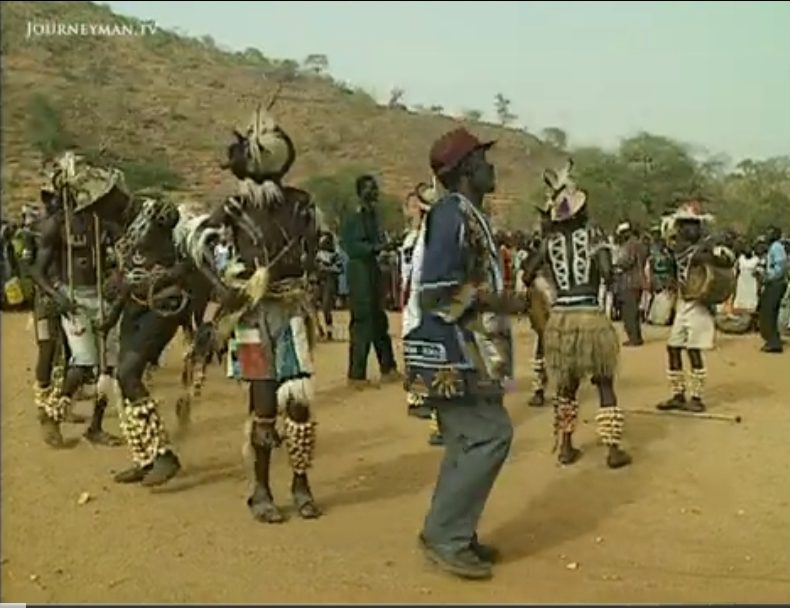
Today, when rebel groups are associated with criminalized economies and predation on local communities, the practices of grassroots democracy in the SPLM-administered areas of the Nuba Mountains in the 1990s and 2000s seem to be from a different world. Under Yousif, the SPLM instituted local self-government. People elected their own village leaders, district representatives, and county administrators. They set up a teachers’ training college and a nursing school. Soldiers who abused civilians were brought to court. In the earliest days, some were shot.
Religious tolerance was not merely proclaimed but practised. The SPLM convened one of the first interfaith conferences in wartime Sudan, which sanctioned marriage between Muslims and Christians. It campaigned against female circumcision and in favor of women’s rights. Traditional wrestling – which had been banned by Khartoum – was promoted and became a symbol of the Nuba’s determination to protect their customs.
Yousif provided shelter for northern Sudanese who had joined the SPLA, believing in the same vision but politically orphaned when the southern SPLA fragmented, becoming tribalized and separatist. Under his leadership, the Nuba Mountains became the political home of the New Sudan idea in a practical form. After Yousif’s death, Garang admitted as much: ‘We had the idea of the New Sudan,’ he said, ‘but Yousif implemented it before we did.’
Six months after Yousif died, I met with President George W. Bush’s newly-appointed special envoy for Sudan, Senator Jack Danforth. He was keen to know where he could test out the willingness of government and SPLA to move towards a peace deal. He wanted to try a ceasefire, but was wary because the SPLA in southern Sudan was so fragmented and ill-disciplined. I proposed that the Nuba Mountains could be a place to begin, because the forces there were unified, well-disciplined, and under a leadership committed to the welfare of the people. And just a few months after that, Danforth convened talks in Switzerland that led to precisely that – a ceasefire that, under the monitoring of a small but highly effective Norwegian military team, silenced the guns and opened the roads.
The 2005 Comprehensive Peace Agreement left the Nuba’s status unresolved: a protocol granted only a ‘popular consultation’ with limited authority. This would make sense if Sudan were to remain united, but if the southerners were to take their independence – which was becoming inevitable in the wake of the death of John Garang, the unionist founder and leader of the SPLM – then the Nuba SPLM and its fighters would find themselves stranded on the northern side of the new border.
For reasons that I find utterly baffling fifteen years later, none of the sponsors of the CPA – the U.S., the United Nations, neighboring African states – took this problem seriously. I spent the weeks before the war erupted in the state capital, Kadugli, shuttling between the governor and his deputy. The governor was Ahmed Haroun, leading member of the ruling National Congress Party, infamous for his leading role in orchestrating mass killing in Darfur, but also a capable operator who was well aware of the explosive potential of a new war in the Nuba Mountains. His deputy was Abdel Aziz al-Hilu, who had taken over the leadership of the SPLM in the Nuba Mountains on the death of Yousif and who knew not only that a new war was on the cards – but that it would be utterly devastating. I wrote a memo to the African Union, UN and international diplomats forecasting a war on June 1, 2011. It happened on June 5.
For fifteen years, the Nuba have again been subjected to aerial bombardment, ground attacks, humanitarian strangulation and hunger. They have again shown themselves capable of stalwart defense and of running a capable local administration. But the spirit of hope has faded. People are interested in survival only.
When the democratic opening came in 2019 — with the popular uprising that brought down the regime of Omar al-Bashir — the SPLM-North should have been well placed to shape what came next. It had the clearest political vision, the most sustained record of democratic institution-building, and the deepest claim to the New Sudan idea the revolution was invoking. But it could not take advantage. During the war the movement had split, and at the moment when decisive, unified action was most needed to support the democratic transition, neither Abdel Aziz nor his former comrades with their own groups were capable of bringing their political weight to Khartoum.
Back in the 1980s and 1990s, the SPLM Nuba Division had fought against the Khartoum establishment and its militias. Again, from 2011 it had fought the regime including its new merciless, tribalized counterinsurgency vanguard, the Rapid Support Forces led by Mohamed Hamdan Dagolo, known as ‘Hemedti’. In fact, when President Omar al-Bashir formalized the RSF, one if its first operations was to attack the Nuba.
The April 2023 war put the SPLM-North in a corner. It deeply distrusted the Sudan Armed Forces. It had every reason to hate the RSF too. In the early weeks of the war, the RSF committed genocide against the Masalit people of western Darfur. The Masalit have much in common with the Nuba and there is even a branch of the tribe who live alongside them. Al-Hilu’s mother is Masalit. Yet al-Hilu decided that he would join the RSF leader, ‘Hemedti’, in a political and military alliance. Just last week their joint forces attacked and occupied the town of Kurmuk, close to the Ethiopian border, in a major escalation of the war.
This is no war of visions, no struggle for a transformation of Sudan. It’s a choice among bad options, a war fought because that has become the way of political life in Sudan. There are friends and enemies of the day, because there is war. Whatever cause might have sparked the conflict is forgotten, or if it is remembered, it is irrelevant. It’s a fight for who owns what part of the rubble.
The political and economic constraints under which al-Hilu and others are fighting gives them precious few options. They are trapped in a vise: one jaw is the collapse in state institutions and the resources that can sustain them, the other is the rising cost of a war machine and the need to beg foreign sponsors for the money and arms needed. Under Yousif, the SPLM in the Nuba Mountains could organize and fight with only the support of the people and a trickle of outside aid. Today communities are hungrier and poorer and the war effort needs drones, vehicles, fuel and funds to pay whoever will turn up to fight.
But leadership still counts. Twenty five years after the death of Yousif Kuwa, on 31 March 2001, his legacy matters. His values – democratic values and a spirit of human solidarity – must be defended. Countries that still believe in these norms should be advocating for them in Sudan rather than standing on the sidelines, wringing their hands and letting the warlords prevail.