There are moments in history when institutions are not merely bureaucratic creations but expressions of political conviction. The African Union High-Level Implementation Panel (AUHIP) was born in such a moment.
To understand the significance of the AUHIP experience—and why its lessons matter urgently today—it is necessary to recall the Africa that gave rise to it.
The AUHIP emerged at the zenith of a remarkable era in which the continent’s organizations were invigorated: the transformation of the Organisation of African Unity into the African Union, the emergence of NEPAD, and the construction of the African Peace and Security Architecture. Across Africa, leaders, intellectuals, diplomats, liberation veterans, civic formations, and policy thinkers were engaged in profound reflection on Pan-Africanism and African agency in a changing world.
This was not merely institutional reform. It was an attempt to redefine Africa’s political destiny.
New norms and principles were adopted. The Peace and Security Council was established. Mediation became a strategic political instrument rather than an ad hoc diplomatic exercise. The “primacy of politics” was embraced as a guiding doctrine for conflict prevention and resolution. Africa committed itself, at least normatively, to leave no conflict unattended.
The phrase “African solutions to African problems” was widely invoked during this period. Unfortunately, it is often misunderstood today. It never meant excluding international actors or retreating into continental isolation. Rather, it meant that Africans themselves had to assume responsibility for defining the political nature of their crises and shaping the frameworks for their resolution. International partnership remained essential, but African political ownership had to provide the strategic direction.
Sudan became one of the first and most consequential tests of this new African doctrine.
The Darfur conflict erupted in 2003 just as the African Peace and Security Architecture was taking shape. Indeed, Darfur was among the earliest agenda items confronted by the newly established PSC of the AU, leading to the adoption of several far-reaching decisions, including the deployment of a mission to protect civilians and oversee the ceasefire reached among the belligerents, as well as the launching of a political process to achieve a lasting settlement. At that moment, the crisis was being actively defined externally—by international advocacy groups, humanitarian campaigns, major powers, and competing geopolitical narratives. The dominant global framing of Darfur as genocide shaped international diplomacy, which resulted in the referral of the Sudan situation to the International Criminal Court and the indictment, years later, of President Omar al-Bashir But the AU recognized something important: unless Africa itself defined the political character of the crisis, it would never be able to contribute meaningfully to its resolution.
That was the significance of the July 2008 PSC decision to establish the African Union High-Level Panel on Darfur (AUPD). Chaired by former President Thabo Mbeki of South Africa and composed of former President Abdulsalami Abubakar of Nigeria and former President Pierre Buyoya of Burundi, the Panel later evolved into the African Union High-Level Implementation Panel (AUHIP).
The Panel’s first and most important decision was deceptively simple: it resolved to define the problem.
I remember vividly how seriously this was taken. Defining the problem was not treated as a rhetorical exercise. It was understood as the very foundation of mediation itself. A wrongly defined conflict inevitably produces a wrongly designed peace process.
The Panel therefore embarked upon one of the most extensive consultative exercises ever undertaken in African mediation. For more than forty days, it travelled throughout Darfur, speaking with people from all walks of life: armed movements, displaced communities, tribal leaders, women’s groups, civil society organizations, intellectuals, native administrations, youth groups, religious leaders, and ordinary citizens.
This was not diplomacy confined to hotels and conference halls. It was political listening as method.
The consultations were enabled by the joint AU–United Nations peacekeeping operation, UNAMID, particularly through the Darfur-Darfur Dialogue and Consultation mechanism. At the time, I was serving within the political structures supporting these processes and was directly involved in coordinating aspects of this engagement before later being seconded fully to the Panel itself, where I eventually served as Chief of Staff.
The experience shaped me profoundly.
What struck me most was the seriousness with which mediation was approached—not as technical facilitation, but as political responsibility. The Panel assembled exceptionally competent African and international experts who worked collectively to support a political process rooted in African norms, principles, and institutional legitimacy. There was a belief that mediation required intellectual depth, historical understanding, political sensitivity, and strategic patience.
And above all, there was humility before the complexity of Sudan itself.
The consultations ultimately produced a definition of the Darfur crisis that differed significantly from prevailing international narratives. The Panel concluded that Darfur was not an isolated problem detached from Sudan’s wider political history. It was “the Sudanese crisis in Darfur.” In other words, Darfur reflected deeper structural failures of governance, marginalization, exclusion, unequal development, and the unresolved management of diversity within the Sudanese state.
This distinction mattered enormously because it changed the logic of conflict resolution itself.
If Darfur was fundamentally a Sudanese political crisis, then the solution could not be reduced merely to humanitarian management, military containment, or negotiations among armed actors. There could be no stand-alone solution for Darfur. It required a broader political transformation of Sudan.
The Panel also proposed one of the most innovative recommendations in African mediation at the time: the establishment of a hybrid court to address questions of justice and accountability. But the Sudanese government hesitated to embrace this aspect of the recommendations. This reluctance proved consequential.
When the report was presented to a special summit of the PSC in Abuja in October 2009, the discussions among African heads of state were remarkable. Several leaders argued that for the first time, Africa had produced its own coherent political definition of a major continental conflict and that the methodology itself should guide future African conflict resolution efforts.
The AUHIP pivoted from the Darfur file toward another historic responsibility: accompanying the implementation of the outstanding matters of the Comprehensive Peace Agreement and helping manage the approaching referendum on self-determination for the people of southern Sudan.
The Panel had defined the Darfur issue through consultation with the people of Darfur. This was different: the Panel was mandated to facilitate the Government of Sudan and the Sudan People’s Liberation Movement in completing an agenda that had already been agreed. But the next stage demanded forward thinking, and the Panel defined the purpose of the post-referendum North-South negotiations around a central concept: the creation of “two viable states.” This became the organizing political framework of the mediation.
The Panel understood clearly that if the referendum resulted in separation—as increasingly appeared inevitable—the task of mediation was not merely to manage partition administratively, but to ensure that both Sudan and South Sudan emerged as viable states capable of coexistence and future cooperation.
Every issue—citizenship, borders, oil, the disputed territory of Abyei, security arrangements, economic cooperation—was approached through the lens of whether it would contribute to stability, viability, and long-term coexistence between the two states.
The Panel constantly challenged the parties to think politically. The mediation sought not merely to broker deals, but to legitimize political thinking itself as a tool of statecraft and as a method of mediation.
On the eve of the referendum, President Thabo Mbeki delivered two seminal lectures—one at the University of Khartoum and another at the University of Juba. In both, he reminded leaders and citizens alike that if the people of South Sudan voted for independence, this would not produce one Arab country and one African country. Rather, it would produce two African countries, both carrying responsibilities toward Pan-African cooperation, coexistence, and integration.
Another important lesson from the AUHIP experience was the disciplined integration of international actors into the mediation process under African political leadership.
The United Nations, IGAD, the United States, the United Kingdom, and Norway—the Troika—were all closely integrated into the mediation framework. They contributed expertise, political leverage, technical support, and diplomatic backing. But critically, this occurred within a coherent political architecture led by the Panel.
This avoided the parallel mediation tracks and fragmentation that plague many contemporary peace processes today.
The Panel also took seriously its responsibility to regularly brief the AU PSC in detail. These substantive engagements enabled the Council to understand the complexity of the issues and adopted informed communiqués and decisions that strengthened the mediation process.
As a result, the PSC and the UN Security Council frequently operated in close coordination, issuing complementary statements and resolutions in support of the mediation effort.
As Chief of Staff of the AUHIP, I witnessed firsthand the remarkable commitment of the African and international experts who supported the process. They worked tirelessly, often under enormous pressure, and brought out the best in one another through collective purpose and discipline.
The resulting agreements were extraordinarily detailed and comprehensive—arguably among the most sophisticated political agreements ever produced in mediation history on the continent.
One aspect of the Panel’s work that remains especially vivid in my memory was President Mbeki’s practice during moments of crisis in the negotiations.
Whenever the process reached difficult impasses, President Mbeki would write lengthy and deeply thoughtful letters to President Omar al-Bashir, President Salva Kiir, and the two parties’ respective chief negotiators. These letters reminded the leaders of their historic responsibilities, outlined the difficulties confronting the mediation, proposed pathways forward, and insisted upon a central principle: that responsibility for peace ultimately belonged to the Sudanese parties themselves, not to the mediators.
I often reflect on those letters today. They represented mediation not simply as facilitation, but as sustained political engagement and ethical persuasion.
Among those who played an indispensable role in supporting the work of both the AUPD and the AUHIP was the late Prime Minister of Ethiopia, Meles Zenawi. As Chair of IGAD and as a sitting African head of government deeply invested in peace and stability in the region, Prime Minister Meles provided exceptional political support to the mediation effort. During moments of serious stalemate and tension, his interventions were often decisive. He engaged directly with the leadership of both Sudan and South Sudan and with the chief negotiators, offering ideas and political pathways that helped unlock difficult impasses. His support for the Panel was exemplary and reflected a profound understanding of mediation as strategic African statecraft.
Tragically, Prime Minister Meles Zenawi passed away before the completion of the negotiations. In recognition of his immense contribution, the two parties and the chief mediators agreed to dedicate the agreement signed between Sudan and South Sudan in his honor. It was a deeply emotional and symbolic moment that reflected the respect he had earned across the process.
Unfortunately, many of the lessons from that period were not sustained. Over time, fragmentation returned. Competing mediation initiatives proliferated. Parallel tracks emerged. Geopolitical competition intensified. The coherence that once existed between African institutions and international actors gradually weakened.
Looking back today, I increasingly believe the AUHIP represented the high-water mark of an era when Africa attempted to practice mediation as serious political statecraft.
Contemporary mediation increasingly unfolds in a fragmented geopolitical environment marked by transactional politics, competing external interventions, weakened multilateralism, proliferating mediation tracks, and diminishing respect for shared norms.
The central lesson of the AUHIP experience remains profoundly relevant: sustainable peace cannot emerge unless mediators possess the political courage and intellectual discipline to define conflicts honestly, engage societies broadly, and insist upon political solutions rooted in legitimacy and ownership.
Ownership means that the parties themselves take the credit and win the plaudits, not the mediator. That is one reason why it has taken more than a decade for this book to be published—none of those involved wanted to rush to claim the limelight.
Dag Hammarskjöld once observed that multilateral institutions were not created to take humanity to heaven, but to save it from hell. The AUHIP exemplifies the seriousness with which African institutions carried such responsibilities at that time.
The Panel also benefited enormously from the exemplary support and facilitation of the African Union Commission itself. Under the leadership of Chairperson Jean Ping and subsequently Nkosazana Dlamini-Zuma, along with Commissioner for Peace and Security Said Djinnit and his successor Ramtane Lamamra. El-Ghassim Wane, then Director of the Peace and Security Department, and senior staff, notably Dawit Toga played crucial roles. All in all, the African Union mobilized its political, diplomatic, and technical capacities in support of the Panel’s work. Their commitment reflected a period when the African Union approached mediation not as peripheral diplomacy, but as a central strategic responsibility.
The Panel also received dedicated and indispensable support from key international and regional partners. Haile Menkerios and the late Nicholas Haysom, both serving as representatives of the United Nations Secretary-General, provided critical political and diplomatic backing throughout the process. Key UN staff included Vladimir Zhagora and Muin Shreim. Ambassador Lissane Yohannes, representing IGAD, the late Ambassador Princeton Lyman, the Special Envoy of the United States, and Mohamed Yonis, Head of Administration of UNAMID, all played vital roles in sustaining and supporting the mediation effort at crucial moments.
As Chief of Staff of the AUHIP, I also wish to acknowledge with deep appreciation the extraordinary dedication and professionalism of the colleagues who formed part of the Panel’s support team. Among them were Paatii Ofosu-Amaah, Barney Afako, Alex de Waal, Allan Pillay, Sani Atsu, Neha Erasmus, Pauline Odera, Laura James, Sarah Nouwen, Chris Luckham, Boitshoko Mokgatlhe, Ambassador Mahmoud Kane, Ali Hassan, Fiona Lortan, Mukoni Ratshitanga, Mashood Issaka, Eric Abibo N’gandu, Sergine Gakwaya, Meron Genene and many others whose tireless efforts, intellectual rigor, and collective sense of purpose were indispensable to the success of the Panel.
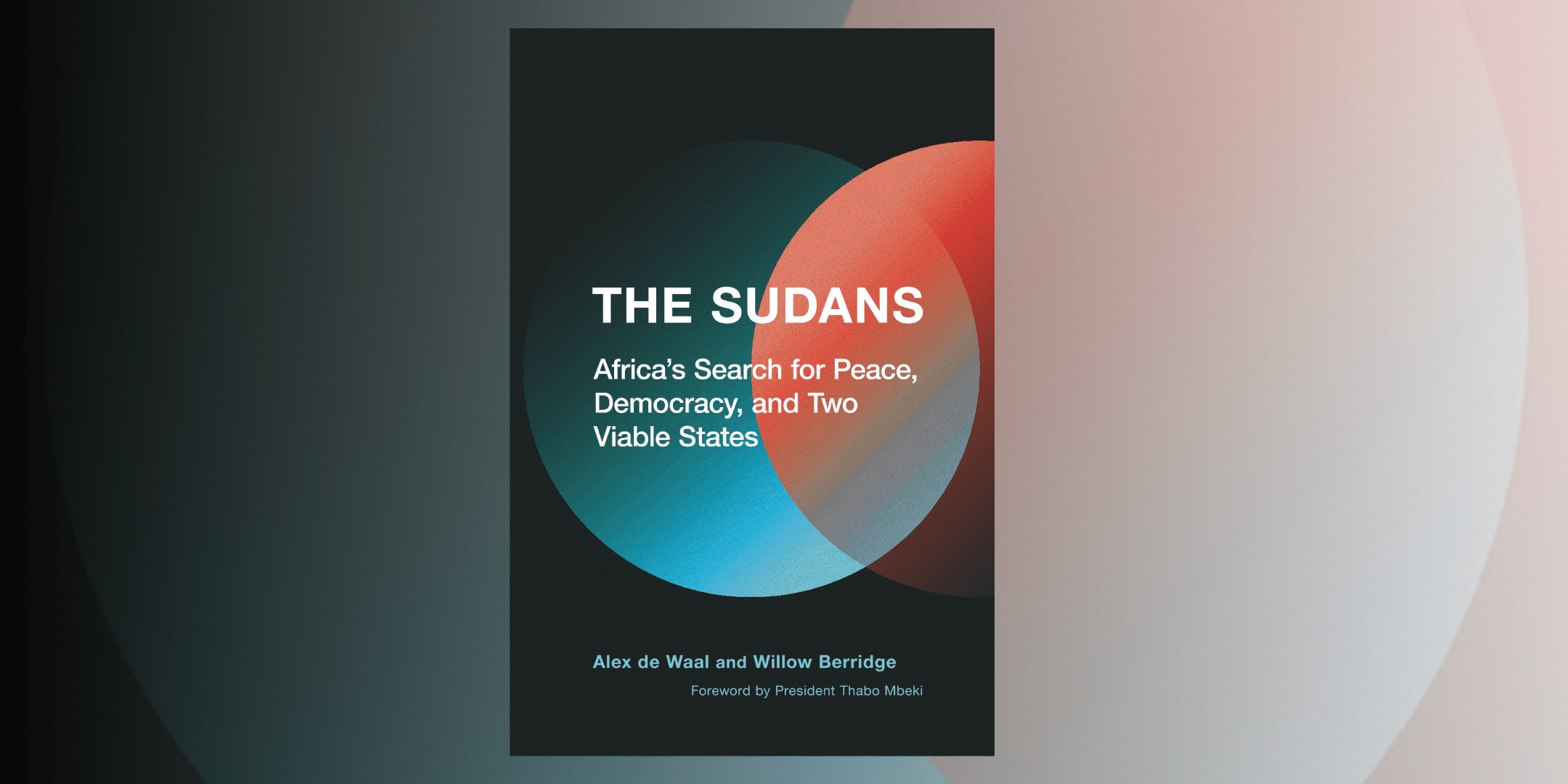
The Sudans by Alex de Waal and Willow Berridge captures and documents this African mediation journey with exceptional richness and depth. The book is fundamentally about the work of the Panel itself and the broader political and mediation experience surrounding Sudan and South Sudan.
The book documents the mediation experience, the negotiations, and the broader African political journey surrounding Sudan and South Sudan with sophistication and humanity. It is not merely a dry institutional account or technical documentation of negotiations. It captures the human drama, the tensions, the personalities, the political dilemmas, and the immense complexity of mediation itself. Much of what I have reflected upon in this essay is captured in the book in extraordinary detail and richness.
Alex de Waal himself was deeply involved in the work of the Panel and contributed immensely across multiple dimensions of the mediation process. No one could have documented this experience with the same depth of understanding.
As Chief of Staff of the AUHIP, I bear witness to the seriousness, commitment, and integrity with which this work was undertaken. For that reason, I believe The Sudans will stand as one of the most important contributions to the literature of mediation and African political history for many years to come.