President Donald Trump and his team haven’t provided a cogent account of U.S. war aims in Iran. That’s consistent with the reckless logic of World War X. But we can see various ways that the war may escalate and broaden, especially on the economic front.
The Israeli calculus in attacking Iran is strategic, not kleptocratic. For decades, Benjamin Netanyahu has made the case that a theocratic regime whose leaders have vowed to destroy Israel, armed with nuclear weapons and ballistic missiles and supported by an alliance of proxies, poses an existential threat. The Trump Administration has echoed that argument. Whether correct or not, whether the threat is sufficient to justify a pre-emptive strike or not, it’s a classic strategic argument.
Israel versus Iran, with each side seeing the other as an existential threat, is a formula for a regional war.
It’s America’s role that makes this a sharp intensification of the economic and financial global conflict we’re already in – World War X.
The reckless style of the Trump Administration’s decision-making chimes with 21st century kleptocracy. Every era’s kleptocrats operate according to the dominant business logic of their time and place. The ethos of contemporary American tech lords is summed up in the slogan, ‘move fast and break things.’ Corporate raiders take over 20th century-style industrial companies, break them up, fire their workers, securitize their assets, maximizing short-term returns to shareholders. They don’t need a careful plan, they’re confident that if they smash a company, they can sell off the treasures in the rubble. Disruption is valued – for itself.
Translate this ethos to the political realm and the rationale for regime change – or deliberate state collapse – is clear. In the era of liberal multilateralism, the rule for military intervention was: if you break it, you own it. No longer.
In the age of disruption, the mantra is, move fast and break things. Smash a state and look for what’s useful in the shards. It’s the chainsaw that DOGE took to government institutions in Washington applied to foreign regimes. The plan is, topple the regime first, watch its structures shatter, and then find out what’s worth keeping.
Applied to Iran, it means that you only figure out a plan once you see the shape of those broken fragments. That could be a new not-so-strongman begging to cut a deal to survive, or rival warlords fighting for power, ideally but improbably a new leader who vows fealty to America.
But the shards could be too sharp to handle – broken but deadly. That’s a real prospect in Iran today.
Trump’s perfect operation was kleptocratic regime capture in Venezuela. That was like a hostile corporate takeover, installing a new, pliant CEO. That’s not happening in Iran. Instead, we seeing a war of wills, wondering whose resolve will break first.
And meanwhile Iran’s citizenry are being left to fend for themselves in the debris. Their most likely future is either intensified despotism, war or anarchy – and in their everyday lives, displacement, poverty and hunger.
But there is a the geo-kleptocratic logic that underlies both the Venezuela and Iran operations: the world money war.
In 2009-10, five countries – Brazil, Russia, India, China and South Africa – came together to form a club, known as the BRICS. They had one thing in common which was that they didn’t like the dominance of the US dollar in the global financial system. They didn’t like their vulnerability to Treasury’s ability to weaponize the dollar by imposing sanctions. They didn’t like the Federal Reserve’s ability to set the world’s interest rate – especially as they had debts in dollars. They didn’t like the way that Wall Street was setting the pace for returns to investment, squeezing them out.
In 2014, Iran joined the BRICS. It wanted to move out of range of Washington’s financial artillery, and conduct its trade using other currencies. Russia and China welcomed this. So too did the United Arab Emirates – which also joined BRICS, hedging its bets.
No sooner had Trump been elected than he declared his intention to target the BRICS. He is determined to keep the US dollar as the indispensable currency for world finance, and as an American profit center rather than a global capitalist utility.
As of now, America’s combat war isn’t going to plan. The Iranian regime has proved resilient.
It has counter-escalated by waging an all-out asymmetric economic war. The US, it seems, was unprepared for this.
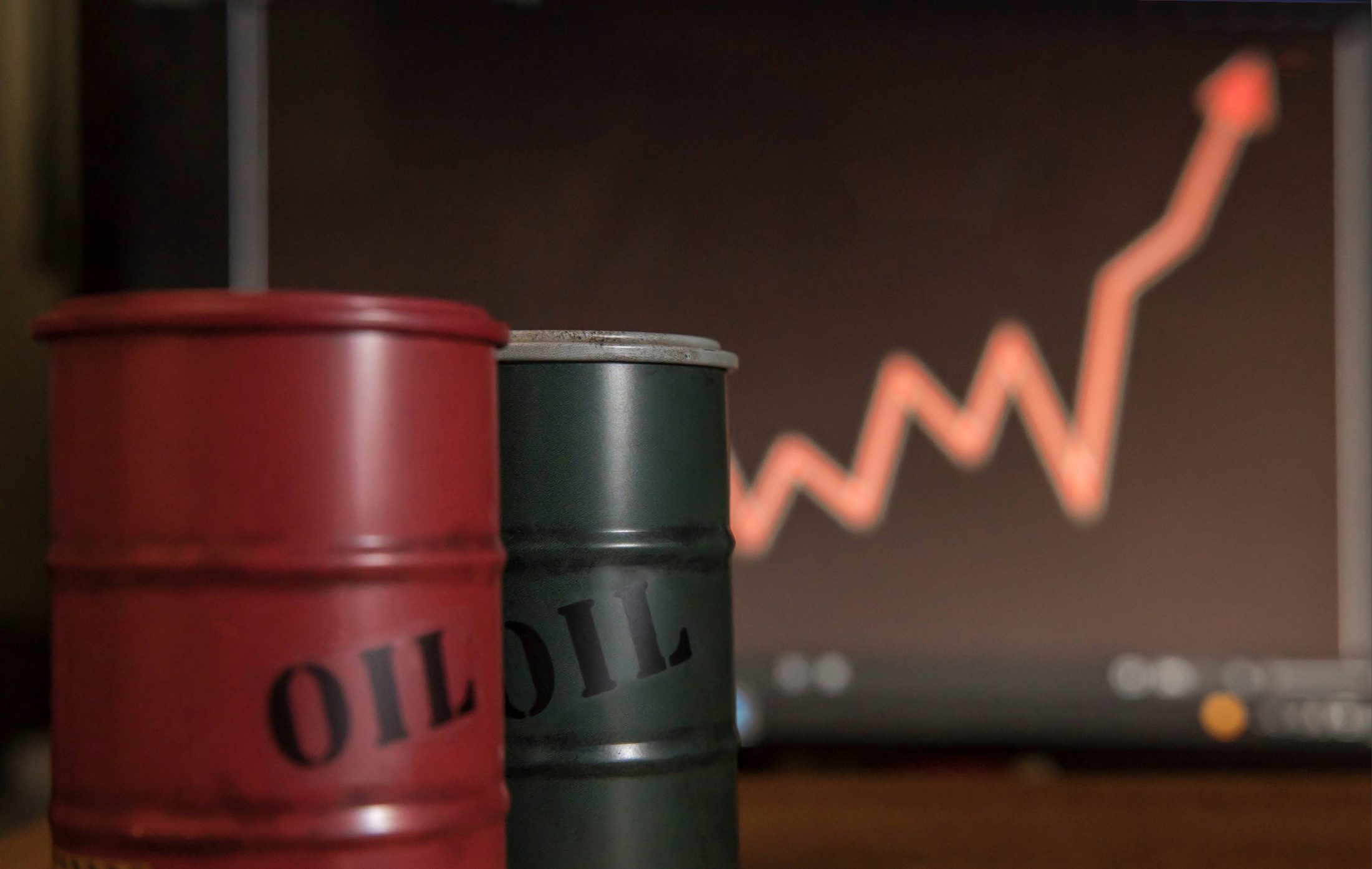
Iran’s most obvious tactic is attacking the petro-states of the Arabian peninsula and closing the Straits of Hormuz. The price of oil has shot up, pushing up the price of gas at the pump. We will also see a world fertilizer crisis that will hurt American farmers. The footloose ultra-rich who have designated Dubai as their place of residence for tax purposes are getting jittery.
Russia has an immediate win – its oil exports are suddenly far more lucrative. China has a win too. The BRICS agenda of de-dollarization will be turbocharged – especially if the Iranian regime survives and becomes the vanguard of alternative trading systems. Just this weekend, Iran has said it will permit tankers to pass through the Straits of Hormuz, provided that the oil will be sold in Chinese currency.
The US isn’t winning the economic war – neither the economic combat with Iran, nor the wider world money war. No less important than how the Pentagon uses its weapons is how the Treasury and Federal Reserve respond.
Along with the people of Iran, the biggest losers are likely to be poor people in fragile countries, who face higher food and fuel bills, and economic recession as their governments struggle to cope with lower revenue and higher debt.
When the Russian invasion of Ukraine threatened a world food and fertilizer crisis, President Joe Biden convened a special session at the United Nations to coordinate a global response. Has the thought of doing something similar crossed the minds of those running the Trump Administration? It doesn’t seem likely.
The Iran war is another big step in the world geo-kleptocratic shift – the evisceration of public finance and public institutions, and the dominance of political money. Smashing Iran will reverberate across the world.