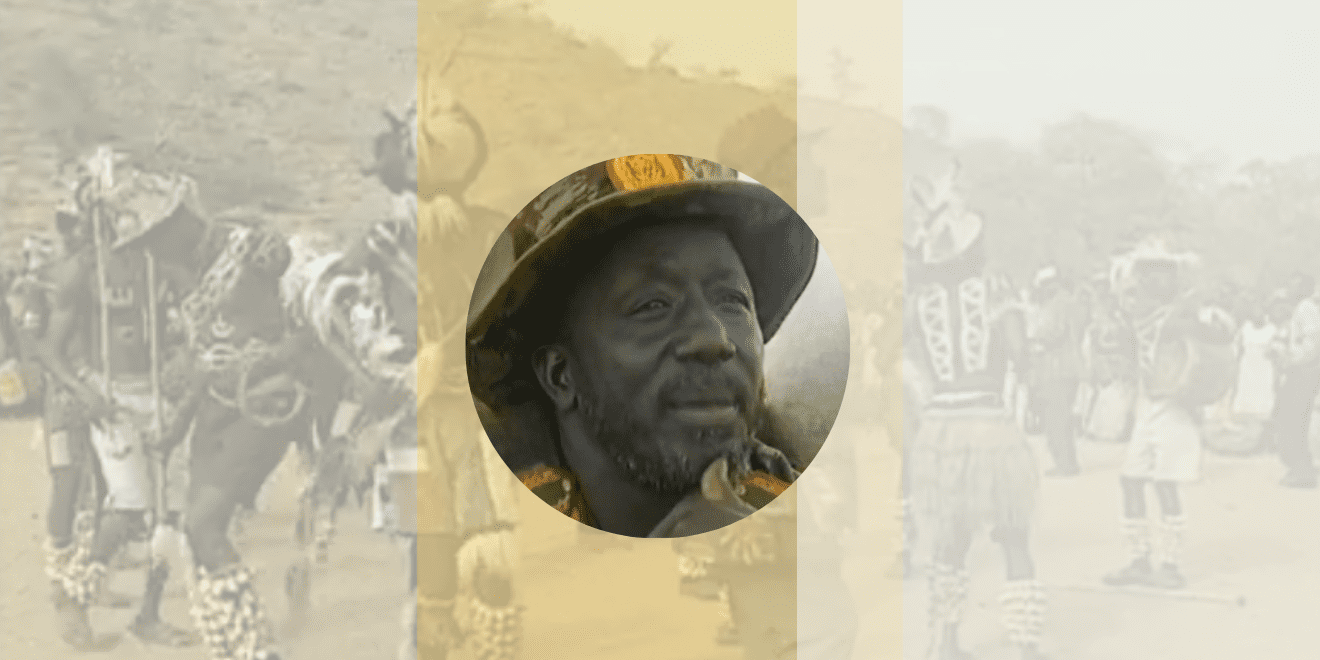
It was May 1993 and I was at home in London, just back from southern Sudan, when the phone rang. “This is Yousif Kuwa. I would like to meet you.” I had no idea who Yousif Kuwa was. A commander in the Sudan People’s Liberation Army, he said. The Guardian had given him my number.
I was furious that the paper had given an SPLA commander my number and read them the riot act as soon as we hung up. But I was also intrigued. The SPLA had split in 1991, dividing the southern SPLA along tribal lines and isolating the Nuba SPLA in northern Sudan from the south, their only supply route since the Khartoum government imposed a blockade on the Nuba Mountains to choke the rebellion there. Inter-factional fighting in the south had claimed hundreds of thousands of lives. Famine was spreading under a new government offensive against John Garang’s Mainstream faction and intra-SPLA fighting for resources was compounding civilian suffering. Since the split, I had written, “the SPLA’s ‘mistakes’ had been no less lethal than the ruthless oppression of an Arab regime bent on making the south in its own image.”
The SPLA did not take kindly to criticism of this sort. Who on earth was this man claiming to be an SPLA commander? Why was he seeking me out? I did not know that he had also contacted my friend Alex de Waal of African Rights for the same purpose: to bring attention to, and support for, the Nuba people – African tribes in the Arab north of Sudan who were the unseen and largely unreported victims of what the late Nuba activist Suleiman Rahhal called “one of the great crimes of contemporary Africa”.
It was only when he was dying in 2001 that Yousif, a teacher, admitted the degree of his own disappointment with the rebel movement he had joined in 1984, despairing of political effort to save the Nuba, one of Africa’s oldest cultures, from extinction. “Had it not been for Dr. John’s vision of a united Sudan, I would have left the SPLA long ago. Not all my soldiers are angels, but it was not like in the south. Tribalism… A lack of political activity… The soldiers’ behaviour also…”
Yousif was fiercely loyal to Garang, rejecting all criticism of him. It would always be a point of disagreement. “He was a well-educated fellow, knowledgeable. Not only that: pan-African. I don’t believe he is a dictator. He consults everybody. Up to now.”
Yousif – everyone called him that – was unique in the SPLA, a large, lumbering man with a ready smile who by the age of 40 had come to believe there was no alternative to armed struggle for the 1.5 million Nuba who had been sealed off from the world ever since the National Islamic Front seized power in 1989. For him, war was not “fun”; he hated it. He did not want to “annihilate” or “exterminate” his enemies; he wanted to engage with them, to understand them and, when necessary, to compromise with them. His language was of reconciliation, not genocide. His vision was of a just peace for all Sudanese, regardless of race, religion or sex. And, he told me a few days before he died, with that irrepressible smile of his, “especially for the womenses [sic]!”
At our first meeting, in a hotel on the Edgware Road, Yousif invited me to breakfast in his room. It was quieter than the restaurant, he said when I demurred, and he had a lot to say. He had just begun saying it when breakfast arrived, piled high on a table with collapsible sides. I waved the waiter away. “I will fix the table,” I informed the commander. But I could not. the flaps refused to budge. I was vaguely aware of Yousif watching me flounder. “Shall I try?” he proffered. eventually. “You can try,” I said, huffily, “but this table is broken!” Yousif stretched out and the flaps rose, magically.
He smiled. “In the jungle, we understand these tables!”
It was the gentlest of put-downs by a man who, we would discover when we accompanied him back to the Nuba Mountains two years later, was loved – not feared – and who showed, in the cruellest of times, that armed struggle need not be incompatible with human rights and care for civil society. In one of the darkest moments of war, in September 1992, when some of his people were asking how much more they could endure, Yousif had convened an Advisory Council to debate what should be done. They met under the trees. Civilians outnumbered soldiers. After speaking for two days, to tell the story of the war up to that point, he said: “I can take the whole responsibility for all that has happened, up to this day. But from today on, it will be us to decide: either we continue fighting, and this would be our responsibility, or we stop fighting, and this would be our responsibility also. After that, we will let the individuals take their decision. If we decide to fight and some prefer to go to the government, they are free to do so. Somehow, someday, they will be back. And if we decide to surrender and some want to go to the south and fight, they are also free to do so.”
After two more days of discussion in which many different views were aired, with powerful interventions from two women, the Nuba voted to continue fighting.
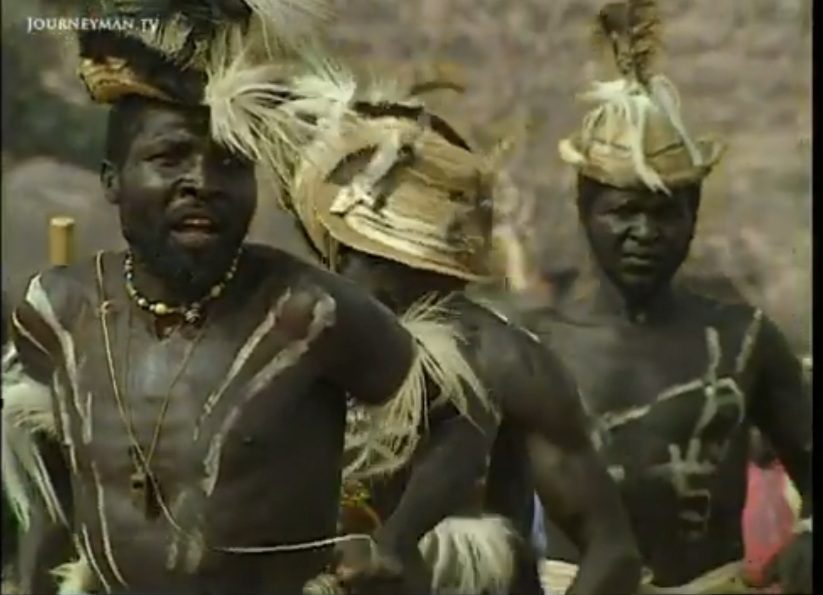
Yousif’s own vision had been shaped by the humiliation of his youth. “We were taught the history of the Arabs and when we were taught about ourselves it was as slaves. At primary school in Miri, the headmaster took a big chair and sat under a tree and didn’t teach. At secondary school, the teacher said: ‘Who works in homes except the Nuba guys?’ You can accept being insulted by a common man, an ignorant man. But when it comes to someone who’s supposed to be well-educated, an Islamic man who’s supposed to believe in equality… Someone comes from the jungle – and knows these things better than you!”
At Khartoum University, where he gained a BA in political economy, Yousif immersed himself in the library. “I read anything related to the Nuba. I discovered that before the Arabs came we had a very big and civilized kingdom. Why are we not taught such history? There is a policy to assimilate us into the Arab-Islamic culture to the extent that a lot of us do not know their mother tongue and despise their own culture.”
He founded a youth organization, Komolo. He read Chinua Achebe and Julius Nyerere. He criss-crossed the Nuba Mountains by bicycle, encouraging the people to have faith in themselves. “I determined to serve the people. I said I will build my civilization, unite regardless of tribe or religion, and I will forgive anyone who humiliated me before.”
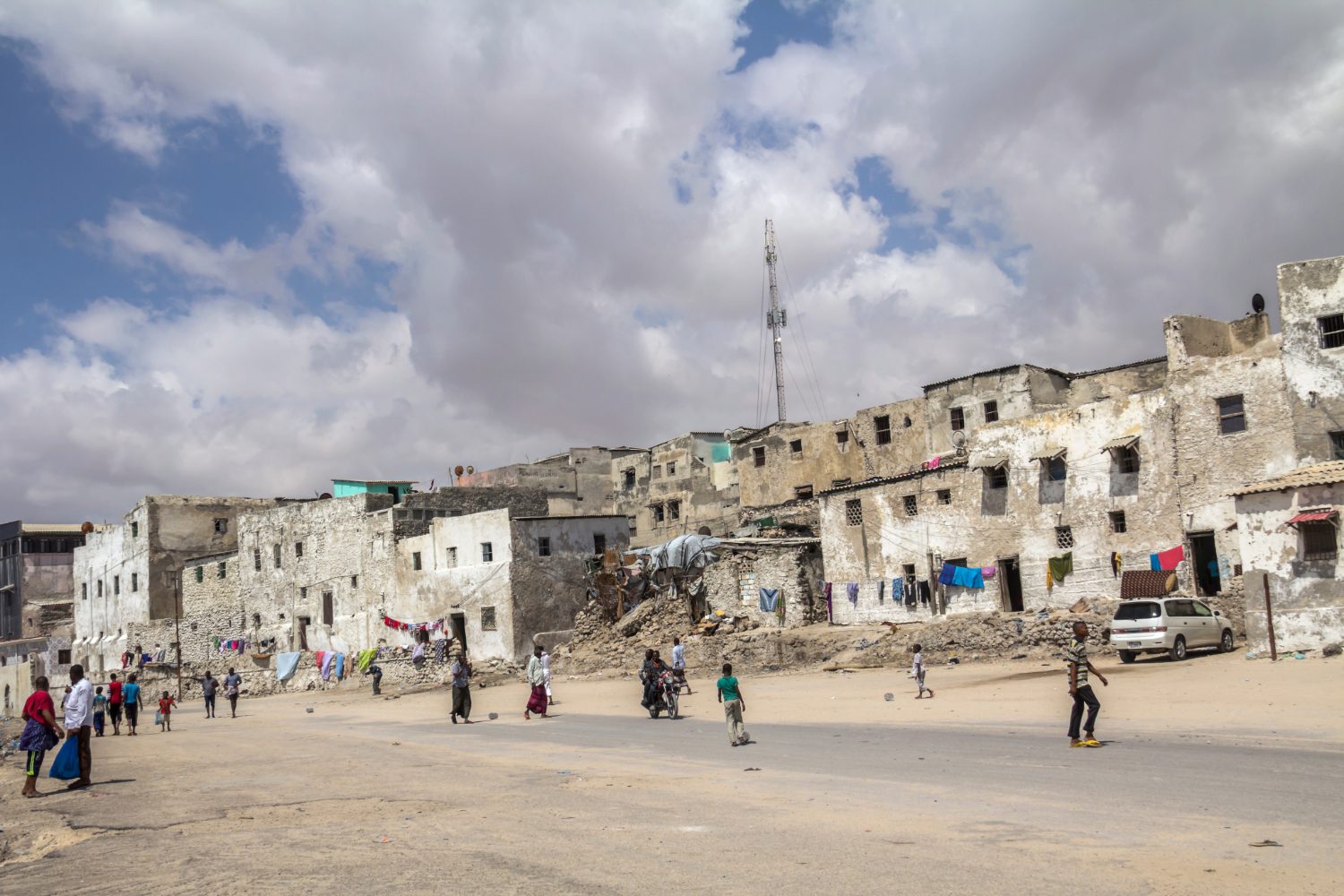
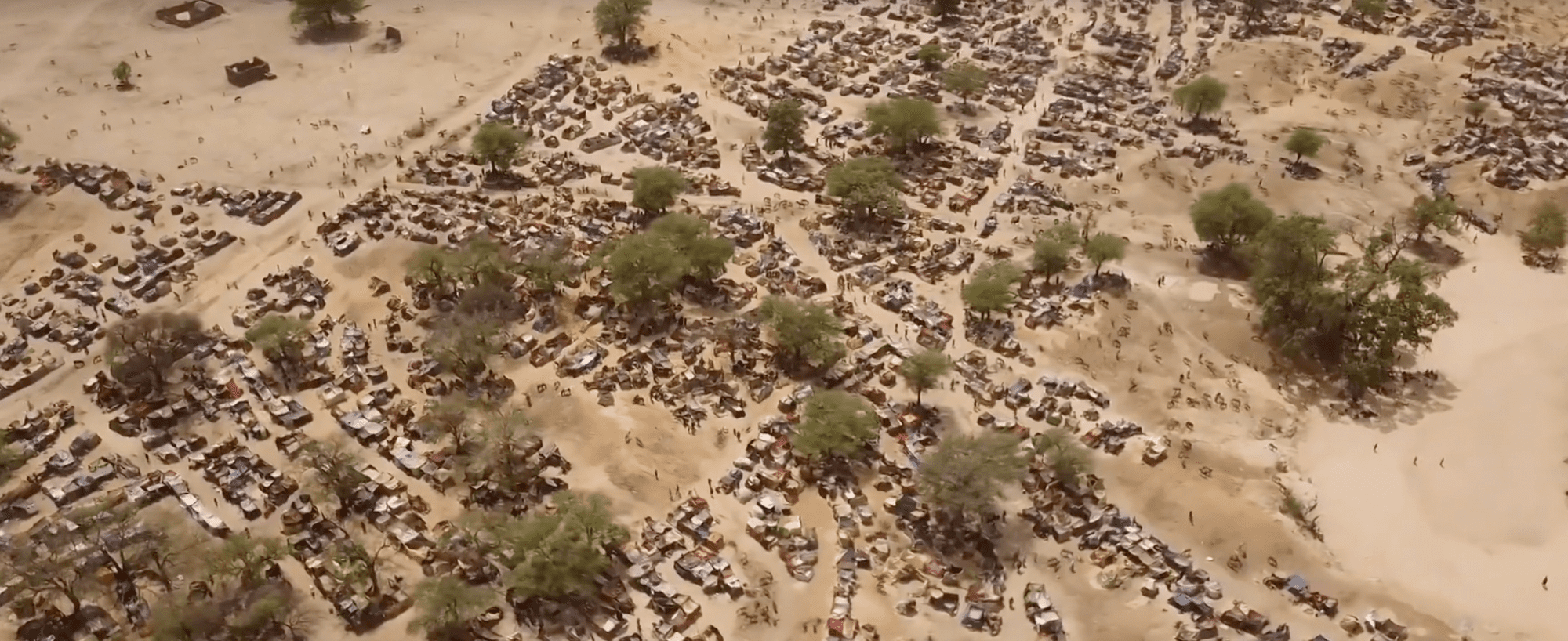
The task facing Yousif in London, which he had never before visited, was daunting. After the SPLA divided, and then fragmented, Khartoum launched its greatest offensive yet. Government soldiers and allied militias killed with impunity, burned villages, looted and burned food, destroyed household golds, stole food. Children were separated from their parents. By government count, more than 150,000 Nuba were corralled into more than 90 militarized “peace camps”, providing labour for government garrisons and Arab farms. Hundreds of Yousif’s men died trying to cross the Nile, first in the dry season and then in the wet, to get supplies – ammunition for soldiers, food and medicine for civilians.
But help was not forthcoming.
“We have asked the UN for food. But they are not taking us seriously. We are like a people drowning in the river and they are standing on the bank shouting encouragement. The international community is killing us. They are submitting to the Khartoum government and people are dying of starvation. The people who died from hunger and sickness are far, far greater than those who died because of war. We do not fear bullets, but I feel bitter when a lot of people – especially the children – die because of malaria.
“It is our policy not to let our people depend on relief. Do not give us ready-made solutions, but help us to help ourselves. We need schools. We need to provide all people with clear and clean water. The government destroyed all the pumps. We want solar energy. Wind energy. Clean energy!”
Two years later, in 1995, Alex and I flew into the Nuba Mountains with Yousif. It was the beginning of a humanitarian airlift, initially supported by only a handful of NGOs that would grow into an international relief effort and, eventually, a ceasefire for the Nuba. But first we needed to break the blockade imposed by Khartoum. Alex in Nairobi hunted for a pilot willing to risk it – two agreed and then pulled out – while I waited with Yousif in the bush in southern Sudan, a staging post for the onward flight to the mountains. During five days of waiting – with Yousif aggravating me daily by saying “I told you he would not come!” – Yousif visited a local doctor and was told he needed treatment in hospital. Prostate cancer, later confirmed in London, was suspected. He said nothing to us.
Finally we heard an engine. A plane circled and landed at our small airstrip. Yousif ordered his men to start loading ammunition, packed in the large jute bags used for rice. Alex’s colleague at African Rights, Yoanes Ajawin, told Yousif we could carry him, and a few of his men, but we could not load weapons. Yousif argued that he could not return empty-handed after years away, but had to concede.
Our pilot had the coordinates of a bush airstrip in the SPLA-controlled mountains, but it was right at the limit of his fuel supply. He hadn’t counted on having to fly in zigzags, under the radar to avoid detection. Our instructions were to land when we spotted a plain without bushes or grazing goats. What we spotted, on landing, was a ragtag collection of men without shoes, with pants held up by fragments of rope and bushes. Yousif’s army. Before leaving Nairobi, I had asked Yousif if there was beer in the mountains. Not beer, he said; only marissa, local beer brewed from sorghum or millet. Now he pulled a child’s satchel off his back and produced… a bottle of beer.
“There is only one,” he said, “and we shall share it!”
Much has been written about Yousif’s tenure as commander-governor of the Nuba Mountains. He established a civil administration unique in SPLA areas and encouraged a renaissance of Nuba culture. The few professionals left in the mountains were organized to give rudimentary training to nurses and teachers. With guidance from African Rights. Yousif permitted an independent human rights monitoring organisation in SPLA-controlled areas, the first anywhere in Sudan. As Alex has written: “In a much-neglected tradition of liberation fighters, his insistence on seeing the task of liberation as a daily struggle of uplifting people was genuinely inspiring. We discovered that Yousif’s reputation as an enlightened leader, a humble man at one with his people, was entirely warranted.”
Teaching was his passion; fighting a necessity. “I feel I am not a commander,” he told us. “I feel I am a teacher, whose objective is to tell the people what are their rights and how to get those rights – even if they are taken by Yousif Kuwa! When I led my first battalion, in 1987, I was not even trained. I did not know how to disassemble a weapon.”
Critically, Yousif’s vision filtered down to the farthest corners of the mountains. On a long, hot trek across the mountains in 1999, I spotted a pawpaw high in a tree and asked the lad accompanying me, Abboud Ismael, to get it for me. He refused. “I cannot,” he said. “That paw-paw is a civilian paw-paw.” He walked away, but was back an hour later with a smiling woman by his side. “This is that paw-paw’s civilian,” he said. “You can ask her!”
Back at headquarters that night, as the cook fanned the fire under our supper with a copy of the UN Convention on the Rights of the Child, I asked Abboud why he didn’t get the pawpaw himself. “No no no no,” he said. “Something like that, it is not good because the civilians will be angry with you and then they can go to join with the government forces. If you are hungry, you take your gun, you go to bush and hunt animals. This is the law of the Nuba!”
On our last day in the mountains, researching for a book and a film we would launch on the same day, for maximum impact, the Nuba women’s union organised an evening farewell. Children perched in the trees. Adults danced. Marissa was drunk. And Yousif made a speech. “These friends have come from far to help us,” he said. “They have encountered many dangers. We thank them. And we love them more than we love ourselves.”
Yousif’s cancer spread. Before returning to London in hope of treatment, he visited his friend Malik Agar, then SPLA commander of Blue Nile, now deputy chairman of the Transitional Sovereignty Council of a divided Sudan. Malik was “terribly shocked and disturbed” by his appearance, but said Yousif was calm and composed. “He was the one encouraging me. He said: ‘I am terminal. In a few months I might not be with you. This is why I paid this visit. Continue the struggle. I am going to continue from where I am. We shall meet in Khartoum!’”
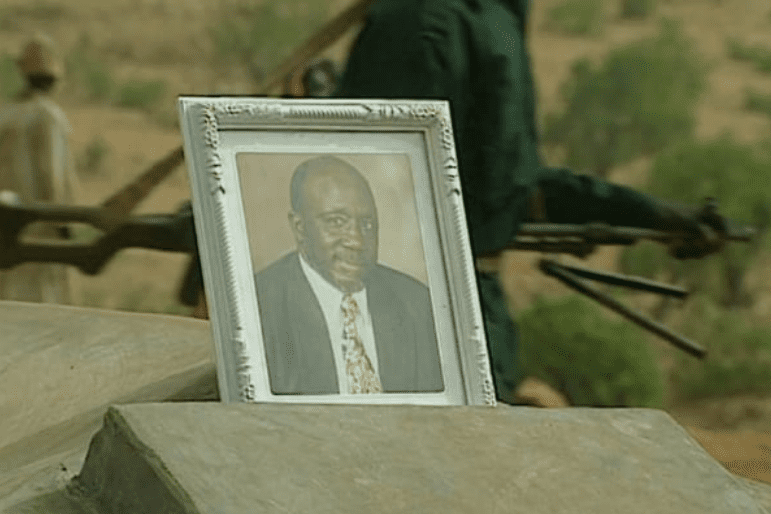
That was not to be. Less than a year later, Yousif was in a hospital in Norwich, north of London. In March 2001, a few days before he died, he asked me for two things: a new biography of Nelson Mandela, and help in composing an open letter to UN Secretary General Kofi Annan, on behalf of the Nuba people. Why, he asked Kofi Amman, did the UN, despite all its promises, continue to abandon the Nuba to the depredations of the Khartoum regime?
It was his last contribution to the struggle. Back in London two days later, working on a report for Christian Aid about the Swedish oil company Lundin, I had a sudden moment of panic. I called the hospital and asked for the sister on Yousif’s ward. “I’m calling to ask how Yousif is,” I said. Her reply was immediate. “I was just going to call you, Julie. I’m so sorry. Commander Kuwa died 10 minutes ago.”