A domestic turn: Interview with Adrienne Klein on COVID 19 in NYC

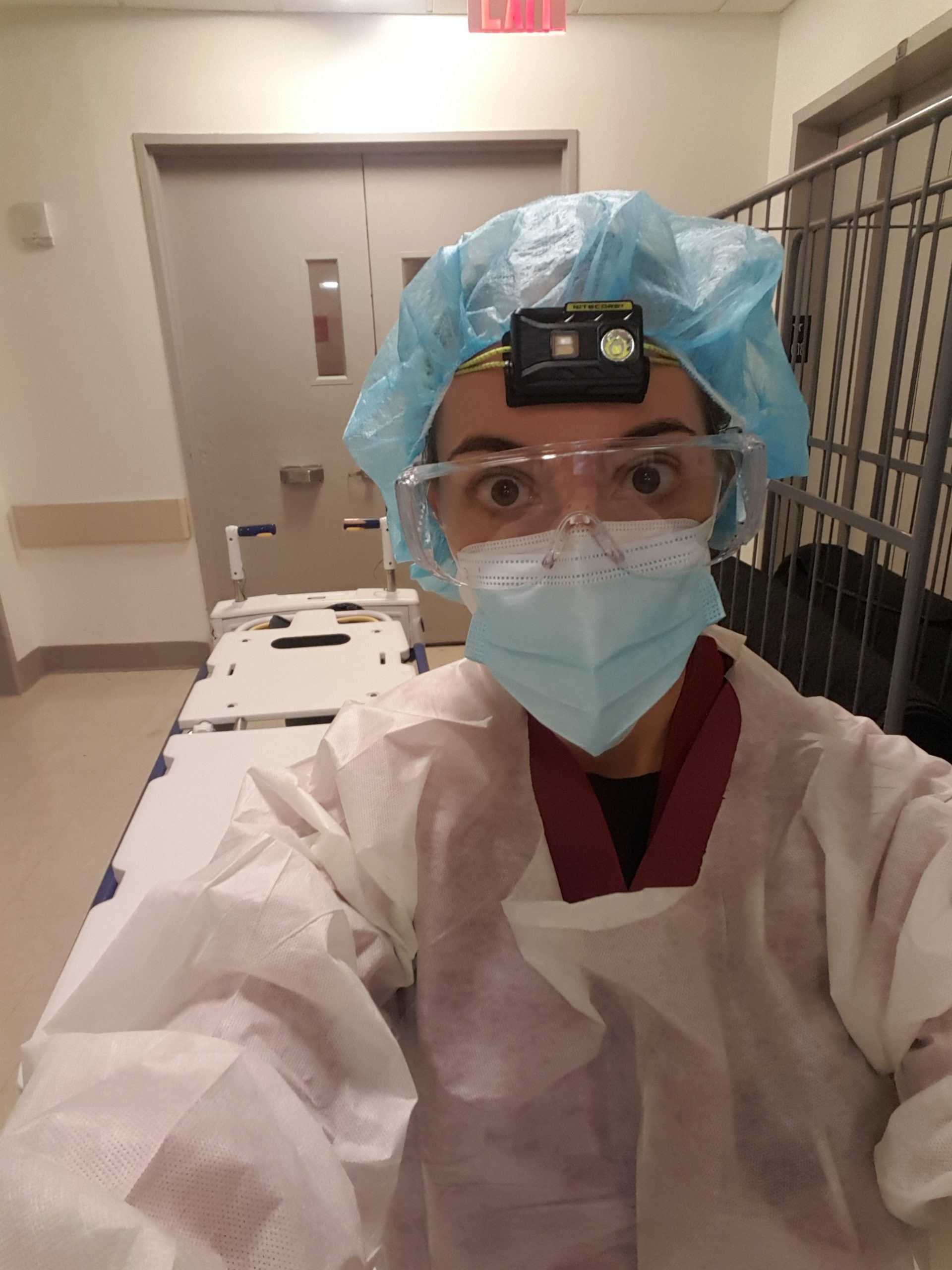
Adrienne Klein

On Monday, April 20th, I had the chance to speak with Adrienne Klein, a Fletcher graduate and former student of mine, about time she spent working in a makeshift morgue in New York City. I spoke with her while she was ‘camping out’ in quarantine in an empty apartment several blocks from her home.

In this first clip, I introduce Adrienne, who discusses how she got involved in the emergency COVID 19 response in NYC.

The actual work she undertook was incredibly difficult. Here, she describes the tasks that she undertook: working to help organize processes of transporting the dead from hospitals to morgues, and then to funeral homes, where possible.

The epidemic created new struggles for families of the dead, Adrienne notes, that complicated their grief.

Adrienne reflects on how her previous work experience in Argentina and Sri Lanka, and her studies at The Fletcher School prepared her for the work work in NYC, while noting that responding to a crisis near home presents distinct challenges.
Bridget Conley works on advancing human rights in solidarity with directly impacted people. Her projects address mass atrocity endings, memorialization and the gendered harms of starvation, and mass incarceration in the US, notably in Massachusetts, where she lives. This research is grounded in abolitionist principles, which informs her understanding of how innovative visioning can directly impact policy debates.

She leads WPF’s research programs on atrocity response and incarceration, and hosts WPF's podcast, Disrupting Peace. She helps manage on project development, fundraising and strategic vision for WPF. Her publications include COVID Diagnosed the System: Lessons from the Pandemic Inside Massachusetts’ Prisons (Rutgers University Press, 2026), Memory from the Margins: Ethiopia’s Red Terror Martyrs Memorial Museum (Palgrave 2019); co-editor of Accountability for Starvation: Testing the Limits of the Law (Oxford University Press, 2021), and editor of How Mass Atrocities End: Studies from Guatemala, Burundi, Indonesia, the Sudans, Bosnia-Herzegovina, and Iraq (Cambridge University Press 2016), in addition articles and essays. She has also published on gender and starvation crimes, the 1992 – 1995 war in Bosnia, mass atrocities and genocide, and how museums can engage on human rights issues.

Previously, she worked as Research Director for the U.S. Holocaust Memorial Museum’s Committee on Conscience, where she led the Museum’s research and projects on contemporary threats of genocide, where she produced multimedia public outreach materials, formulated positions on contemporary threats of genocide, and curated exhibitions. She received a PhD in Comparative Literature from Binghamton University in 2001. When she is not in the office, she is happiest with her family or on a mountain.