This blog is part of the Sexual and Gender-Based Violence and Starvation program, which probes the intersection of the law of starvation and SGBV, with the goal of sharing expertise across currently siloed research and policy arenas. We aim to develop new ways of understanding, documenting and analyzing, preventing, responding to and punishing actors who perpetrate these harms.
Background
A long-standing political disagreement between Ethiopia Federal government and the northern regional state of Tigray’s regional government led to an outbreak of hostilities on 4th November 2020. This was characterized by military action resulting in general insecurity in the region, internal and external displacements, and a disruption of livelihoods.
From 2020 to 2022 the Ethiopian National Defense Forces (ENDF) and the Eritrean Defense Forces (EDF) united with Amhara Special Forces and irregular militia men (Fano) invaded Tigray State, a member of the Ethiopian Federation.
During the eight months of active war in the whole Tigray, the region faced untold atrocities including indiscriminate killing of civilians, gang rape of women, girls and children as a weapon of war. Tigray has been excommunicated from the outside world for two years, subjected to famine as a weapon of war deprived from humanitarian aid to date.
The ENDF, EDF and other forces destroyed 87% of the health infrastructure, 85% of the schools, looted public and private property including drought animals, burnt down villages to ashes, and displaced millions from their homes.
The most heinous of them all, however, was the brutal and gang rape of women, girls and children from the ages as young as eight years to women as old as 75[i]. The gang rape was often carried out by armed men weeks long. After the violence, some of the predators put foreign materials in their genitals creating as it does fistula, pelvic infections and transmitting HIV and STI in addition to physical and emotional injury. Infrequently, the rape was exercised in front of children, family and community members at gun point. The perpetrators raped the woman and insulted the survivors using the most savage words conceivable.
This essay presents the lived experiences of survivors of wartime sexual and reproductive violence in Tigray, highlighting the nature of the violations, their lasting impacts, and the urgent need for coordinated support and justice. This memo also highlights how mass starvation in Tigray has become a direct and indirect driver of gender-based violence (GBV), the compounded impact of sexual violence and starvation on survivors in Tigray, particularly women and children. The findings underscore the urgent need for integrated protection, psychosocial, and humanitarian responses.
Weapons of War: The Systematic Nature of Sexual and Reproductive Violence in Tigray Conflict
GBV refers to harmful acts directed at individuals based on their gender[ii]. It is rooted in gender inequality, the abuse of power and harmful norms. GBV includes sexual, physical, mental and economic harm inflicted in public or in private.
Rape is one type of sexual violence which involves penetration, no matter how slight, of the vagina or anus with any body part or object, or oral penetration by a sex organ of another person, without the consent of the victim[iii]. In Tigray, perpetrators had also been putting objects and inanimate things into Tigrayan women’s vagina.
Wartime Rape is a form of rape committed by combatants during armed conflict and war. Such rape was taken as a military and political strategy in Ethiopia-Tigray war.
Ethnic Rape is not a rape perpetrated against a person by penetrating one’s sexual organ or object into survivor’s vagina, mouth & anus per se. Rather, it is also perpetrated against the survivor’s ethnicity, political group, cultural and religious group, and family & social structure by penetrating their genitals into the group members of the women or men which the perpetrator’s define the whole group as ‘enemy’, ‘Junta’, ‘Cancer’ etc.
The rape perpetrated in Tigray wasn’t like peace time rape that is due to pleasure principle which the male power unleashed. It wasn’t wartime rape due to the so called “pressure-cooker” theory of rape in war per se. It wasn’t an act of sexual violence which the biological and/or innate drives for sexual release combined with the stresses and aggression that soldiers experience during and after war.
It was a rape under orders of ENDF, EDF & Amhara different forces. It wasn’t a rape out of pleasure seeking, out of stress or aggression. It was a rape under systematic control. It was rape to destroy Tigray. It was a rape unto death. It was rape that makes Tigrayan survivors wish they were dead instead.
It was rape intended to prevent births within the Tigrayan group. The wartime & ethnic rape survivors of Tigrayans have been sexually mutilated and sterilized. It was indeed rape intended and aimed at destroying the reproductive capacity of the Tigrayan group.
It was rape to humiliate Tigrayans. It was rape committed publicly where families, neighbors and communities of the survivors were forced to witness. It was a rape perpetrated against Tigrayan’s group and not individuals per se. These acts are not only violations of individual rights but also tools of war that fractured families and communities.
Testimonies of Survivors and the Lingering Consequences
Sexual violence and rape were strategic tools of the ENDF, EDF & Amhara forces’ efforts to destroy and eradicate Tigrayans. It was rape used deliberately to terrorize, humiliate, and destabilize the Tigrayan community. The wartime and ethnic rape included mass rape, gang rape, sexual mutilations & destroying sexual & reproductive organs, recurring sexual violence with brutal physical violence, torture, rape with racial slurs, dehumanizing & degrading words and acts, denial of reproductive autonomy, public rape and raping children.
“… Fourteen Eritrean troops came to our house and closed the doors. All 14 Eritrean troops raped me alternately in front of my two children.”
“… It has been one month since those bloody and ruthless troops raped me and my innocent little 11 years old baby. One of them raped me in one room and the other raped my baby in the other room. Forget what happens to me, what drives me crazy is my daughter’s rape!”
“… I was raped in the street like an animal. I was raped like donkeys and dogs.”
Survivors claimed they were publicly gang raped in front of their families, neighbors, friends and community members by ENDF, EDF & Amhara forces intentionally and left alive so that the humiliation would affect not only the individual survivor but also her family and the whole community she belongs in.
“… The soldier butt-raped me while I was piggybacking my daughter. My son was forced to watch, and he was crying out loud. He was thrashing around crying. The second soldier replaced the first one and continued to do the same thing, and then the third one continued and my butt began bleeding.”
Reproductive violence is a form of sexual and gender-based violence (SGBV) that targets a person’s reproductive autonomy with the right to make decisions about one’s reproductive health and choices. It includes forced pregnancy, enforced sterilization, forced abortion, forced or coerced contraceptive use, denial or restriction of access to reproductive healthcare, destruction of reproductive health infrastructure, physical violence aimed at reproductive organs. It also includes genocidal acts intended to prevent births within a group[iv].
Perpetrators do not only used their genitals to rape Tigrayan women, rather they also used objects to rape and sterilize Tigrayan’s womb. As survivors claimed perpetrators used stick, metals and umbrella to rape and mutilate their victims.
“… When they pinned me down to rape me, I screamed and told them that I was pregnant, begged them to let me go, and not rape me’.
They said ‘A Woyane[v] child should not be allowed to grow in you! It has to die! Your womb should never carry Woyane blooded child ever again! We will take your uterus out!’ They proceeded to rape me. ‘We will now rid you of your child and take out your uterus’ they said. As if being raped by four predators was not enough, they started twisting dry branches of wood and metal rods inside me. They scraped the inside of me!” First, they used the metal rod, and next they looked for and found a dried twig with smaller dried branches shooting from the side in order to pull my uterus out.”
Especially survivors who were fleeing from Western Tigray were kidnapped and taken into the perpetrators camps and raped repeatedly and collectively. In their stay in the camp, survivors claimed that they were subjected to labor work, sexual slavery and ethnic-based verbal abuses.
“… while I was running for my life, the Amharus[vi] caught me and beat me until I could not stand. It was eight of them. They dragged me to the side of the street and started undressing me. I could not believe it. They take turns raping me until I lose consciousness. I found myself in their camp; God knows after how many days. They raped me one after the other taking turns for days that I could not tell.”
“… I was being raped for days but also forced to do their chores. At night, they took turns raping me and daytime, I wash their clothes, cook their meals, wash the dishes and other tasks as assigned. My knees were shaking, and they would come and beat me like animal.”
“… they don’t only rape us; they insulted us with words that breaks your bones and souls. They called us “thieves, cancers, Juntas, hyenas! They said “you Tigrayans are cancers, and you can only be killed before you kill the whole body!”
Tigrayan’s survivors of rape testified that their perpetrators stated their intent to eradicate Tigrayan ethnicity and their blood line. The perpetrators also stated to the survivors that the rape they were committing to them were means to achieve that eradication of Tigrayans. Tigrayans were impregnated through rape intended to dilute Tigrayans blood.
“… He raped me while the other three waited outside. He took my virginity and then left, and then the other three men also raped me. They kept me for three days in that house and continued to rape me many times. They stated I would be pregnant with their blood.”
“… every time they raped me, they said ‘we are now close to giving you a full-Amharan blood. It is the best. Your child will be Amharan! Hahaha Do not give him a Tigrayan name!”
“… You must not bear Tigrayan Child! No woman should give birth to Tigrayan. You bloody Louse[vii]!”
Many Tigrayan children & adolescents lost their virginity through brutal rape. Survivors suffered from shame, guilt, and self-blame, since the culture highly value virginity and purity. Survivors shared that no one wishes to marry them, as they are labeled ‘leftovers of the enemy.’ One survivor recounted:
‘Now everyone knows what happened to me. My fiancé no longer speaks to me. He said I’ve lost my purity and cannot be his wife. Neighbors and others refer to me as a ‘leftover of Fano.’ As if being raped wasn’t enough, I am forced to relive the horrific rape and its consequences every single day.’”
At the moment, there is no reliable data collected systematically to understand the extent of the damage and human suffering. Damage assessments carried out by Government task forces estimate 100-120,000 survivors. That needs verification. Others believe that every woman under the occupation was blanket raped. However, the fact that women may not come out to disclose the GBV can hide the true picture for a longtime.
Wartime GBV was one of the weapons of war by the enemies of the people of Tigray not only to humiliate but also to what they themselves called “We will erase you from this land”[viii]
Survivors of rape was forcefully impregnated. Survivors stated their perpetrators had threatened them that they would kill them and all their family members if they seek any medical assistance. During the war, 70% of the health facilities in Tigray were destroyed. Even when survivors wished to seek medical assistance, there were no functioning healthcare facilities or qualified professionals available to provide treatment. As a result, many survivors were left without access to post-rape care, leading to unintended pregnancies often referred to as ‘rape babies’ with long-term physical, psychological, and social consequences.
“… after they raped me, they told me not to tell anyone and not to go to doctors. They laughed and said ‘you will be pregnant with Shabia’s[ix] bloodline. I was afraid and I could not even leave my house thinking they will find me, rape me and kill me. Now, I am almost 8 months pregnant.”
Many survivors who were forcibly impregnated during acts of sexual violence and had no choice but to give birth to children conceived through rape have expressed profound emotional challenges. They report struggling to bond with or care for their children, as the children serve as painful reminders of the trauma inflicted by their perpetrators often referred to as their fathers only in biological terms.
“… my baby… sometimes I feel sorry for her that I could not love her and care for her. She is a reminder of them. How can I love her? They forced themselves on me and forced me to give birth to this poor child that I did not want to bring to this world. Who is the father? The Shabia or the Amharans or even worse which is mixed? Every time I see her, I remember their faces, their smells and even the noise they were making! How can I care for her?”
Many survivors shared that after the brutal rape they endured, their belief in God was shattered. One survivor said she no longer feels there is a higher power watching over her:
“If there was a God,” she asked, “how could this happen to me?”
This loss of faith has left them feeling profoundly alone, stripped not only of their sense of safety but also of spiritual support. They described how their entire worldview has changed, and how the absence of belief now fuels their anxiety and deepens their emotional isolation. For them, the trauma did not just violate their body, it fractured their soul, leaving them to navigate life without the comfort or hope they once found in faith.
Living the Aftermath: The Psychological, Social, and Reproductive Impact of Conflict-Related Sexual Violence in Tigray
Sexual violence survivors suffer from various unexpected complications such as: Genital injuries, unwanted pregnancies and abortions, pelvic inflammatory diseases (PID), urinary tract infections (UTI), fistula and sexually transmitted infections (STIs) including HIV. Furthermore, acute stress reactions, anxiety, sleep disturbances, post-traumatic stress disorder (PTSD), depression, substance abuse, self-harm and suicidal behavior are among the mental health consequences of the survivor. Rape was not only declared as a crime against humanity but also as a weapon of war. Furthermore, rape and sexual violence was used to terrorize and destroy thousands of women during war and conflict in Tigray.
The psychological impacts of wartime sexual violence in Tigray contexts such as mass rape, gang rape, sexual slavery, and forced impregnation are profound and multi-layered, affecting survivors individually, within their families, and across entire communities. The consequences of sexual and reproductive violence are long-lasting and multidimensional.
Individual-Level Impacts
Tigrayan survivors endured profound psychological and emotional suffering. Many experience Post-Traumatic Stress Disorder (PTSD), marked by recurring nightmares, flashbacks, emotional numbness, and hypervigilance. Alongside this, depression and anxiety are common in almost all of the survivors, manifesting as persistent sadness, hopelessness, panic attacks, and in some cases, suicidal thoughts or attempts. These mental health challenges are compounded by deep identity and self-worth struggles, where survivors are stigmatized and blamed. As a result, many withdraw from social life, facing isolation due to fear of judgment or rejection by their families and communities. The trauma is not only internal it is lived daily, often without access to the support systems needed for healing.
The violence inflicted upon Tigrayan survivors has not only devastated their bodies and minds it has also fractured their spiritual beliefs and sense of meaning. Many have lost the comfort of faith, leaving them feeling exposed to the harshness of life and emotionally isolated. Their trauma reverberates in the very space where hope and divine reassurance once lived. These stories reflect the full spectrum of harm caused by sexual violence not just physical and psychological, but also spiritual, forcing survivors to navigate a world that now feels profoundly unsafe, unjust, and devoid of the support they once believed existed.
Family-Level Impacts
In a family level, survivors face deeply strained relationships within their families, particularly those who returned with children born of rape. Many reported rejections by spouses, parents, or siblings, who struggle to accept the survivor or the child due to stigma and cultural beliefs around purity and honor. Mothers frequently describe emotional challenges in bonding with their children, as the child serves as a painful reminder of the trauma they endured. This disconnect led to emotional neglect and identity struggles for the child, who may grow up facing discrimination, exclusion, and confusion about their origins. These dynamics contribute to a cycle of intergenerational trauma, where both survivors and children carry the psychological burden of violence, rejection, and silence.
Community-Level Impacts
At the community level, survivors are facing severe stigma and exclusion, frequently labeled as “leftovers” or “dirty,” which leads to their rejection from social, religious, and economic life. Sexual violence in Tigray was not only a personal violation, but it is also a weapon used to dismantle social cohesion, instill fear, and displace entire populations.
Survivors are silenced by cultural taboos and weak justice systems that fail to protect or acknowledge their suffering, leaving them without avenues for justice or healing. In the absence of support, many women and girls in Tigray are forced into harmful coping mechanisms such as early or forced marriage, prostitution, or transactional sex, exposing them to further exploitation and abuse. These consequences ripple across generations, eroding trust, safety, and dignity within communities.
Intersection of Starvation and Sexual & Reproductive Violence
GBV as a Driver of Starvation in Tigray
Recurring Sexual Violence and Starvation
Survivors of sexual violence including kidnapping, repeated rape, and sexual slavery have endured prolonged deprivation of food, water, and basic necessities. These conditions have affected both the survivors and their children, exacerbated by captivity, displacement, and social stigma.
“… after they all were done, I could not move. My one year and six months child was crying out of hunger. I could not feed him.”
“… my four years old was the one who was begging and looking for food to bring us back home. I was sick for days challenged to care for my children.”
Impact on Maternal Care and Mental Health
Survivors have developed severe psychological disorders, including PTSD, major depressive disorder (MDD), and generalized anxiety disorder (GAD). These conditions impair maternal bonding and caregiving, with long-term consequences for child development and maternal health.
“… I do not know how others are living. I still struggle to feed my children. I still struggle medically after the harm (gang-rape) I endured. My husband died in the battle, and no one could hire me for anything with these children (twins she gave birth to after the gang-rape).”
Socioeconomic Consequences
Many survivors in Tigray have been abandoned by their partners and are now sole providers. This has increased the risk of malnutrition and poverty. Stigma, discrimination, and physical disabilities resulting from sexual violence further limit access to resources and support.
Life-Threatening Deprivation
The intersection of violence and starvation has led to life-threatening conditions. In the current humanitarian context in Tigray, access to aid remains severely limited, leaving survivors in critical need of protection and assistance.
Starvation as a Driver of GBV in Tigray
Sexual Exchange and Survival Practices
In the current context of extreme deprivation, women and girls are increasingly coerced into transactional or survival sex to access food, shelter, or protection.
“… I am doing this to feed my children.”
Exposure to Rape During Resource Search
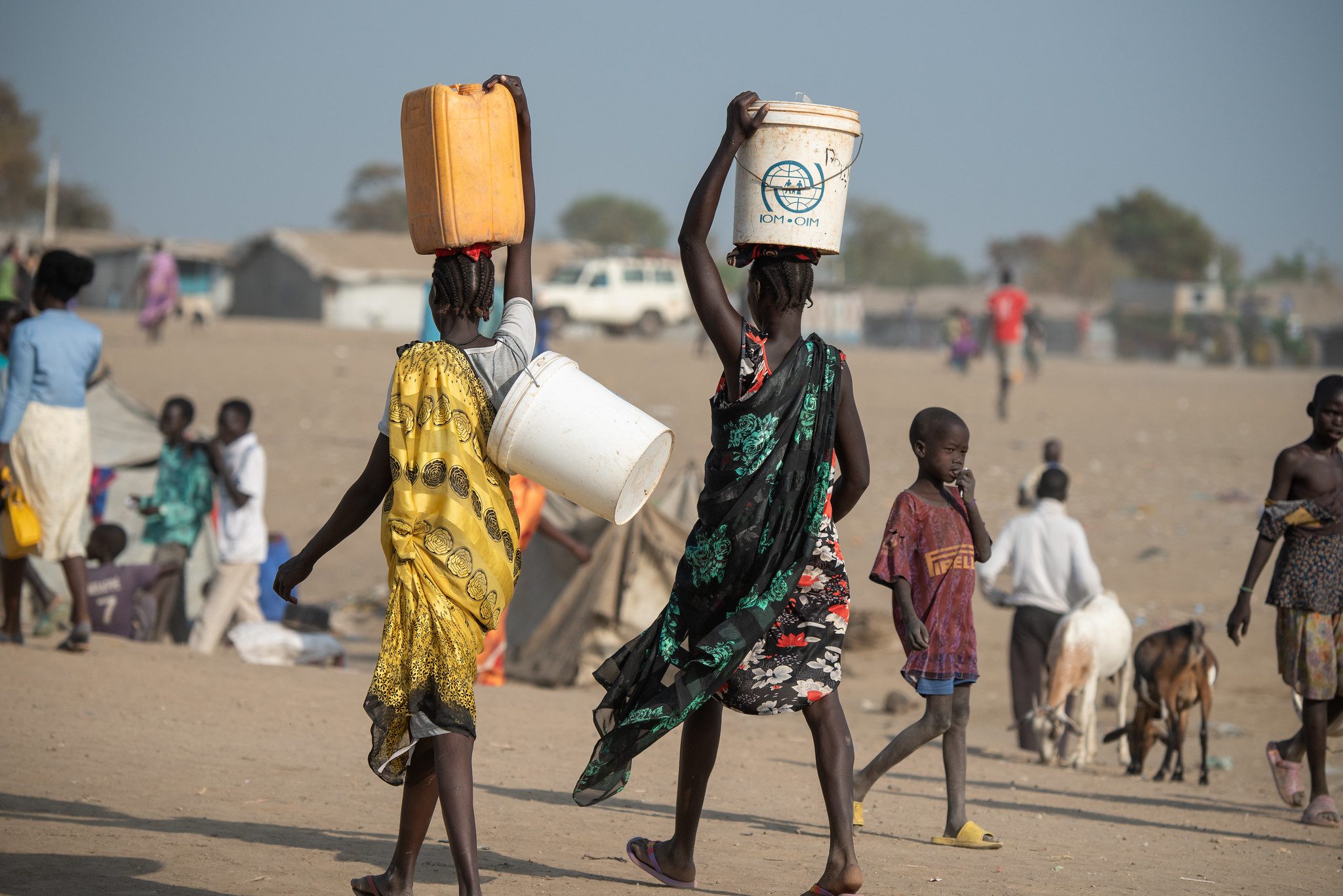
The search for food and water in Tigray often requires travel through unsafe areas, significantly increasing exposure to sexual violence.
“… I asked the driver if he can support to take me until my house for free since I am carrying groceries. He took me along a road that I was not familiar with and forced me to leave the car. He took me to the tree side and raped me.”
Prostitution and Forced Marriage
Economic desperation has led many survivors to engage in prostitution as a survival mechanism. Internally displaced women and girls are particularly vulnerable. Economic desperation is leading survivors and families to marry off daughters or push them into prostitution as a survival strategy.
Shifts in Household Dynamics
The death of male partners and family members during the conflict has led to a rise in women-headed households. These households face heightened risks of exploitation, abuse, and food insecurity, further compounding the vulnerability of survivors and their children.
Justice Cannot Wait: A Call to Action for Holistic Support, Accountability, and Reparations
The survivors call upon governments, humanitarian agencies, donors, and civil society organizations to urgently recognize and respond to the needs of survivors of wartime rape many of whom continue to suffer in silence, without access to psychological care, medical treatment, legal redress, or reparations.
These survivors have endured unimaginable violence, and yet their pain is compounded by neglect, stigma, and exclusion. Their healing and recovery must be prioritized as a matter of human rights, justice, and dignity.
Survivors demand:
- Multi-sectoral responses integrating food security, protection, health, nutrition, and livelihoods.
- Access to trauma-informed mental health and recovery services tailored to survivors’ experiences.
- Comprehensive medical care, including sexual and reproductive health services.
- Legal support and protection, ensuring perpetrators are held accountable.
- Reparations and livelihood assistance to restore agency and rebuild lives.
- Community reintegration programs to combat stigma and promote healing.
Survivors are not invisible.
[i] These are the age ranges of survivors I supported in my role as a psychotherapist. Recent studies have revealed that even very young children as young as two years old have been subjected to rape, either directly with their mother or in the presence of their mothers, during incidents of sexual violence in Tigray.
[ii] UN Women. (n.d.). Frequently asked questions: Types of violence against women and girls. UN Women Africa.
[iii] Federal Bureau of Investigation. (2013). Rape Addendum. Uniform Crime Reporting Program. https://ucr.fbi.gov/crime-in-the-u.s/2013/crime-in-the-u.s.-2013/rape-addendum/rape_addendum_final
[iv] Global Justice Center & United Nations Entity for Gender Equality and the Empowerment of Women (UN Women). (2024). Documenting reproductive violence: Unveiling opportunities, challenges, and legal pathways for UN investigative mechanisms. UN Women. Retrieved September 24, 2025, from https://www.unwomen.org/en/digital-library/publications/2024/09/research-paper-documenting-reproductive-violence-unveiling-opportunities-challenges-and-legal-pathways-for-un-investigative-mechanisms
[v] “Woyane” (also spelled “Weyane”) has deep historical and political significance in Tigray. It refers to both a historic rebellion and a modern political movement, each rooted in resistance and regional pride. In contemporary Ethiopian politics, “Woyane” is often associated with the Tigrayan People’s Liberation Front (TPLF), which was founded in 1975 in Dedebit, Tigray.
[vi] A word most survivors use to refer perpetrators from Amhara different regional forces.
[vii] Louse has been used historically by Ethiopian politicians and leaders to insult Tigrayans and refer them as a community causing irritation to Ethiopians and are often associating the Tigrayans with poor hygiene or poor living conditions.
[viii] Human Right Watch and Amnesty International Report, April 2022): Crimes against Humanity and Ethnic Cleansing in Ethiopia’s Western Tigray Zone.
[ix] The term “Shabia” (also spelled Shaebia or Shaabia) refers to the Eritrean People’s Liberation Front (EPLF), a revolutionary movement that played a central role in Eritrea’s fight for independence from Ethiopia.