This interview is one of a series, produced as part of the Future of Peace program, that explores how thinkers and practitioners are making sense of a changing world and what that means for the future of peace. The series aims to surface different ways of thinking about the challenges, tensions, possibilities, and uncertainties that lie ahead.
The below is an edited transcript of a conversation that I had with Carol Daniel Kasbari on September 25, 2026.
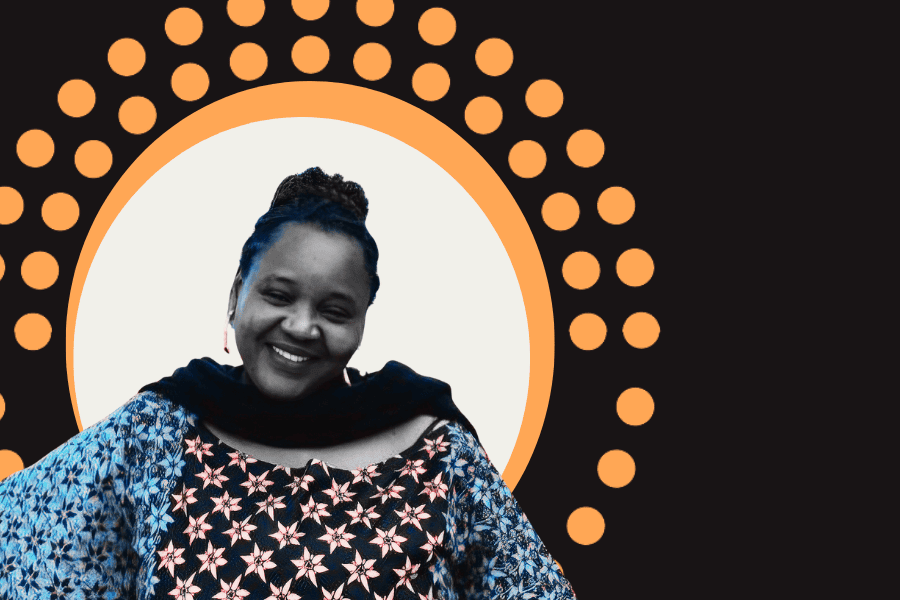
Carol Daniel-Kasbari, Ph.D., is Senior Associate Director of the Conflict Resolution Program at The Carter Center, where she oversees the Center’s global conflict-resolution initiatives, and a Non-Resident Fellow at the Quincy Institute for Responsible Statecraft. With more than 25 years of experience, she has designed and led mediation, dialogue, and peacebuilding initiatives in conflict-affected contexts across the Middle East, Africa, and Europe. Her perspective is also informed by her Palestinian American background. She earned her doctorate from George Mason University’s Carter School, where she has taught; her research on power, peace, and everyday resistance received the Peace and Justice Studies Association’s 2020 Best Dissertation Award and the American Association of University Women Ph.D. Award. She has published widely on conflict resolution, structural violence, resistance, and the gap between conflict management and transformation, including “Ending Control, Not Managing Conflict.”
The transcript was originally generated using Zoom transcription software and has been edited for accuracy and readability. I have added hyperlinks.
Michelle Anderson: Carol, thank you so much for taking the time to speak with me. I’m glad to include your perspective in this series for many reasons, one being that you bring extensive experience working in conflict resolution and mediation across different contexts, and a critical perspective on some of the assumptions that have shaped those fields. I have a few questions for you around that, but perhaps to start, could you tell us a little bit about your own background and current work, and how you came to the questions that are shaping your work now?
Carol Daniel-Kasbari: Thank you Michelle, for having me here. I feel honored and privileged to be talking to you, and thank you for leading this program. A bit about myself: my work has always moved between practice, policy, research, and teaching. At the moment, at the Carter Center I oversee conflict resolution work in the Middle East, in North Africa, and in West Africa doing mediation, dialogue, conflict analysis, policy engagement, and working with country offices and local partners.
For many years, I taught conflict resolution at George Mason University, and I also engage with policy communities, currently through the Quincy Institute and previously the Middle East Institute. Teaching kept bringing me back to the foundational ideas of the field while practice kept testing them, and that has shaped the way I think. I’m very interested in theory, but in what it helps us see differently in practice— what questions it makes us ask, whose voices we pay attention to. One question that keeps coming back is: why do we have such good analysis and sophisticated peace processes and strong policy recommendations, and yet the underlying conflict barely changes?
For me, this question is also personal. I’m Palestinian American and originally from Nazareth, historical Palestine. It’s inside the Israel Green Line, and I lived most of my life in Jerusalem, so peace has never been an abstract concept for me. I come from a region where the language of peace has been used so much, but where people could see that “peace process” did not necessarily mean that the conditions producing the conflict were changing. That made me very interested in the idea of who gets to define peace. A government may define it as stability or security, while an international institution may point to a ceasefire or an agreement. But people living through the conflict are asking very different questions. Am I safe? Am I recognized? Is my identity recognized? Can I move freely? Do I have a say in the decisions that are shaping my future? This comes back to theory. Theorists like John Burton and Johan Galtung influenced my thinking and my practice, because Burton pushed me to look beneath the political positions and ask: what basic needs are not being met here? Is it identity, security, dignity? Galtung, on the other hand, made me much more cautious about treating the end of violence as the end of conflict. A ceasefire is essential, but the question then becomes, what happens in the space that follows? Are the structures or relationships that produce the conflict changed? I see that directly in our work at The Carter Center in Sudan, where ending the violence is obviously essential, but our work has also reinforced for me that civilians need real agency in shaping the country’s political future.
That gets me to the other part of the question, what is occupying my thinking at the moment. I am increasingly wondering whether much of what we have been calling conflict resolution has actually become only conflict management. We respond all the time to violence. We negotiate temporary arrangements. We fund dialogue, all of which is very necessary, but we often leave the structures that are reproducing the conflict largely untouched. The question that I come back to all the time is, what would it mean to move from managing any conflict to structurally transforming it, and what would that require us as practitioners to do differently?
My recent writing on Palestinian liberation and the future of Israel-Palestine grew out of that concern, but the question is much broader than that context. Are we helping societies change the conditions that produce violence, or are we just becoming better at managing the consequences? For me, peace is not simply what happens when the violence stops. It’s also about what becomes possible afterwards, back to whether people are meeting their basic needs, whether they’re exercising their political agency, whether they’re challenging injustice without violence, or shaping their collective future.
MA: That’s a big question. What’s your take on that right now? Do you have a sense of what you think it could look like for practitioners to better enable that structural transformation?
CDK: It’s the million-dollar question, about how to move from conflict management to structural transformation. Conflict management is not necessarily a failure, at all. A ceasefire is needed. It stops people from being killed. That matters enormously. Humanitarian access, all these temporary arrangements and negotiations, they’re important because they prevent further violence. That is necessary. But the question I keep asking, especially in the last few years, is: What is that management buying time for? Is it creating space to address the conditions that produce that violence, or does it become a way of preserving those conditions with less visible disruptions? The danger is when temporary arrangements become permanent substitutes for political change.
A powerful example is Israel-Palestine. I started my career right after Oslo in ’94 and was a huge believer in the peace process, dialogue, and working with civil society and grassroots. We had development programs, peace education, dialogue initiatives, and a huge growth in organizations working to prepare people for peace. But at the same time, the reality on the ground was moving in the opposite direction — the occupation deepened, settlements expanded, violence continued, and infrastructure was repeatedly destroyed. And I mean infrastructure in both senses: roads, homes, and institutions, but also the infrastructure of hope and trust that peacebuilding was trying to create. So while we kept calling it a peace process, the fundamental questions of power, rights, sovereignty, land, and political agency were never really addressed or resolved. You see a similar situation today in and around Gaza, where Palestinians are given responsibility for administering services or rebuilding institutions, but the meaningful authority over security, borders, financing, and reconstruction is elsewhere. I call it “responsibility without authority.” You can create an administrative structure that way, but not meaningful self-government.
Structural transformation for me starts by looking beneath the immediate crisis and asking who holds power, who controls resources, and what actually needs to change. Who actually has the authority? Who is in control of the resources? Whose security is protected and whose is not? Who can move and who cannot? Who participates in decisions, and who ultimately has the power to influence the outcome? The short-term measures have to connect to those deeper questions and the facts on the ground.
Sudan is another example. This is something we confront daily in our work at the Carter Center. Of course, the immediate priority is to stop the fighting, protect civilians, prevent further atrocities and displacement, and secure humanitarian access. But if the political settlement is negotiated only among armed actors and essentially distributes positions, authority, and resources among those who fought the war, we may stop the fighting, but we are recreating the same situation. We are reinforcing the idea that military power is the route to political power. Transformation requires us as practitioners to ask a different set of questions. What should be the relationship between civilian authority and armed institutions? How should power and resources be distributed? Who gets to shape the transition? Are women, youth, displaced communities, and civil society influencing decisions? This is part of what we have been trying to address through our work in Sudan. We have created spaces for Sudanese civilians inside Sudan and in the diaspora to identify the priorities for their recovery and connect those priorities to the broader political and policy discussions.
I think, and this is something you discuss in your recent paper, it changes how we define success in our field. We are very good at counting meetings and agreements and reports, but those tell us that a process has happened. It doesn’t tell us whether anything meaningful has changed. At the end of the day, the questions about conflict transformation have to be: Did people gain political agency? Did an unjust policy or institution change? Did decision making become more inclusive? These are harder questions for us as practitioners, and much harder to measure, but they are the questions we have to ask.
Structural transformation requires us to look honestly at power. Conflicts are not always about actors with equal authority. There are significant asymmetries of power. One thing that I’ve heard all the time is that we as peace practitioners depend a lot on relationships and access. We need to be able to engage across a conflict while having the relationship and access, but at the same time recognize that there are power asymmetries. There is a real tension here. How do we name power and domination honestly, without losing the ability to engage with the actors whose behavior we’re trying to influence? I don’t think our field has fully resolved that tension.
We do need conflict management, but the real test is where it leads. We can stop the violence now, but we need to then ask: what has to change in terms of structures and relationships so that power does not produce the next conflict?
MA: You raise several points that I have follow-up questions on, but on your last point about power asymmetries, have you found strategies through your experience that felt particularly useful for naming and addressing those asymmetries?
CDK: It’s a tricky situation. I have been in it many times, whether it’s in second-track negotiations between Israelis and Palestinians, or working with Cypriots, Greek and Turkish Cypriots or with Iraqis. Practitioners not only need to name domination and power asymmetry, but they have a responsibility to do so, because if we ignore unequal power simply to preserve access or keep everyone at the table, the process can become disconnected from the reality people are living.
For me, the key distinction is between impartiality in how we engage people and neutrality toward the conditions producing harm. As a practitioner, I should listen seriously to everyone, treat people with dignity, no matter what I think, and remain open to perspectives across the conflict. But that does not mean that I can be objective. There’s no such thing as complete objectivity. As practitioners, we cannot be neutral about facts, human rights, international law, or structural violence. Impartiality certainly does not mean pretending everyone has equal power. If one actor has far greater control over territory or movement or resources, then treating the conflict simply as two equal sides with competing narratives, as we see in many examples, can obscure the very relationship that needs to change.
At the same time, naming domination cannot mean dehumanizing people on the more powerful side, or treating them as permanent enemies. In Israel-Palestine, for example, acknowledging Palestinian dispossession and unequal structures of control does not require dismissing Israeli fears or Israelis’ feelings of insecurity.This is where engagement still matters. We need spaces where fear and trauma, identity, and political interests can be discussed honestly, but dialogue cannot become an end in itself. If people understand one another better while the structures around them remain unchanged, we have to ask what the dialogue is actually achieving.
As a practitioner, recognizing power asymmetry should change how we design the process, who participates, who sets the agenda, what protections are needed, how decisions are made, and whether people have influence rather than just a seat at the table. There are many moments when speaking honestly makes access more difficult, but access is a means. It’s not a measure of success. If maintaining access requires us to avoid the central source of the conflict, then we have to ask what that access is buying us.
That leads to broader questions for our field, which is that doing this honestly requires more than better mediation techniques, because we ask about strategies. It requires us to challenge some of our deeper assumptions about neutrality, or about what counts as a successful agreement, and about whether participation is the same as influence, and who defines peace in the first place?
MA: Challenging assumptions is something I’m thinking about a lot right now. The follow up question I always come to is, what can or should happen in that open space once we remove assumptions? To me, this is interesting in the context of bigger conversations that we have both been part of, around shifting global power and what that means for what comes next. Given that, what kinds of institutions, relationships, or forms of cooperation do you think will or should become more important in the future for peace?
CDK: You are right, and yes, we have been discussing this at the Future of Peace and Security Coalition. It’s also a very hard question about cooperation with the very limited resources that we have at the moment. And when I say limited resources, I mean particularly the funding available to do this work
I don’t think the future necessarily requires more institutions. We already have so many, and what we need are different relationships among them, and a much greater ability to work across sectors. Peace is still largely treated as the responsibility of governments, NGOs, and international organizations; that has to change. Institutions can connect across boundaries, but they need to do so without trying to control everything themselves, building relationships that last beyond a single project.
One example from our work at The Carter Center is the Strengthening Trust and Resilience, or STAR, program in the United States. It works through cross-partisan networks and trusted local voices to address misinformation, de-escalate political tensions, strengthen confidence in democratic processes, and reduce the risk of political violence. What I find important is that it doesn’t assume people will agree on the major political questions. The goal is to preserve enough trust, communication, and commitment to shared rules that disagreement remains political rather than becoming dehumanizing or violent.
Take the private sector, for example. Businesses have an enormous stake in peace. Conflict disrupts markets and supply chains, displaces workers, weakens institutions, and destroys public trust. Investment in peace shouldn’t be seen simply as philanthropy or corporate social responsibility. Peace is a precondition for many other investments in health, in education, infrastructure, and technology. That means we need stronger relationships between businesses and civil society. Business can bring resources and technology and logistics, employment and influence, and civil society can bring technical expertise, community relationships, grounded knowledge, and an understanding of local power dynamics. But that relationship has to be substantive. It cannot only be a company writing a check, as we see today, or putting a logo on a flyer for a project and calling that peacebuilding. It certainly shouldn’t give companies a free pass. How a business treats its workers, natural resources, and data is part of its impact on peace.
Health and peace is one example of this kind of cross-sector work, because health depends on trust, access, security, and functioning institutions — and cooperation around health can sometimes create openings across political and social divides
Technology is another area where collaboration is going to be much more important. I think we’re all afraid of AI, that it’s going to kill us! But I think AI could be used differently. It could help us understand conflict. It could help us identify and predict risks, translate across languages, and make information more accessible to everyone. I don’t think peace practitioners can afford to enter that conversation after the technology has already been designed. We need to be part of it now, from the beginning, thinking about how we use AI for good. The big question is, what kind of society do we want this technology to help create at the end of the day?
There is also the relationship between knowledge and practice. I would like to see peace and conflict thinking have much greater influence across fields, not as another institutional silo, but as something that informs how we think about everything: security, public health, the economy, governance, and development. That means that universities and think tanks need much stronger relationships with people working at the community level. Too often, local knowledge is collected and turned into a report and taken to policymakers, while the people who have produced that knowledge have very little influence over the recommendations or what happens next. Grassroots actors should help define the questions and interpret the evidence. Policy institutions, for example, can bring access and expertise, but they should create direct channels through which grassroots actors can influence decisions themselves.
So for me, the point is to embed peace much more seriously into how we think about security, health, technology, economics, governance, and development.
MA: Thank you. Once again, this is so rich, but I am thinking about your last point about having cautious hope because of new approaches you are seeing. You’ve already mentioned a few exciting programs at the Carter Center, and you point to areas where you think there should be more collaboration; is there anywhere you see particularly interesting or generative thinking already happening around questions of peace, justice, social transformation, and futures?
CDK: One area I see as particularly useful is work that admits what our limits are, and becomes clearer about the direction it is trying to move in. I was drawn to the distinction you made in your recent paper between peace and the conditions that make more peaceful futures possible, so thank you for that. I would take that a little further because I think our field needs to define more honestly what we are doing and what we’re not doing. We may not be resolving a conflict. We may be reducing immediate harm, preserving an important relationship, or keeping a political space open. Those are meaningful achievements, especially when people’s lives are at risk. But we should name them honestly, and then ask: what future possibility is this work creating?
That is one reason I find the work connecting health and peace especially interesting. I have seen this in some of our work in Mali at the Carter Center. Insecurity can prevent health workers from reaching communities that need essential services. Creating periods of relative calm can allow those workers to reach places that would otherwise be inaccessible. But sometimes something else happens as well; the communities, the authorities, the tribes, and other actors may have to collaborate around a basic shared need, and that practical collaboration can begin to create trust or preserve relationships that may otherwise not happen or disappear. That does not mean a health intervention resolves the political conflict, but it may reduce harm and create an opening where few openings exist.
That challenges one of our conventional ideas about where peacebuilding happens. It doesn’t always happen, or only happen, at negotiating tables or through formal peace processes. The conditions for peace are also shaped through health systems, schools, local governments, media, and other institutions that affect whether people experience dignity, fairness, or some degree of agency in their lives. It offers a different way of thinking about coexistence. For example, in deeply divided societies, we may not be able to begin by asking people to agree on a common political future. Sometimes the starting point is much smaller. Can people collaborate around a shared human need, and if they can, does that begin to change the relationship between them?
But there is an important caution here that practical collaboration or cooperation cannot become a substitute for justice. People can cooperate around health or education while still living within deeply unequal political structures. The question is not simply whether cooperation happens, but whether it also expands access and creates pathways toward more responsive and legitimate institutions.
This is where I see some of the most promising thinking: work that is modest about what it can accomplish immediately, but clear about the direction of change. It may not create peace, but it can help create some of the conditions that make a different future possible– an opening, a pathway, a relationship that survives, a more responsive institution that gives evidence that cooperation is still possible. Sometimes those conditions are what allow people to begin imagining a future that is not simply an extension of the present.
MA: Absolutely. Your point about being honest about what we’re doing and what we’re not doing, to me, calls back to what you said about needing more relationships between sectors. I worked in global health for a few years prior to this and have been thinking a lot about the ways peace intersects with these other areas of work, so I’m nodding furiously as you talk about this.
You pointed to the openings that allow people to start imagining different futures– I’d love to talk more about that. I know that appears in your recent article on Palestinian liberation and the future of Israel-Palestine. What do you think makes political imagination possible, particularly for people living and working in immediate conflict? Maybe a second part to that is, what role do you think people working in peace, broadly speaking, can or should play in creating space for those possibilities?
CDK: For me, political imagination begins with refusing to assume that the structures we have today are permanent. One of the problems in Israel-Palestine is that we have spent so much time debating formulas, and sometimes the institutional arrangements become more important than the principles that they’re supposed to serve. In my piece that you reference, I argue that we need to reverse that. We need to focus on the progress rather than the process, and on what has to be a future in which no people permanently governs another people, Palestinian freedom and self-determination are real, political equality is not conditional, and Israeli security does not depend on Palestinian insecurity. These are the main arguments.
That requires imagination, because the present reality can make those principles seem unrealistic. When people have lived for seven or eight decades with occupation, fragmentation, fear, violence, and unequal power, the existing system begins to look inevitable. Political imagination is the ability to say it is not inevitable. It means imagining Palestinians not as a population to be administered, contained, or periodically reconstructed, but as political actors with authority over their own lives and future. It means imagining Israeli security not through permanent control, but through a political relationship based on equality and shared security.
I don’t think we have to prescribe the final institutional architecture in advance. It could take different institutional forms — two states, a confederation, or another rights-based arrangement — but whatever the structure is, it has to pass a much more basic test. Does it end domination? Does it give both peoples freedom, dignity, security? Does it meet what Burton called basic human needs? Otherwise, it will never end. The political imagination we need is not really about inventing a more creative plan or map. It is about imagining fundamentally different relationships between people on that map.
As for your question about people working in peacebuilding, I don’t think we can create peace for others— that is an important distinction. What we can do is help create the conditions in which people can build peace themselves. We can help reduce violence. We can help protect political space. We can bring people into conversations who are usually excluded. We can connect communities with decision-makers, make realities visible that might otherwise be ignored, and help preserve relationships when formal political processes are breaking down
We can also challenge the structures and practices that keep reproducing the conflict, including within our own institutions. But ultimately, the people living the conflict have to have the agency to shape their future. I see the peacebuilder’s role less as designing the destination and more as opening space, widening choices, and connecting people and institutions to make that future more possible.
MA: Thank you. That’s an excellent answer to a difficult question. Is there anything that we didn’t get to today that you think is particularly important to include in the conversation, especially for people thinking about the future of peace today?
CDK: This idea of hope and optimism that everybody keeps talking about. That is something I wonder about as someone who’s been working in this field for 30 years. I ask myself, what gives me hope? Really, what gives me hope? What keeps me going?
The power of people and the young generation, these are the two things that give me hope today. I see a generation that is less willing to accept inherited assumptions. Whether it’s in the U.S., with polarization that is happening here, or elsewhere internationally, I see a generation that is much less willing to accept things simply because institutions or governments have repeated them for decades. I don’t want to romanticize the generation. Young people are living with enormous pressures. Ask my two sons! Misinformation, uncertainty, economic issues– but many of them are unwilling to accept that the future has already been decided for them, and are looking for different ways to organize, communicate, and hold institutions accountable.
More broadly, as I said in my dissertation of 800 pages on everyday resistance, people’s power gives me hope. And hope is not the same as optimism, that I have to be clear about. Optimism assumes that things will somehow get better, and I’m still engaged in this field because I want to continue to create possibilities, even when there is no guarantee that they will succeed. I also don’t think we should tell people living through violence that they need to stay hopeful. I can’t add this burden onto them. I feel my responsibility is to create credible reasons for hope– hope for a policy to change, or collective action, or something else.
What makes me skeptical is that many conflicts continue not because we don’t understand what’s driving them, but because powerful actors benefit from the way things are. Honestly, I don’t think we lack knowledge. It’s all there. It is the political difficulty of changing how power and resources are distributed.
Within our own field, I worry we sometimes confuse activity with progress, and I hope that we start thinking about what progress looks like.
Finally, I don’t believe more peaceful futures are inevitable. They are possible, but they require, as I said, connections between sectors. They require political choices, institutional courage, and people who refuse to accept violence and inequality as permanent. I keep saying that my skepticism keeps me from mistaking activity for progress, but my faith in this generation and in people’s power keeps me from mistaking the present for the future.
MA: Beautifully said and thank you for everything you’ve shared today– a lot of food for thought.
CDK: I really enjoyed this conversation and your questions, and I’m grateful that you’re creating this space for practitioners, theorists, and others to think about these issues together. I really hope we have some breakthrough at some point with all that we’re doing. That satisfies me more than professionally, it is also on the personal level, to see even a little bit of change in the way we do things.