The practice of ending wars through peace agreements, often with a third party as a mediator, has existed throughout history, and became normative in the last forty years. While there’s no requirement in international law for a state to accept any offer of mediation, nor any standardized criteria for recognizing whether such a process is authentic or has broken down, nonetheless it has become standard to respect a process of mediation once it is underway.
Respect for mediation isn’t a matter of nicety. It’s foundational if there is to be any chance of ending wars.
Some security commentators and politicians like to grandstand about how the only thing that matters is force. Their style may look authoritative and their language may sound no-nonsense, but militaristic hubris is in fact the height of naivete. Tough image, soft thinking.
In the Melian Dialogues, Thucydides cites the Athenian ultimatum to the Melians to surrender without any condition, “the strong do what they can and the weak suffer what they must.” Self-proclaimed realists like to quote this as the iron law of international politics. Historians – including Thucydides – recount how Athens itself went on to suffer the devastating consequences of its hubristic lawlessness.
As Athenians learned to their cost, no order created by force alone can last longer than the capacity to impose it. And that’s never, ever long enough – and in an age of disruption, total domination’s sell-by date comes ever closer.
The men and women who met in San Francisco in 1945 and outlawed aggressive war knew the realities of war.
The Trump Administration’s war of choice against Iran will have many unforeseen consequences. One that’s predictable is damage – possibly lethal – to the already-battered norm of respecting mediation.
Israeli violated this long-held precept last year when it attacked Iran while negotiations, under the auspices of the state of Oman, were ongoing. The U.S. subsequently joined Israel’s 12-day war.
There are lessons to be learned from recent cases in which peace talks were prematurely cut short by military action. On March 19, 2011, NATO started its bombing campaign against Libya on the same day that a panel of five African Union heads of state was scheduled to fly to Tripoli to negotiate a soft landing for Muammar Gaddafi and avert what they feared would be a calamitous war. NATO leaders scorned the African peace effort – and in doing so they killed it. Fifteen years on, that decision to short-circuit peace talks looks like armor-plated naivete.
Among other things, the decision convinced Russia that NATO promises couldn’t be trusted. The first casualty of that was Syria.
With this weekend’s attack on Iran, Washington appears to have jettisoned any respect for mediation. A round of talks had been held in Geneva, with Oman as mediator, last week. The Omanis reported that Iran had made significant concessions and that talks would resume this week.
It’s not clear whether the Geneva talks were a smokescreen for military action that had already been decided, whether the US’s demand was something that the Iranian regime could never accept (such as unconditional capitulation), or whether America moved the goalposts. Whichever it is, there will be further damage to the US’s reputation for negotiating in good faith.
And the fact that the very first strike of the war was to assassinate Iran’s leader raises the stakes even higher. Will it now be a norm in inter-state relations, if one state thinks that another is threatening it, its opening salvo can be to kill its head of state?
There’s a key difference between what happened over the last week and faltering mediation efforts in ongoing wars such as Ukraine and Sudan. Where there are already ongoing hostilities, it’s standard for the belligerents to fight and talk at the same time, until they agree to a truce.
In the case of the American-Israeli war on Iran, there were no active hostilities. Nor, by any reasonable standards, was there an immediate threat to the U.S. or Israel justifying the first strike. This is President Donald Trump’s war.
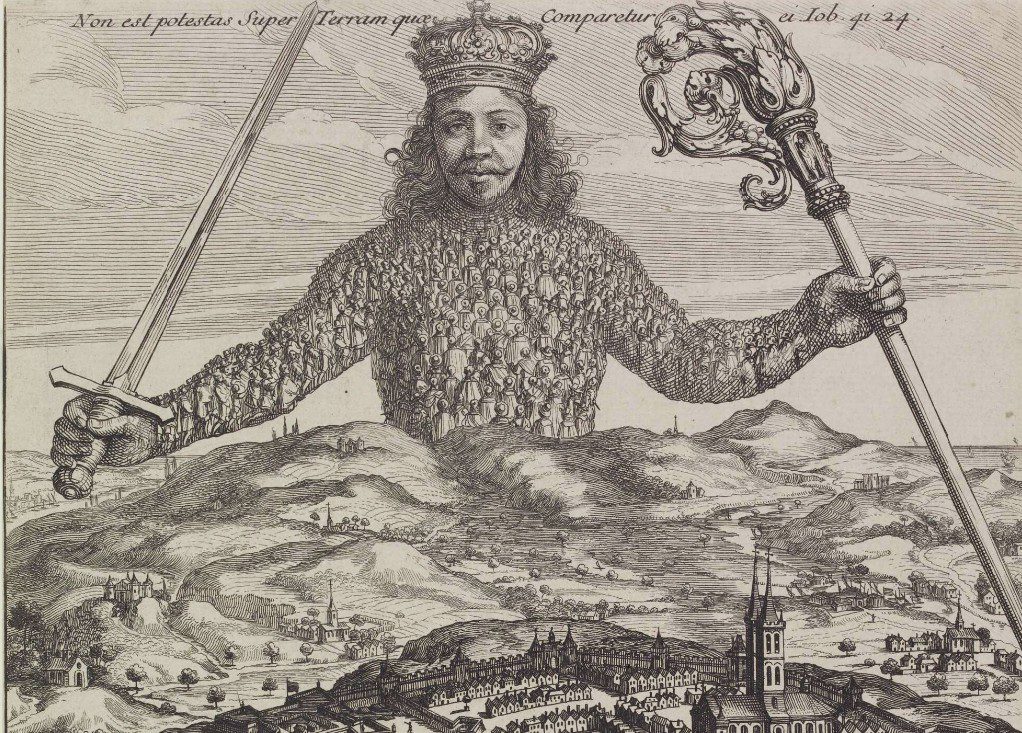
How does this fit the template of World War X? In two respects. First, it’s leading us straight into a general state of war – or, as Hobbes would have it – warre. Second, ideology is subliminated to power and money.
Trump increasingly looks like a man whose only deal-making stratagem is to make an offer you can’t refuse. We saw in Venezuela that his version of regime change is to replace the leader of the targeted country with a client who continues to run the same gangster-kleptocracy, just paying out to the new boss. It’s possible that he has something similar in mind for Iran.
When kleptocrats negotiate, there’s a deal to be made – but behind closed doors, not at the negotiating table.
Respect for mediation is closely intertwined with the principle of respecting the other side’s negotiator. This is a longstanding part of the warrior’s honor. It was upheld by, among others, Jingghis Khan, some 800 years ago.
Israel has assassinated several Hamas negotiators in the months after the October 7 atrocity and onset of war in Gaza. In October last year it tried to assassinate members of a Hamas delegation in Qatar. In Arab and Muslim tradition, inviting someone into one’s house, under one’s protection, creates an obligation that cannot be violated. When Israel violated that principle, it sparked instant outrage, even among Qatar’s fierce rivals in the Arab world. The President of the United Arab Emirates and the Crown Prince of Saudi Arabia immediately responded by flying to Doha to embrace the Qatari Emir in a show of solidarity. The Gulf States successfully pressed Trump to compel Benjamin Netanyahu into a public apology to the Emir.
But any hope that this signalled that the US was going to adhere to foundational norms of peacemaking appear to be vain.
Last Thursday, the Center for Conflict and Humanitarian Studies in Doha published its World Mediation Report 2026, entitled “Peace Mediation in an Era of Normative and Institutional Collapse.” It could not have been more timely.
If the norms and practices of preventing wars and ending them are spurned, war will become the normal state of world affairs. It may be that those who are strong today may learn the wisdom of restraint only when they themselves suffer. That can be avoided. But it needs leaders who understand the difference between war and peace, who understand that the hardest armor and toughest words often hide the softest, most naïve thinking.