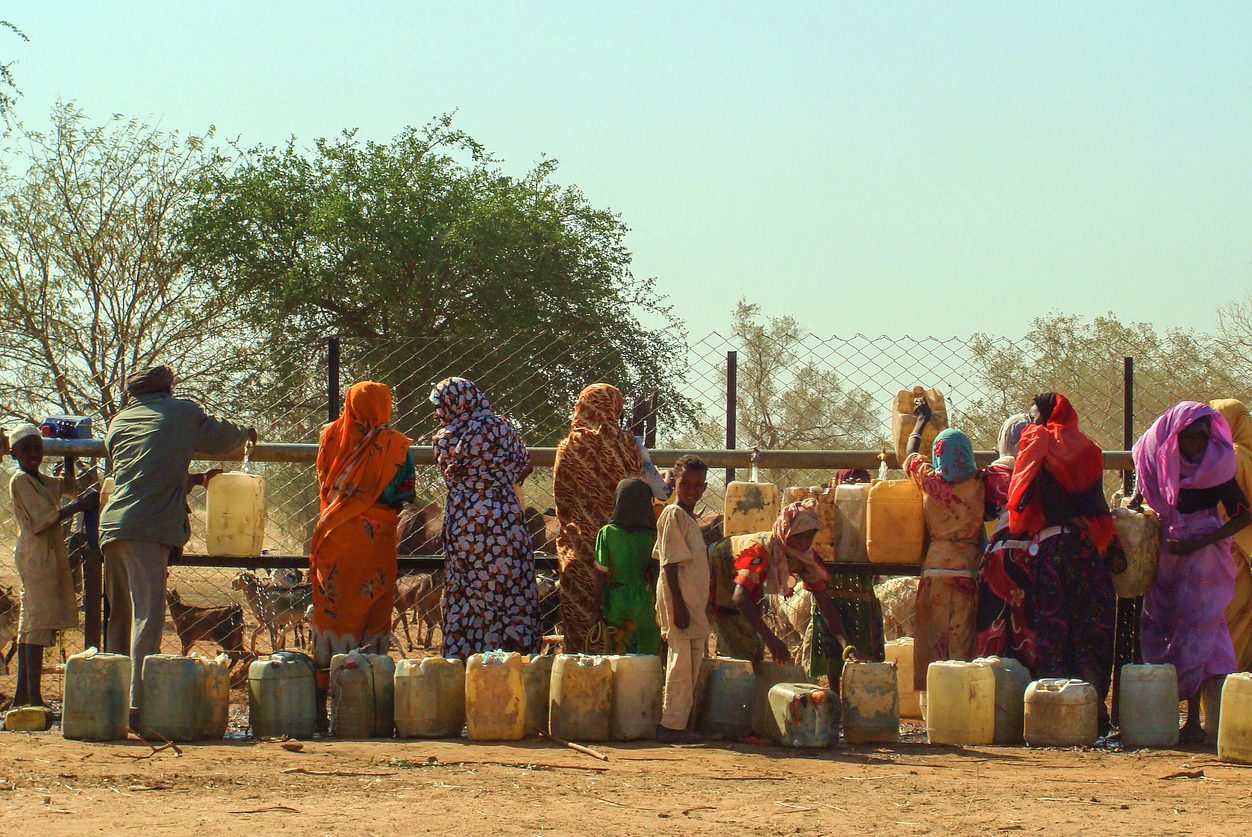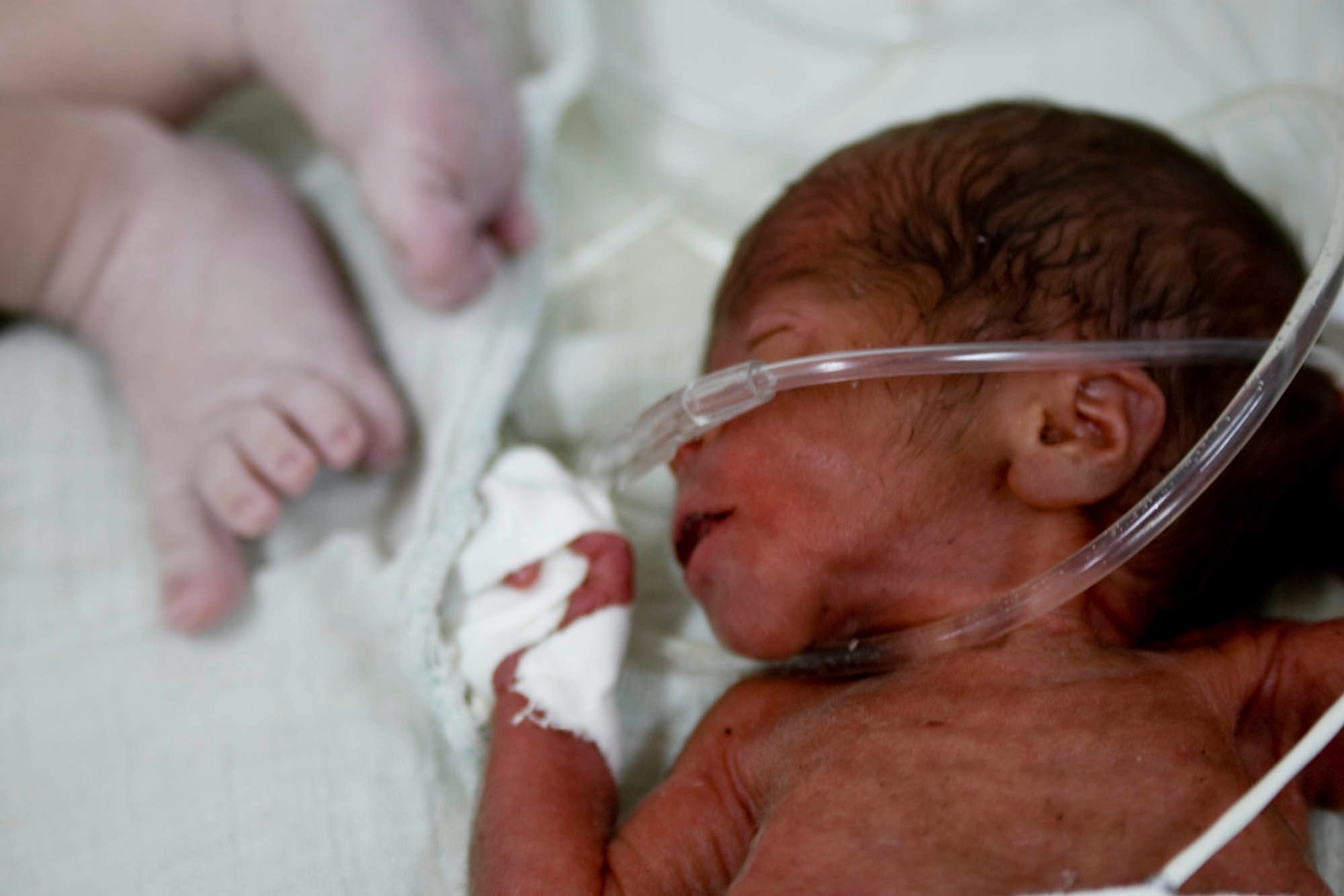
The gendered language of ‘man-made famine’ is deliberate. All modern famines are primarily triggered by political and military decisions, overwhelmingly taken by men, acting in paradigmatically toxically masculine ways. Other proximate causes of mass starvation have become vanishingly rare. Once they are triggered, how famines unfold is shaped by power relations in society, which are gendered.
Episodes of mass starvation caused, deliberately or recklessly, for political and/or military purposes, differ widely but share certain family resemblances. One of these characteristics is that they are an assault on the social order, leading in extreme cases to the breakdown of basic social functioning that press afflicted people to such desperation that they violate fundamental social norms.
Sharing food is central to human belonging. The word ‘companion’ is derived from the Latin companio, which combines com (with) and panis (bread). Sharing food is foundational to the family, community and society. In most societies, preparing food for a family, and for company that may join to share the meal, is foundational to a woman’s identity. Sociologically, starvation occurs when people no longer share bread, but fight for it. That is a point of social degradation, humiliation and dehumanization.
It is useful to see famine as a complex system, but also as the accelerated traumatic dismantling of a socio-economic and political system, to be reconstituted as something else—likely one in which patterns of vulnerability are changed and sharpened. It is a process in which hunger and humiliation go hand-in-hand.
The Gendered Demographics of Famine
Famines have four major kinds of demographic impact: excess deaths, reduced births, migration, and changed household composition.
Excess deaths are the most egregious demographic insult, and the one most commonly taken as a metric for the magnitude of the famine. Excess deaths attributable to famine are usually taken to include all non-trauma deaths above the population baseline. ‘Non-trauma’ is defined narrowly to exclude deaths directly caused by kinetic violence, including deaths due to hunger, communicable disease, or untreated non-communicable disease. Leaving aside the narrow definition of what qualifies as ‘trauma’, there is an ongoing debate as to whether three categories of trauma-related deaths should be included among famine deaths: (a) people who are killed while seeking aid (e.g. about 2,500 fatalities in Gaza); (b) people who die from accidents when seeking food (e.g. poisoned by toxic foodstuffs or drowned while trying to seek famine foods, as in South Sudan’s swamps); and (c) people who would normally recover from traumatic injuries but do not do so because of malnutrition and/or infection (common in Gaza and Tigray, and likely so in Sudan).
For peacetime famines, the demographic literature points to a common (though not universal) puzzle, which is the female mortality advantage (FMA). Women and girls tend to have higher survival rates than men and boys. With the exception of some Asian populations that have particularly severe discrimination against girls, female life expectancy is, in normal times, higher than male. In famines the FMA is usually accentuated. There are both biological and socio-economic hypotheses to explain this.
In famines associated with armed conflict, the gendered demographics are different. Armed conflicts usually concentrate excess deaths among adult males. The borderline categories of excess deaths mentioned above may also become significant, for example if men are the ones exposing themselves to danger to get food. The societal dynamics of food distribution also change during wartime. It is a near-universal that in any siege, it is armed men who are the last to starve, not only because they are able to obtain what they need by force, but also because community members may provide favorable rations to the men defending them. These factors all have implications for the gendered burden of excess death.
Moreover, the FMA comes at a cost, which is that the socio-economic burden of famine is borne more heavily by women. Women may have (slightly) better odds of survival than men but they have worse socio-economic outcomes.
The second demographic impact is a reduced birth rate. The number of cancelled or postponed births in a famine is usually comparable in scale to the number of excess deaths, though for obvious reasons this phenomenon is much less visible. Again, it has biological and social elements.
Famine-related fertility reduction is a hugely under-researched area. As with excess mortality, it has both non-traumatic and traumatic elements. (The same definitional caveats apply.) Both are involuntary. ‘Non-traumatic’ reduced conceptions may be caused by spousal separation, starvation-related amenorrhea or starvation-related miscarriage. Traumatic reduced conception can be the result of sexual violence and torture, which leaves the survivor biologically infertile or socially ostracized and unable to marry and have a family. In the case of systematic and widespread rape, survivors may bear children fathered by their rapists, but thereafter have little prospect of becoming socially re-integrated. One of the acts constitutive of genocide is preventing births in the targeted group. If a protracted famine is inflicted on a population with the intention of reducing births, it could be potentially genocidal.
After a non-wartime famine, it is common to see a rebound in fertility, with a brief period higher than the baseline. This is likely due to a rebound in conceptions among those who chose to postpone marriage or because of spousal separation during the famine. It may also be due to pro-natalist policies following the deaths of the famine years. The sociology of maternality may change after famine, another neglected topic.
The third impact, usually the biggest by the numbers, is migration. Famines cause various kinds of migration, including short-term migration to seek work or charity (reversed when the famine is over), abandonment of homes and livelihoods (often seen as short-term at the time but usually turning into an indefinite shift), and post-famine outmigration. In agrarian societies, the demography of many famines or episodes of forced mass starvation can be characterized as traumatic accelerated urbanization. That is, existing communities and livelihoods are wrenched into new patterns, usually informal urbanization (sometimes officially called refugee camps or IDP camps). These change household composition and gender relations. For women and girls, it may sometimes be an escape from the rigidities of patriarchy in the village. But it is also commonly an impoverishment, a social trauma, and an exposure to abuse and exploitation.
Fourth, during famine, household composition often changes dramatically, with families dispersing and in some cases, aggregating around those who provide security and patronage. Some of these changes are reversed after the famine, but others are not. All of these have gendered impacts.
One of the acts constitutive of the crime of genocide is ‘deliberately inflicting on the group conditions of life calculated to bring about its physical destruction in whole or in part.’ Destructive conditions of life can, obviously, refer to conditions under which biological life is unsustainable. Less obviously but no less significantly, it may also refer to the destruction of a group as such by inflicting physical destruction that also sunders relations among the members of the group, as one could destroy a family unit by separating parents and children. In the case of famine, this could include inflicting genocidal harms that also cause forced migration and dispersal of the population, breaking its relationship to its land (including places of particular symbolism for its identity), and inflicting dehumanizing conditions under which meaningful social relations are no longer viable, or people are compelled to do shameful things in order to try to survive.
It is worth exploring how mass starvation and widespread SGBVE, along with other cumulative gendered impacts of famine, can in combination contribute to the destruction of a social bonds and norms constitutive of a meaningful community, and hence constitute acts of genocide.
Currently it is too early to say what will be the major demographic outcomes of the famines in Gaza, Sudan and Tigray. Past Sudanese famines and humanitarian emergencies (e.g. the Darfur war and genocide of 2003-05) have led to accelerated urbanization, but the current one is witnessing de-urbanization. The indications from Tigray are that famine and war have caused both short-term urbanization among the poorest and long-term outmigration of those with higher socio-economic status. For the Palestinians of Gaza, the question of their future geographic location is perhaps the central political question today.
The war crime of starvation is defined as the deprivation of objects indispensable to survival. Acts of SGBVE can deprive vulnerable women and girls of what they need to survive. SGBVE, or its threat, can be considered a starvation crime.
Lasting Harms and Restorative Justice
Framing starvation and SGBVE as traumas, there are notable parallels between the two. Both kinds of harm comprise bodily, physical experiences, and psychological and social ones. As well as direct physical injury, often with life-long consequences for health, they are experienced as shaming, degrading, humiliating and dehumanizing. The great majority of survivors of these abuses do not speak about what they have endured, and often when they do, it is many years later and only in private, protected settings. Survivors often blame themselves for the abuse they have suffered. They rarely confront the perpetrator.
One key difference is that the perpetrator of SGBVE is in direct, intimate physical contact with the victim, whereas the perpetrator of starvation is usually remote. Another is that one particularly painful characteristic of the traumatic memory of starvation is that the survivors feel they have inflicted cruelty or deprivation on others, for example by failing to share what little they have with family members. Survivors of starvation blame one another, and themselves, for the quotidian harms directly experienced, instead of laying blame where it really belongs, on the ultimate architects. The humiliation is internalized.
The parallel between the traumas of SGBVE and starvation compels us to think creatively about the kinds of social healing and restorative justice that are required in the aftermath of famine.
Transitional and restorative justice mechanisms in the aftermath of famine are an area in need of exploration. The parallels and intersections between starvation and SGBVE point to possibilities for joint learning. Common to the two kinds of crime and trauma is the silencing of victims and survivors, including their own internalized shame that inhibits them speaking out. Transitional justice begins with re-humanizing those who have survived, and enabling them to define their experience and the crime in their own terms. The perpetrator of a crime should not have the privilege of owning the label of the crime and victimizing the survivor a second time.