This interview is one of a series, produced as part of the Future of Peace program, that explores how thinkers and practitioners are making sense of a changing world and what that means for the future of peace. The series aims to surface different ways of thinking about the challenges, tensions, possibilities, and uncertainties that lie ahead.
The below is an edited transcript of a conversation that I had with Kristin Alford on July 13, 2026.
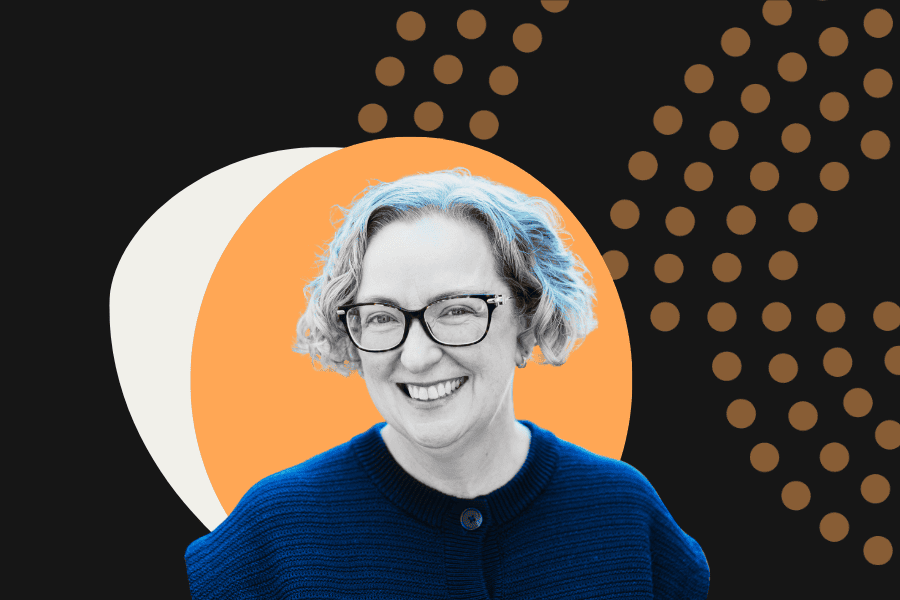
Dr Kristin Alford is Co-Executive Director of The Ubuntu Lab, developing civic infrastructure for a public understanding of humanity. Her work sits at the intersection of futures studies, design and organisational practice, translating cultural vision into operating institutions.
She was previously Founding Director of MOD, the futures-focused museum at the University of Adelaide in South Australia, where she remains an Adjunct Industry Professor. Her research on hope theory for alternative futures has been published in the Journal of Futures Studies, and she is the lead author and editor of Cultivating Futures Thinking in Museums. Earlier in her career, she led the strategic foresight practice In Situ Foresight, working across education, arts and culture, sustainability and health, and curated TEDxAdelaide.
The transcript was originally generated using Zoom transcription software and has been edited for accuracy and readability. I have added hyperlinks.
Michelle Anderson: Kristin, thank you for taking the time to do this. One of the observations I’ve made in developing the Future of Peace program is that some of the most interesting work shaping the conditions for peace is happening in places that aren’t explicitly framed in the language of peace. That has led me to wonder what peace researchers and practitioners might learn from fields that have spent much longer thinking about the future. With that in mind, could you tell me a bit about your own work? How did you come to be a futurist, what questions are you trying to address, and how has your thinking evolved over time?
Kristin Alford: My current role is as Co-Executive Director of The Ubuntu Lab, which was co-founded by Co-Executive Director Mike Radke about 15 years ago, with the aim of creating a public understanding of humanity as the underpinning quality we need in service of creating world peace. I’ve joined that work because I’m interested in building people’s capability to think and do differently. That’s come out of my work as a futurist, and that’s my passion. What’s driving that interest is, how do we get people to imagine and act differently? The work that is calling me at the moment is, how do we do that in service of a world that feels peaceful and is peaceful?
MA: That’s an impressive range of topics. Given your background, and that you are now thinking more explicitly about peace, how does the concept of peace– however you choose to define it– function within your work? Where does it feel useful, insufficient, constrained, or contested?
KA: I think the logical way to explain where I am now is to start a little bit further back. My active thinking about peace started when my daughter was in kindergarten, and the inquiry module they were doing was “making peace machines.” They had these 20 kids making peace machines, and I was like, “This is insane! Like, this is so cool!” At the time I was doing my Masters of Strategic Foresight, and I thought this was such a fantastic futures provocation because we so often associate technology with defense and war, and we so often assume peace is soft and fluffy, like Cinderella or Snow White vibes of being in the forest with the animals. But real peace work is so gritty, and it’s tough, and yet the public perception of peace…. like even saying to people at the moment that we are doing something in service of peace doesn’t have the weight. It got me thinking and stayed with me, so then when I was at MOD [the Museum of Discovery at Adelaide University], we did an exhibition called Waging Peace, which asked, can we aggressively pursue peace? Doing that upset people working in defense because we weren’t talking from a defense frame, and it upset people working in peace because I was aggressive about it. But it was about what it looks like when we have active engagement towards peace. We’re not taking it as a default thing but as something that’s worth fighting for, that is worth creating work towards doing.
That’s where my interest in peace started; it was a frustration with the quality of the word. That also comes from a frustration with the quality of the word “hope,” as well. We do a lot of work around hopeful futures, and hope just feels so inadequate as a word to explain, again, the grittiness of what it takes to be truly hopeful. There’s got to be a different language for describing that active, persistent, constructive work that goes into peace building.
To summarize, my interest in peace has started from thinking about reframing the language, reframing the use of technology, and how we work towards peace as an active, worthy goal, and not something that we’re defaulting to or just passively hoping for.
MA: I appreciate being able to bring in the idea of grittiness alongside joy and hope, and that maybe that has to be part of it because if we weren’t hopeful, how could we think there’s a better future worth pursuing.
KA: Yes, I think you’ve seen the article we’d written on the “BROKEN” exhibition at MOD related to [hope theory and futures], and it intersects with the work that I’m doing at The Ubuntu Lab as well. At MOD we would run a participatory event every couple of years where we would ask people what they were excited about for the future, what they were fearful about, and what was keeping them up at night? In 2022, when we did it post-COVID, everything was really depressing. People were fearful around the world, and we had a list of things they said were broken, which was basically everything. This feeling of hopelessness, not being in control of the world, and not knowing what to do about these very broken systems was persistent through that workshop, which is where the idea for the BROKEN exhibition came from. The motivation was, when things feel tough for lots of reasons that are out of our control, how do we find hope? Using a range of different hope theories, how might we give people pathways, agency, and positive views of the future that they are willing to grab onto and move towards? Because those are the things that allow us to have some control, allow us to feel like we are doing something. Those are the things that also drive hope, and hope and peace are both actions. It’s weird that they’re nouns, because they really are acts of doing. So that is how we came to that idea, which was about giving people the capacity to do hope.
The work that we’re doing at The Ubuntu Lab is similar in some ways. We’re giving people the capacity to navigate difference with each other, to build practices of resolving conflict, sitting with discomfort, being less fearful of the other, being more at peace inside oneself, being more literate around understanding how we negotiate collectively and how we build those community relationships, and how that how that scales up through government to international cooperation. It is around that capacity building.
MA: Lots I want to follow up on– let me start with, can you say more about Hope Theory? The article you referenced about the MOD exhibit explained it a bit, and it resonated with me because, in many conversations I am having about the future of peace, many people are struggling to move beyond crisis or despair to the question of “what comes next?” I’d love to hear more about the hope theories you draw on and what they suggest about the conditions people need to imagine and action better futures.
KA: I’m a big fan of theories and frameworks. I’m an engineer by training, so I look for structure underneath something. I acknowledge that the map is not the territory, so none of the frameworks I use are going to be sufficient or nuanced enough to explain the whole of human experience, but I like the framing of [psychologist C.R.] Snyder. We used that work [on Hope Theory] to basically say, if we look at hope as an equation, hope includes having a positive, engaging image of the future– something that you want to drive towards– and we can see that we actually don’t have a lot of those. For example, when we were doing climate futures in the 2010s, the dominant image of climate futures was smokestacks and dying polar bears. Then South Australia put in a large battery for energy storage, and I felt like that was a hopeful image of the future. It’s not terribly exciting, but it was the first thing I saw that people could point to and say, “This is somewhere we’re going.” If we don’t put out positive images about what happens when we get, say, climate action right, we’re always fighting against something, and that is exhausting. That is when you see activist burnout.
In hope theory, first, having a positive, engaging image of the future is so critical, as is being able to work towards that. The second aspect is having agency; agency comes from being able to understand where you can make a difference and making a difference there. That might be your family, your local community, or national policy, but agency can come in any of those scales. It doesn’t have to be, can you change the world, but you need to be able to feel like the work you are doing is making a difference. The third thing is having multiple pathways; this means not just hitting your head against a brick wall, but being able to find multiple ways of moving and being comfortable with experimentation and the flexibility to change strategy or adapt. The final element is having moral alignment with the values of what you’re doing, as in, whether it aligns with your internal sense of self. We set up the BROKEN exhibition around those things, and took people on a journey that got them to reflect on these different aspects of hope and then gave them a profile at the end that said, this is what kind of hopeful person you can be in the world, you can take action here. You only have an hour with a visitor, but to put that across to them to take forward, I think that model is interesting.
One thing I’ve done in my teaching practice related to this is the Polak game, which comes from work that Peter Haywood and Stuart Candy did. It’s an embodied game where you’re in a room and you line people up and ask, “how do you feel about the future?” If they feel more positive about the future, they move to one side of the room. If they feel more negative about where the future is going, they move to the other side. They stay on that axis then you ask, “Do you feel like you have an influence on where the future is going, or do you feel like you have no influence?” You end up with four quadrants. It’s interesting because people often understand how they have been in all of those different quadrants during their life, and what opens up for people is seeing how they can shift their perception of what the future might be and how they might influence it, and that is powerful. I spend a lot of time doing futures work where you feel like you can see where everything is going to go wrong, especially in the climate space. It’s huge, and the ability to influence feels so small, and peace is probably similar. It’s the whole planet that you are trying to influence towards something, and there are things that seem completely unchangeable or completely out of control. For a long time I was sitting in the quadrant of despair; that is not the right name, but it felt like, I don’t think there’s anything I can do, and I don’t think things are going to get better. But, being able to stay in that quadrant and surrender to it and still act, is an act of hope.
It is like the Stockdale paradox. Jim Stockdale was a prisoner of war in Vietnam, and his paradox was, the only way to have hope is to recognize how dire things are, firstly in the present, and from there, you are able to recognize the circumstances and then act. A lot of hope theories come out of experiences and places of despair. I think those are important lessons for us to consider. Hope isn’t ignoring the enormity of the crises we might be facing as society. It’s not ignoring genocide, it’s not ignoring the climate aspects that we’re facing, and it’s not ignoring the influences that politics has on everyday people and societies, democratic and elsewhere. It’s also not minimizing them and saying, “Oh, she’ll be ‘right, mate.” It’s recognizing how serious they are, and still being able to say, “and yet…”. These things are created by people, and people can also create solutions. That paradox of recognizing how terrible things are– and yet. And yet! So those are the things that I’ve been drawing on in my teaching and work, but also in my own space of how I function in the world. When things feel overwhelming and really hard, it is just reorienting those levers, like, what can I change to affect the space that I’m in?
MA: I think the framing of this being something that you can do both with other people and individually is a useful reminder.
KA: This also connects to the work at The Ubuntu Lab. Hope plays a role, but it’s part of many things we are pulling together to try and develop this understanding of humanity, like, what does it mean to understand who we are as people, how we are together, and how we are because of each other? We don’t exist in the world as individual entities. We are deeply connected, and when we’re thinking about the work we can practically do with people to make a difference, it comes down to those levels: the very internal inner level on, how am I today? How am I making sense of my orientation to the world and my interpersonal relationships? How do we think about those community relationships, and then those global relationships? And how can all of those relationships be developed to be more skillful? I’ve got young adult daughters now, and I keep thinking, if only I could go back, I’d be a much better parent, knowing what I know now. Those things can be learned, and we don’t really teach them. Rather than assuming we know how to be in relation simply because we are human, we’re interested in how people can become more skillful at it. We see personal capacity for being more skilled at the practice of being human with each other as something that scales up to create that very public, very global shared capacity for being human together.
At the moment, the main task at The Ubuntu Lab is building civic infrastructure to support learning how to navigate difference, and to not assume that it’s going to come from accessing a workshop or a course. We’re not going to get a fully global public understanding if we’re not providing infrastructure that makes it accessible to people. Informal learning, like the work that museums and cultural institutions do, is an excellent way of getting learning at scale and at speed, so we are building a global network of 100 museum spaces in 100 cities, underpinned by digital platform and formal learning engagement, to create that public understanding of humanity as fast as we possibly can.
MA: Can you say more on that? I’m hearing museums as a form of civic infrastructure, but what does a museum that builds capacity for human understanding look like in practice, and what’s the longer-term goal?
KA: Museum is such an inadequate word for that in some ways. We found the same thing in creating MOD; what I had in mind for MOD didn’t really feel like a museum, but there’s no other word. The spaces that we [The Ubuntu Lab] are creating, we’re calling “seums”. We are fundraising for the infrastructure for at the moment. We see them happening in environments like retail precincts and high streets, in spaces where people already are. They’re similar to museums, with content that is relevant and timely; they are highly digital so we’re able to work more on a current affairs schedule, more like a newsroom. A cross between journalism, retail, and a museum is probably coming closer to what we’re imagining.
They will be highly facilitated, it’s hosted. It’s a way of practicing conversations with people. It’s a way of interacting more broadly because there’s the network of 100. Those environments are networked, and so it’s almost like being able to experience what it’s like to travel to meet people from other cultures and that bring different perspectives, to see that your understanding of the world is valid, and also that there are many different understandings of the world and get that plurality. When you go in, there’ll be a cafe, there’ll be digital interactives, video and content that you can interact with, and there will be people you can interact with.
The topics that we’ll be covering are within two tracks. One is, how do we know what it means to be human today? What are the disciplinary areas that help us make sense of that, from psychology and sociology and the social sciences, but also First Nations and Indigenous ways of knowing, lived experience, practitioners in design and in futures, and all of those other ways that we make knowledge in the world. How do all of those knowledges come together to help us understand what it is to be human?
The second track has to do with, what are we grappling with in the world? What might we be having trouble with, or having conversations about? This year, for instance, if we were doing exhibitions, we would probably be talking about power. What is power? How is power earned and grown and wielded? How is it exploited and abused? Where is that power sitting? One of the exhibition topics we’ve been discussing is called “Rise of the Rest”, which is about understanding shifting power dynamics, for example, women’s rights, but also shifts like the rise of China, and lots of other ways for thinking about how power is being challenged. It is a big topic, but it lands in discussions around things like, how are you voting, or the geopolitical tensions and crises that we see, and the war that is happening. It also lands in discussions around domestic violence, or around consent. There’s many ways that this lands for people, personally and again at those larger levels.
MA: One thing that strikes me is that you’re bringing up enormous issues but in ways that allow people to engage through their own lives and experiences. That also feels useful as we think about the future of peace because everybody is experiencing these microcosms of what peace means to them. What do you think this approach makes possible that others don’t?
KA: It’s not explainer methods, that’s critical. The underlying pedagogy is something that we call hospitality-based learning, which is around meeting each other; starting with a welcome, having an encounter, and knowing that none of us have the answers to this because we are all human, and working through this together is the condition for better understanding and for peace, so it can’t be didactic. It can be learned, and everybody has a role in the teaching of that, which is why the lived experience component is important.
Also, when I say it’s a hosted experience, there is somebody to spark the conversation, and there’s somebody to be a guide, but that role between the facilitator and the visitor changes depending on the nature of the conversation and depending on the experience and the expertise of each of those people. The pedagogy is deliberately designed to facilitate conversations, not to explain something. That’s a critical part of the approach because that in itself is a practice of how to be human together. It’s a practice of how to navigate difference. It’s a practice of how to have a conversation. It does all of those things, whereas a more traditional approach wouldn’t do what we need to be done in the world.
MA: I’m curious how you prepare facilitators for that role. While it’s specific to what you’re building, it also seems like a set of skills many people could use when navigating difficult conversations about the current moment and how to move toward better futures.
KA: I need to first acknowledge that [Mike Radke, director of The Ubuntu Lab] has been doing this work for 15 years already, and he’s been testing the pedagogy and the theory, and learning the frameworks in workshops across thousands of people all over the world to make sure that it translates between cultures. I’m coming to this from understanding the work that he’s done, and then from the crossover points with ways we tried to work at the MOD.
First, there’s some inspiration points from good service practice. I remember this meal that stands in my mind because of the way the owner made me feel when I arrived at that restaurant. It was very much about stopping and listening. It wasn’t a classic, ‘welcome to our restaurant and here are the instructions that you need to know in order to know how to be here.’ It was really calming because it felt like, ‘You’re here in our space. Welcome. This is a moment of respite. We want to make sure that you’re going to enjoy yourself. That’s what we are here to do. How can we do that with you?’. It was just beautiful and thoughtful; there was a lot of listening, it wasn’t a script, and it was a genuine moment of human connection.
Then there are some good futures practices around perspective taking. How do you move through a range of perspectives and not come at something from one direction? In futures, that means understanding that we construct the future together, and that everybody has a mental model of a future. Being able to articulate that model and explain it and share it, and then collectively build a shared understanding is one of the ways we do that. To do good futures work means knowing that your model is partial and insufficient over the world, and the only way that we can create futures is to negotiate those together. I know that’s not exclusive to futures, but that’s the framing that I bring.
Then there’s probably a third element, which is expecting facilitators to be themselves. Again, the unscripted bit. At MOD, we would say, here is the exhibition guide for BROKEN and here are all of the things that you might be able to tell a visitor– but also– find what’s in that guide that is meaningful to you. Those are the conversations that you as a facilitator should be having, because as a visitor goes around through an experience, they’re going to meet different facilitators in the space, and they don’t want to be having the same conversation – that’s not personal. Bringing people’s own values, passions, or deep nerdiness about a topic or hobbies or whatever it is to the work is important.
I think those three things: the hospitality, the perspective taking, and the personal, are ways in which this might be a different way of approaching teaching and learning.
MA: On the other side of that, what conditions allow visitors to engage in the open way you’re hoping for? Are there lessons in there for others trying to create spaces for dialogue across difference and moving forward?
KA: It is partly the role of the facilitator, but it’s also the visitor orientation, isn’t it? It is the ability to engage in that practice of being welcomed into a space, so we want the threshold of crossing into the space to be as easy as possible for people, and deliberately designed to not be intimidating. These spaces are designed to be free, so that there isn’t that barrier to entry. They’re also designed so you could come in and spend five minutes or two hours; they’re designed for flexibility.
The other thing we observed working with young people in MOD, is that people don’t want to look or feel stupid. Coming into a space where there is knowledge transfer happening is often a recipe for feeling a little bit out of depth, and what we want instead is for there to be the ability to ask the stupid questions, the obvious questions, the ignorant questions, and to have those accepted and to be able to worked with and not going, well if you just knew this– because there is so much that we don’t each know. There are deliberate processes with the design to make the environment one where it’s not necessarily a safe space where nothing terrible can be said, because that doesn’t create peace either, but a genuine space where there is openness. They’re also designed to be the kind of spaces that, because the information is so current and the topics are changing, they’re worth coming back to and building a relationship with. We’re not expecting a transformation to happen in a visit. We’re expecting something to happen in a visit that creates a chain of events for that person in their life somewhere else, or that there’s a repeated practice; it’s part of a whole ecosystem of practice.
It’s also interesting because– and I don’t know if it’s because I’m spending some time in the States and some time in Australia, and the cultural differences are much more than I had appreciated– so I don’t know if this is American or something more universal, but one of the things we’ve been talking about is the ability to sit with friction and to sit with a little bit of discomfort. I mean, maybe it’s more global than that, but I get it coming here, the convenience of America. There’s just something about how everything seems optimized for frictionless living, where you don’t even have to see or talk to another person if you don’t want to, and everything just comes to you. We’ve been talking about how friction is the point. Actually being able to have discussions with people and be comfortable with the friction, that’s where the amazing part of life happens– in the difference and how we negotiate that. I’ve heard this in a few other spaces recently where people are going, without that, where’s the meaning? How do we bring that friction back in? People are looking for experiences that go beyond the superficial, that go beyond the pushing away and smoothing over, and even wanting a little bit of the grit because it’s there that love deepens, it’s there that understanding deepens. It’s there that you start to realize your own true potential and the potential of the people around you, and that’s where great teamwork happens. All of that happens because of friction. Being able to bring a visitor into their capacity to play a little bit more with that friction, and be comfortable with it, is important.
MA: It also seems like practicing friction in a lower-risk space could make people more willing to engage with disagreement or difference elsewhere. It reminds me of work I did years ago using digital storytelling archives to facilitate imagined cross-community contact in a divided society, which found that participants became more open to engaging across differences in everyday life after first encountering perspectives from ‘the other’ in a virtual setting.
KA: We’re short of those spaces at the moment where you get crossover between people from different environments. Libraries are doing amazing work in that space, but we haven’t really designed new civic infrastructure for the times we are living in and the pace of change of technology, and that weird effect of being more insular yet more globally affected. We are living in a specific time. We are trying to create the civic infrastructure that meets the needs of the times. As I said, that combination of journalism and museums and hospitality is a specific thing that is missing in a way that we need right now.
MA: I appreciate your point about designing civic infrastructure for the needs of this particular moment. In peace and conflict work, it is often said that we’ve seen these crises before, like wars, polarization, and power shifts– and that is true– but the conditions surrounding them are changing, which means our responses probably need to evolve as well.
KA: Yes. People say, “Why are you doing this?”, and I would say, well, because we want world peace…? That really is the ambition. We get that no one person or organization is going to achieve that on their own. We see our role in creating a public understanding of humanity, which creates the conditions for people to be able to do things in different ways, a foundational support for peace. What we’re about to embark on is a 10-year project to get this network established; we get that it’s a generational change. The world goes in cycles. There are things that we’re going to keep running into, but there is the ability to pass on learning through generations. There is an ability for us to learn new ways of doing things and new approaches, so it doesn’t have to be fatalistic, which again is the agency. Is it worth striving for something that seems impossible, and seems like an incredibly ambitious goal? I would say yes, because there are very practical and achievable ways of making a difference, and that’s why we do the work we do.
MA: Wow, what a way to start wrapping up! I have so much more I could ask you, but as a last question, if you were advising someone working in the realm of peace who wanted to become better at futures thinking, where would you encourage them to begin?
KA: Because I like a framework– the framework that I developed for myself and when I teach futures is around five ways to think about the future. They’re about activating five different modes of thinking.
The first one is learning from the past; reading history or anything that helps understand where we are and where we’ve come from, and the persistent values or the persistent patterns that we see, is helpful.
The second way is to notice things that are happening in the present. Futurists tend to have interesting scanning processes for looking for weak signals of change in the environment. I think the practice of noticing comes from a practice of introducing randomness into your life, which is about putting yourself in situations where you are meeting others, seeing different perspectives, and doing different things. This could be traveling, listening to different types of media or music, reading different types of books, or being out in the world noticing what people are doing and what they’re paying attention to. For me, a little bit of mindless scrolling is okay in there as well, like, how do you notice what’s happening in the world?
The third one is thinking about possibility, that imaginative space, doing the ‘what if’ and ‘what else could be’, and playing with alternatives. There’s a great futures line which comes from Jim Dator, that for an idea about the future to be useful, first it should appear to be ridiculous. If you aren’t making yourself go ugh or laughing at something, then you’re not getting to the imaginative enough.
The fourth one is around visioning and imagining what you want, and what you want to see in the world, and having immense clarity about how to articulate that to yourself and to others.
Then the fifth one is around emergence, just being open to intuition and the feeling that comes, when you’re like ‘oh, that’s interesting,’ and also being attuned to that quiet spot in a meeting where something changes or a new insight arrives. It is being open to that interesting thing.
Then there is a sixth one, which is just do something. Experiment with something, try something, make the change you want to happen slowly. That’s my framework. For someone who is coming to futures new, to try and navigate a huge body of futures theory can be challenging, but I think those five ways plus an action is a good way of starting to play in the space, and they’re all human capabilities. We can do all of those.