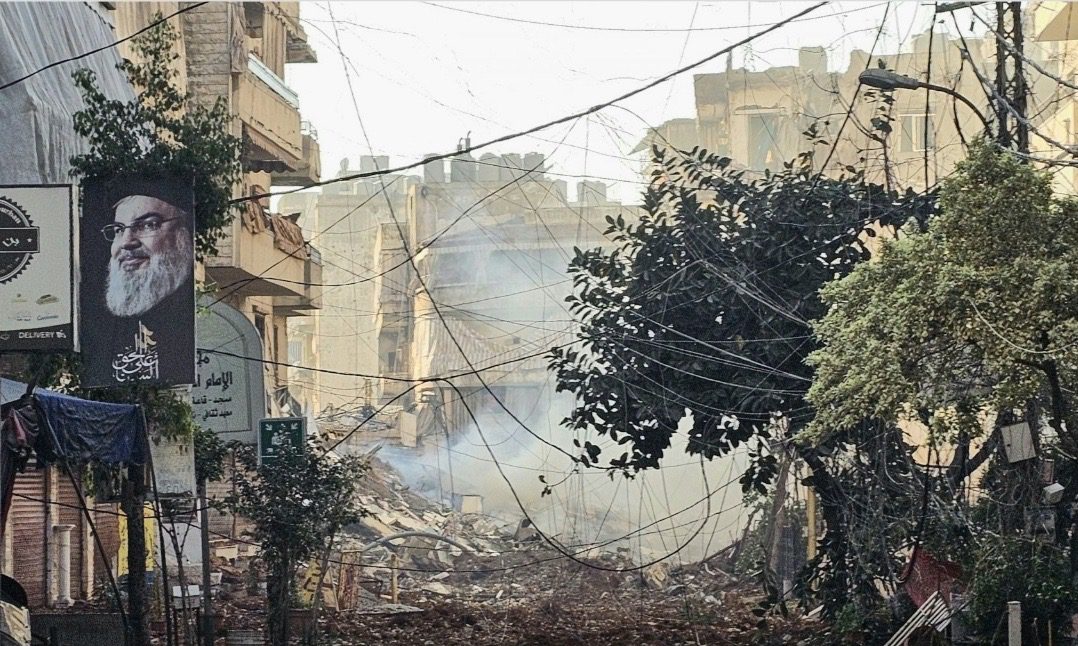
In just ten minutes on April 8 – a day now known as “Black Wednesday” – the Israeli air force struck approximately 100 targets across Lebanon hours after President Donald Trump suspended bombing Iran. In the capital, Beirut, it hit, by its own count, around 35 “military infrastructures”, including, allegedly, an emergency headquarters of Hezbollah’s intelligence unit, a headquarters of its missile unit, and a headquarters of the Radwan Force, an elite force specialized in cross-border attacks.
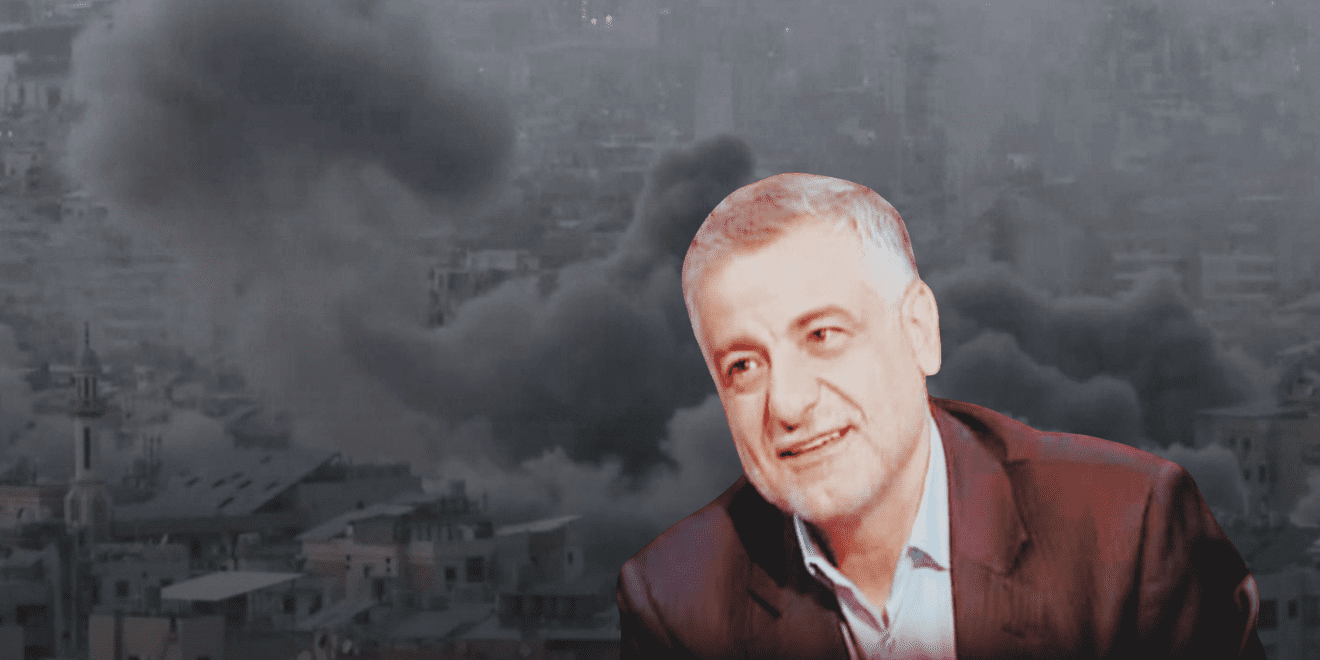
More than 350 men, women and children died in the 10-minute bloodbath across Lebanon. More than 1,200 were wounded. Others are buried under tons of masonry. Israel has named only six of its victims – five commanders and the nephew and “personal secretary” of Hezbollah Secretary General Naim Qassem: Ali Yusif Harshi, said to have been killed in a strike in the very center of Beirut rather than the southern suburbs, until now Hezbollah’s heartland.
Hezbollah has denied that Harshi was killed. It says no Hezbollah official, or cadre, died in Beirut. “Those who died in Beirut are 100% civilians.”
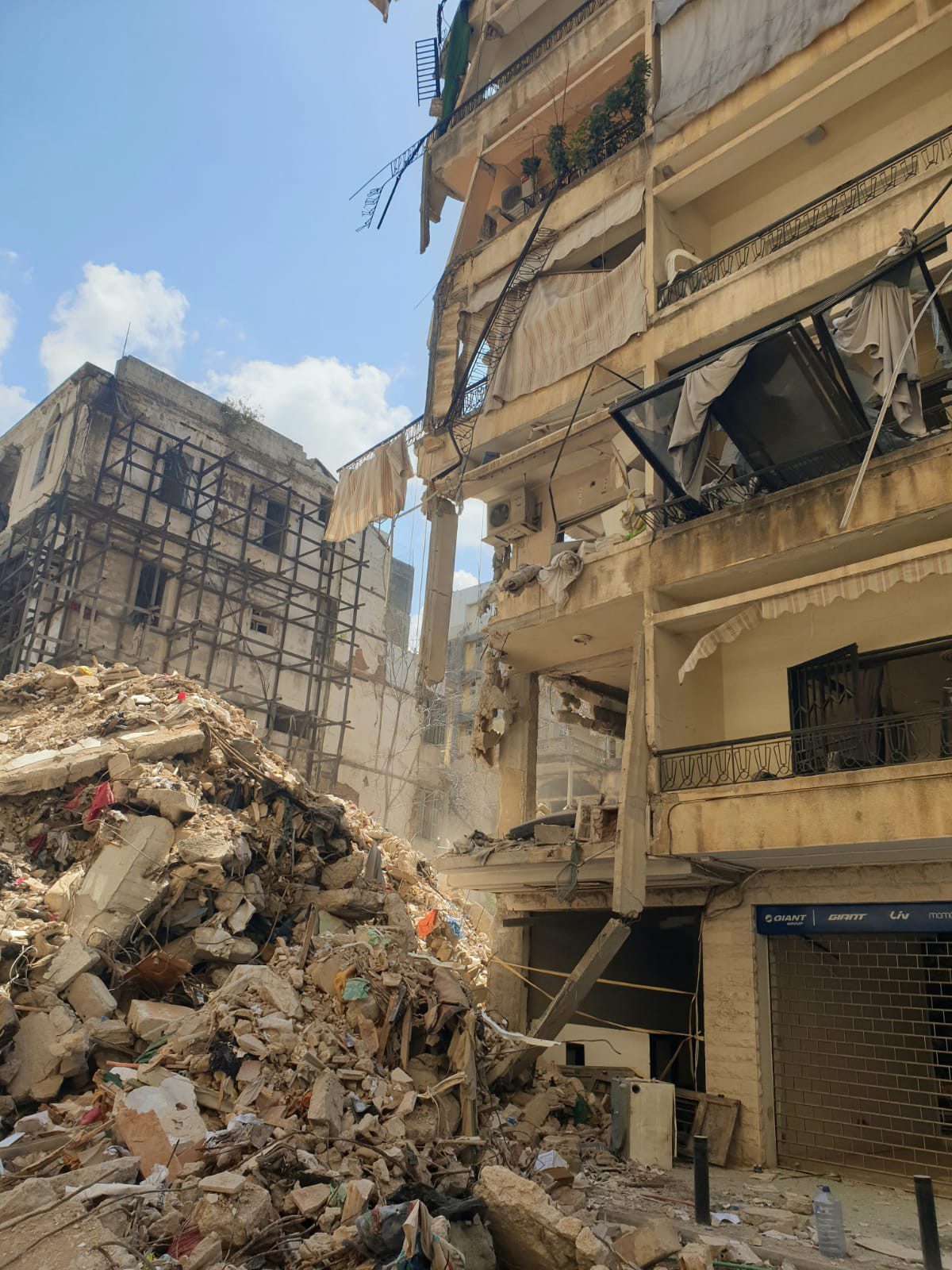
Israel also claimed, as it always does, that it took steps to “minimize harm to civilians”. In my area, Ain Mreisse, there was much harm – but no steps. Not one. At 2.14 pm on Black Wednesday, the eight-story Hamad building in Air Mreisse, next door to the first apartment I rented more than 40 years ago, was hit without warning. Half of the building collapsed, like a house of cards; the other half will be demolished.
The first we knew of the strike was when our buildings shook and families walking on the Corniche, one street away, started screaming and running – with no idea of where to run as high winds played havoc with sound. Dogs howled and broke their leashes.
Israel justified the firestorm across Beirut, the Beqaa valley and south Lebanon by saying that it “eliminated” more than 250 Hezbollah “operatives… commanders and terrorists”. Since Lebanon’s health ministry has counted more than 100 women and children among the dead, this would mean that every man killed on Black Wednesday was active in Hezbollah.
Abbas Badawi, a longtime resident of Ain Mreisse who lived on the first floor of the Hamad building, gives the lie to that assertion. Abbas runs a generator for Ain Mreisse – apartments, a couple of restaurants, a bank, and a scattering of corner shops – providing electricity to fill in some of the long hours when the official supply is cut. Abbas’s wife and mother died on Wednesday, crushed by seven floors of masonry. His 5-year-old son Ali, is still in hospital almost a week later, out of danger after emergency surgery. Ali’s little brother, 4-year-old Jaafar, has life-changing injuries. He woke from a coma for a few minutes on Monday, most likely paraplegic, and immediately asked: “Where’s mummy?”
A neighbor who has just had a child of her own – her first – is at his bedside much of the day every day. Ain Mreisse is a large family. People know each other. People help each other.
Before the civil war – and even during the militia wars of the 1980s – Ain Mreisse was a microcosm of the dream of Lebanon. Muslims and Christians lived side by side. The party controlling the neighbourhood, the Progressive Socialist Party (PSP) of the Druze leader Walid Jumblatt, kept it crime- and abduction-free. Western diplomats and journalists rushed to rent here despite the high prices — a reflection not only of its proximity to the Mediterranean, and to the American University of Beirut and the American Hospital a few hundred meters up the hill, but of its precious religious and cultural mix. The PSP planted trees, removed garbage, and guarded Christian homes abandoned when civil war broke out in 1975. When a blocked drain was flooding my bathroom, a local man offered to do what the under-resourced municipality couldn’t. With a hand grenade, it transpired. I protested the method. But the drain unblocked.
Abu Tareq Aboud was Abbas Badawi’s immediate neighbor, on the first floor of the Hamad building, and like him had lived in Ain Mreisse for years. Retired for some time, he once worked, in a relatively menial position, in one of Lebanon’s national security offices. When the Israeli plane struck the building, his wife Amal and her sister died instantly. Abu Tareq was badly injured and rushed to hospital, where a leg was amputated. He died a few days later. In the 15 minutes between the strike and the building collapsing, his oldest daughter, Malak, managed to reach the street but was injured by falling masonry and underwent head and neck surgery. Her 27-year-old sister, Zahra, recently engaged to be married, has disappeared without trace.
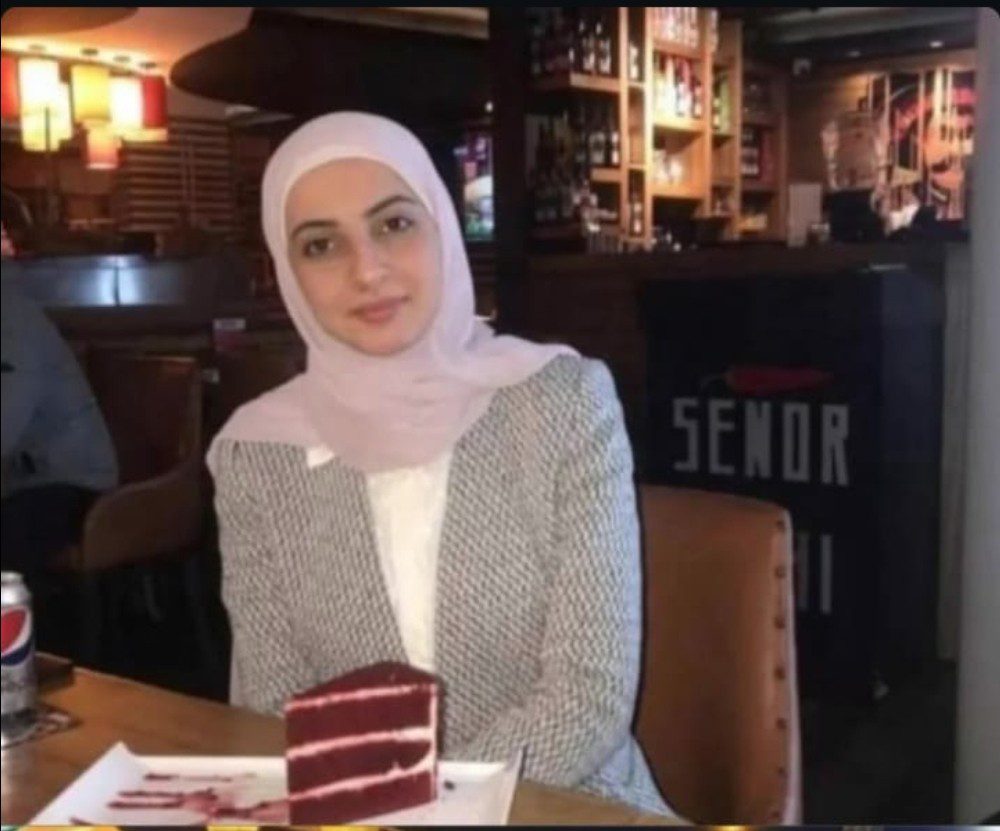
With Zahra’s immediate family all dead, relatives issued an urgent appeal, with a photograph: “Please help us. If anyone works with the civil defense, or at a hospital, of knows someone whose job it is take injured people to hospital, please help us… If anyone sees her in any hospital, or recognizes her, please let us know. May God reward you.”
Almost a week after the strike, there is still no word of Zahra. The diggers say she will not be found. She’s “in pieces”. Her family hope there will be a sign of her some day – even if only in DNA sieved from rubble, rubbish and body bits.
The Hamad building was not completely full. Some families with second homes had left Beirut. Several apartments were occupied by Syrian refugees who found work in local groceries and eked a living of sorts as delivery boys. Forty-year-old Furad left Deir ez-Zor in eastern Syria five years ago, with 11 children from his extended family. Karim, Walla, Raed, and Fatma survived the strike. Raed (at 17, three years older than his namesake), Ramis, Rahab and Zahra did not. The bodies of the other three were dug out three days later. I did not have the heart to ask their names. Karim said the youngest was 7 or 8.
With everyone in the family accounted for, the survivors packed what was left of their belongings – it wasn’t much — and started the drive back to Deir ez-Zor, some 350 miles away.
Early in the war that started on March 2, a man displaced from south Lebanon also moved into the building. This caused no surprise or even concern. More than one million people had already been displaced, most of them Shi’a, and the neighborhood adjacent to Ain Mreisse, Minet el Hosn, is predominantly Shi’a. Throughout the war years, Minet el Hosn was identified not with Hezbollah but with the more moderate Amal movement, which from its birth as a clandestine militia on the eve of the civil war in 1974 evolved into the main political party of Lebanon’s underprivileged Shi’a.
Could this relative newcomer, presumed to be among the dead, be one of the “Hezbollah operatives” on Israel’s list? Someone important enough to justify a punishing, earth-shattering strike in the very center of Beirut? Justification for the 28 people killed, the others grievously injured, their homes destroyed? It seems highly unlikely.
In the mid-1980s, when the PSP in Ain Mreisse was fighting Amal in Minet el Hosn, Shi’a reinforcements arrived – unannounced – from the Beqaa valley. In the middle of the night, they entered the main street of Ain Mreisse, dressed in black and heavily armed. These men were not the Amal we knew. The PSP leader in Ain Mreisse ordered his men onto rooftops all along the street and, once the whole crocodile was on the street, stretching from the old American embassy to the crossing to Minet el Hosn, shouted down through a megaphone: “Throw down your weapons, leave and never come back!” They threw, left, running, and never came back.
In May 2008, Hezbollah fighters moved up from Beirut to the PSP’s heartland in the Shouf mountains. PSP fighters were kidnapped and killed. Ain Mreisse has not forgotten. A Hezbollah “operative” would have to keep a very, very low profile here.
Today, with 28 people known dead in the Hamad building, counting Zahra, Ain Mreisse is a microcosm of something very different: a city-wide slaughter that in the blink of an eye turned parts of central Beirut into the stuff of nightmare.
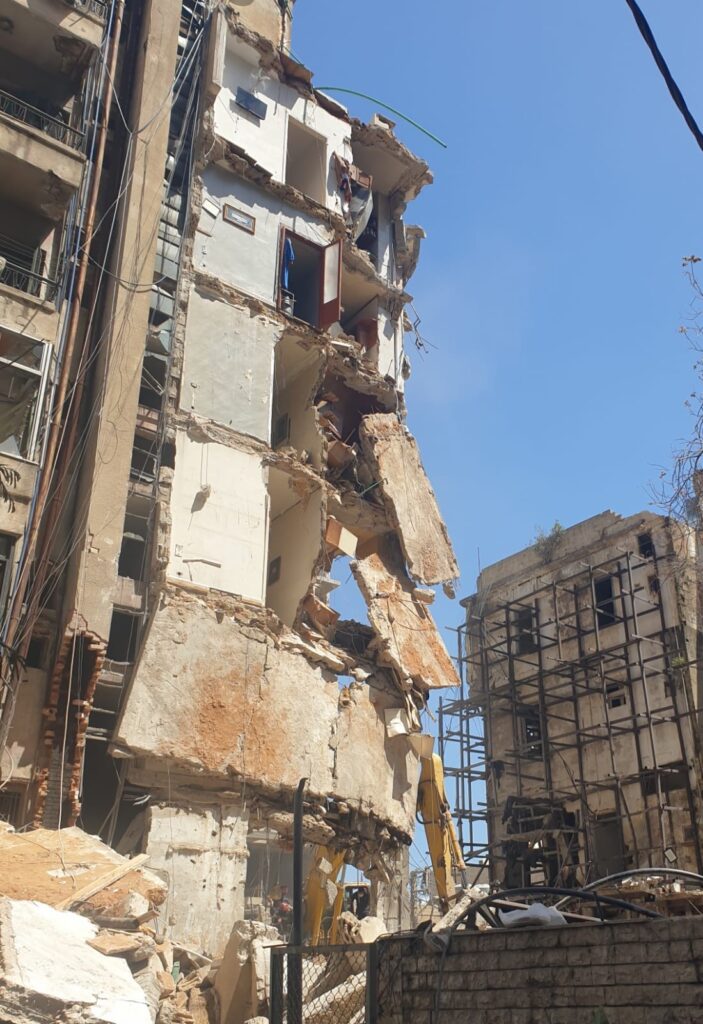
But with hospitals running out of supplies to treat the wounded, and mortuaries running out of space, the “Switzerland of the Middle East” got very little interest, let alone sympathy. Ain Mreisse, once the favored haunt of Westerners in Beirut, merited barely a line. British Foreign Minister Yvette Cooper was “deeply troubled”. French President Emmanuel Macron expressed hope that the ceasefire agreed between Trump and Iran would be “fully respected by each of the belligerents, across all areas of confrontation, including in Lebanon.” But Israel denied that Lebanon was ever included in the ceasefire, and as yet has not been obliged to change its mind.
Bloody Wednesday took the pessimism many Lebanese feel about their future close to rock bottom. “It’s the era of Israel,” a neighbor said. “They will kill you whatever you do. And what is the international community doing? Nothing.” Some Israelis feel the same. “Israel … has been conducting annihilation and destruction in Gaza, the West Bank, Lebanon and Syria,” Amira Hass wrote in Haaretz on April 10, “without the world rearing up to stop it.”
Without any purposeful international condemnation, it is a near-certainty that Beirut has worse to come. Over the weekend, Israeli Energy Minister Eli Cohen urged “striking energy facilities and the airport” in Beirut to force the government to disarm Hezbollah — an impossible task that would divide the army and encourage the civil war Israelis are now acknowledging as one of their war aims. In the words of a Channel 13 News interviewer: “It seems we’re leading the State of Lebanon toward civil war. Maybe it’s not so bad for us. Let the Lebanese government fight Hezbollah.” And the response: “That’s been the goal from the start.”
In Ain Mreisse, for the moment, the search for the dead is over. The last corpse pulled from the rubble, by volunteers from the Animals Lebanon charity, was a white cat with a pretty blue collar undamaged by the explosion. We decided to find whose cat it was – to try to return the collar to its family. Some comfort, perhaps, in due course. After a few wrong leads, we discovered that the cat’s family was the Kumbarji family. Mohammed Kumbarji, a guard in another part of Beirut, was on duty when his apartment was pulverized. His wife, young son and daughter were at home. All three are dead.
Twenty-four hours after the strikes, UNICEF said 33 children had been killed across Lebanon and another 153 injured. The figure is too low. In Ain Mreisse — just one of the 100 targets – Israel snuffed out the lives of at least eight boys and girls.
The worst fear of Beirutis deepened a few days ago after Haaretz reported the “main area of concern” for Israel now is expected to be “the center of the country, where Hezbollah has entrenched itself and is directing extensive fire at Israel.” The “center of the country” was left undefined. One thing is certain: no fire came from Ain Mreisse.