Today’s debate about the perils and promises of artificial superintelligence is at once terrifyingly existential and astonishingly narrow. It is framed as a good vs. evil binary over humanity’s future: superabundant Utopia or humanity’s extinction. No-one can put a number on the probability of any outcome because the titans of Silicon Valley are accelerating into the unknown.
In my essay, “Cyborg Politics 3.0: AI and the Algorithms of Unpeace,” I argue that this framing misses what has already happened. AI has changed how we think, as members of a social-political collective. AI has hacked the operating system of society and is defining the questions to be posed and limiting the range of allowable answers to those questions.
The advent of superintelligence has sparked much philosophizing around questions of whether AI is conscious or even possesses a soul. Much of this philosophical speculation – for example the thinking that went into Claude’s Constitution – seems to have been conducted in a state of blissful ignorance of elementary social theory. I begin by injecting two well-known social theorists into the debate: Donna Haraway, who taught that we are all cyborgs, fused with our technologies, and Mary Douglas, who showed that the hard thinking is done not by individuals but by institutions. Together, their analysis directs us towards seeing social institutions as cyborg politics, in which human thinking has been integrated with technologies, regularly upgraded over history.
Today’s upgrade is to Cyborg Politics version 3.0. The hard thinking behind this upgrade – forced upon citizenry without consultation – is not the cogitation in a digital brain, or inside the heads of humans writing its code, but within the social institution of corporate AI: engineers, executives, investors, and algorithms. That societal collective has set the terms of the debate about its own dangers. It is defining categories such as ‘alignment’ without questioning what is the ‘we’, and what is the intent of the ‘human’, with which AI is supposed to align. Unsurprisingly, this institutional thinking reproduces the prior orientations of a rather small, self-selected club of exceptionally wealthy and ambitious individuals.
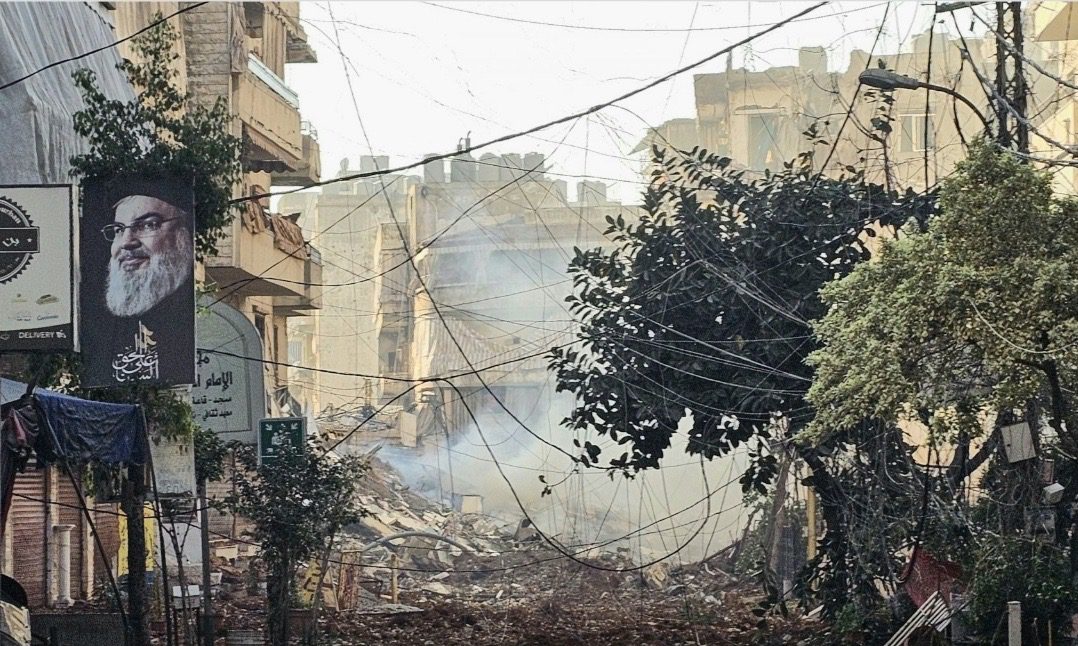
The second half of the essay extends this analysis to two social institutions, war and peace. These two sets of practices and systems are being upgraded too. On the battlefield, keeping a human “in the loop” means little when soldiers come to think like their algorithmic copilots. In the negotiations that are the process of making peace, we see the commodification of power being taken to a new level of granularity and contingency. Peace itself is being remade as short-lived deals calculated for advantage in the moment, not settlements built on trust. The result is what I call “unpeace”, a perpetual interregnum managed by powerbrokers and their machines.