After three years of war, Sudan’s ruination continues without respite.
There’s just one flicker of solace. It’s that the same political logics that burned through Sudan—kleptocracy and permanent war—that are now exploding across the wider Middle East, and their self-defeating nature is on full show.
What’s been won is clarity and in that clarity flickers hope.
Three years ago this week, Sudan’s Rapid Support Forces stormed the centers of power in Khartoum, planning to seize power, but instead sparking a civil war that has all-but-destroyed the Sudanese nation. The Sudanese Armed Forces, half of the junta that had strangled the Sudanese people’s hopes for democracy, justice and an end to gangster-kleptocratic government, clung on to strongholds in Khartoum, before beginning an organized fightback.
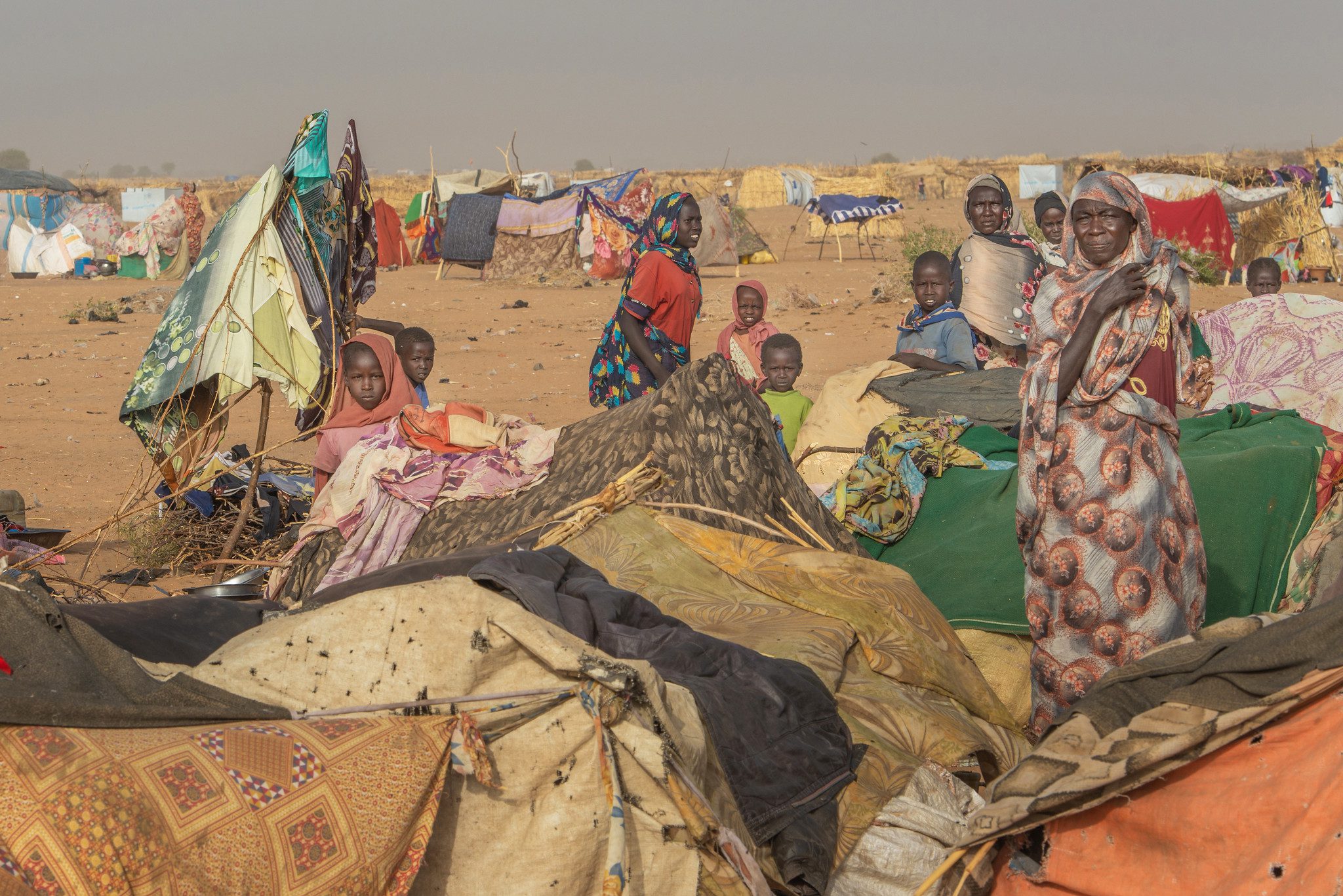
For thirty six harrowing months, the people of Sudan have suffered violence, destruction, mass displacement and famine. None of these words—not even ‘genocide’—captures the totality of what it means to destroy a nation. Women and girls have suffered untold, untellable violence. As Tom Fletcher, the UN Emergency Relief Coordinator said, the country is ‘an atrocities laboratory.’ The Sudanese people are trapped between the candidly genocidal onslaught of the RSF and the bitter determination of the SAF and the members of its coalition to fight on, rejecting compromise.
Sudan’s ruination didn’t begin in 2023. Rather, every toxin of the country’s historical experience has surfaced, in even more poisonous form.
And there is no end in sight.
Sudan’s war ought to be a local war. The differences among the Sudanese should be settled by national processes of compromise, dialogue, and reconciliation. Notwithstanding the RSF’s genocidal killings in Dar Masalit and al-Fashir, differences among the communities of Darfur should be settled by those communities themselves. Sudanese have deep experience in such peacemaking. So too do their neighbors.
But there can no longer be local peace in Sudan. Today, quarrels between a Darfurian militiaman and his rivals cannot be settled by tribal notables, nor national politicians, nor even African elders and international diplomats. Astonishingly, the path to a deal runs go through the White House.
International mediation efforts were slow to start, low-energy and poorly-coordinated. The most credible of these—the ‘Quad’ of the United States, Egypt, Saudi Arabia and the United Arab Emirates—was set up on the reasonable premise that to end the fighting, those outside powers that are themselves arming the warring groups, transferring their own rivalries and ambitions to Sudan, must first come to the table to settle their differences.
The Quad, combined with the Quintet of multilateral organizations—the United Nations, African Union, League of Arab States, Intergovernmental Authority on Development, and European Union—vested their hopes in this formula.
The rival Gulf patrons—Saudi Arabia and the UAE—have shown no inclination to settle their differences directly with one another. Sudan is only one issue that divides them, and it is far down their list of priorities. They need another stage on which they can make the necessary concessions to one another, and Quad formula gives them that opening—in front of the President of the United States.
This ‘outside-in’ formula was tested in October and November last year. It hasn’t worked. President Donald Trump did not manage the file with discretion or finesse. Over the following months, diplomats and analysts hoped he might do better next time, and there was some hope that the package presented by his Special Envoy, Massad Boulos, to the UN Security Council in February—despite concessions to the UAE that many found distasteful—might represent that opening.
If it works, it’s a narrow path, and it leads not to peace, but to a truce that could be the threshold of peace. It removes one big obstacle to a bargain between the SAF and RSF, but not others. It’s where a peace process begins.
Well aware of the arc of the deal—that those who come to the table to craft the road map will be there to pocket the rewards at the end—advocates for democracy, justice and a lasting peace are skeptical of promises made to them, and inevitably divided over how to position themselves in a political landscape of options, some bad, others worse. Endorsing the Quad formula is a form of tragic realism, accepting that the arsonists will be the ones to put out the fire.
Commentators have hoped that the U.S.-Iran conflict might set the stage for a reinvigorated Quad. Confronting much bigger problems—Iran’s attacks on their territories, the closure of the Straits of Hormuz, the devaluing of the U.S. security guarantee—it’s possible that the Gulf monarchies could agree to cooperate on Sudan. Such a scenario is possible. In fact it makes eminent sense.
But peacemakers would be unwise to put their trust in this even narrower path to the threshold of peace. The ruling logic of the Trump White House is disruption. The basic rule of a deal in the political marketplace is that it holds only for as long as the market conditions prevail—and then it will collapse or have to be renegotiated.
And in aligning itself with an Israeli government that appears to have given up any expectation of peace in favor of outright military domination, the U.S. has also lost its credibility as the guarantor of peace agreements.
Hope lies elsewhere. It begins with a candid assessment.
Over the decades, Sudan has been the tip of the spear of the logics that drive our current World War X. Decades ago, Sudan became a mature, violent political marketplace, a refined gangster-kleptocracy in which political and criminal finance has submerged public institutions and a land in which wild power in its most brutal form has rampaged.
This is no longer an aberration. This is the playbook whereby the Russian president pursues his ambitions. Adjusted for the rules of the Gulf shaikhs, these logics are the rules of the Red Sea arena. And, inflated to gargantuan scale, they are the operating system of the geo-kleptocrats in power in America.
Today, the self-defeating futility of power-as-commodity is clear for all to see across the shatter zone of the greater Middle East. Vladimir Putin’s bets in Syria, the Caucasus and Ukraine haven’t paid. The Gulf shaikhs’ belief that they had bought membership of the Atlanticist sovereign club has exploded. Trump’s assumption that everyone thinks like a real estate mogul has been refuted. On both shores of the Persian Gulf and across the Red Sea arena, leaders negotiate for dignity as well as material gain and all understand the first rule of statecraft, which is that one’s word is one’s honor. They appreciate the virtue of loyalty, the importance of reputation. These norms are deeper than liberal precepts, more longstanding than multilateral institutions. Those grasping onto their quanta of power—the Gulf monarchs who have more, the African generals and political entrepreneurs who have less—have been sharply awoken to the limits of this mode of politics by the last six weeks of havoc.
Time and again, the Sudanese people have resisted these logics of power. Their civic revolutions have been betrayed. Today, they are praised for their resilience and their humanitarian efforts against the odds. The praise is warranted and the word ‘civilians’ is well represented in the preambles of international declarations. But there is no effort to put in place the material conditions under which they have any chance of success.
What’s been achieved in Sudan, and the entire Middle East and Africa, is clarity. The pretenses of peace-for-profit, of populist peace as performance, have been demolished. Permanent war, as currently practiced by Israel, makes any peacemaking, among anyone within its range, impossible—and also requires a blank check from a superpower.
In Sudan, Yemen, Syria, Lebanon—anywhere one cares to mention in the vast swathe of lands from Russia to central Africa, from central Asia to the Levant—it’s only going to be possible for a variable, intricate multilateral peace geometry to work if the logics driving World War X are halted and reversed.
The Quad and the Quintet might just be able to snatch a truce in Sudan. That would be a pause in the suffering, and very welcome.
But let’s not have any illusions that true, lasting peace in Sudan will be possible without a much wider and deeper peace—an end to geo-kleptocratic gangsterism worldwide.