Thirty-five years ago, the people of Mali claimed a future of democracy, peace and diversity. A non-violent people’s revolution rejected autocracy, corruption and war. But that liberal moment crumbled and in 2012 it became an early victim of World War X. Mali was then the focus of an ambitious international mission to defeat jihadism and bring peace and security. Trapped in the kleptocratic vice of squeezed public revenue but plentiful security and political money, that effort—and the Malian state—failed.
After 2020, Mali’s generals asserted their sovereignty, proclaiming a new path with Russian support. Their frustrations were understandable. Their plan was bold and it has now failed in a spectacular way. Mali’s immediate future is in the hands of the insurgents: the Jama’at Nusrat al-Islam wal-Muslimin (JNIM), which is a Salafi Jihadist organization affiliated with al-Qaeda, and the Azawad Liberation Front (FLA), a separatist group fighting for an independent Tuareg state in the Sahara.
This blog post maps Mali’s descent. It begins with showing the basic dynamic of World War X—new conflicts beginning faster than existing conflicts are being ended. This pattern has switched back and forth since 1990—but over the last 10 years, the balance has been negative.
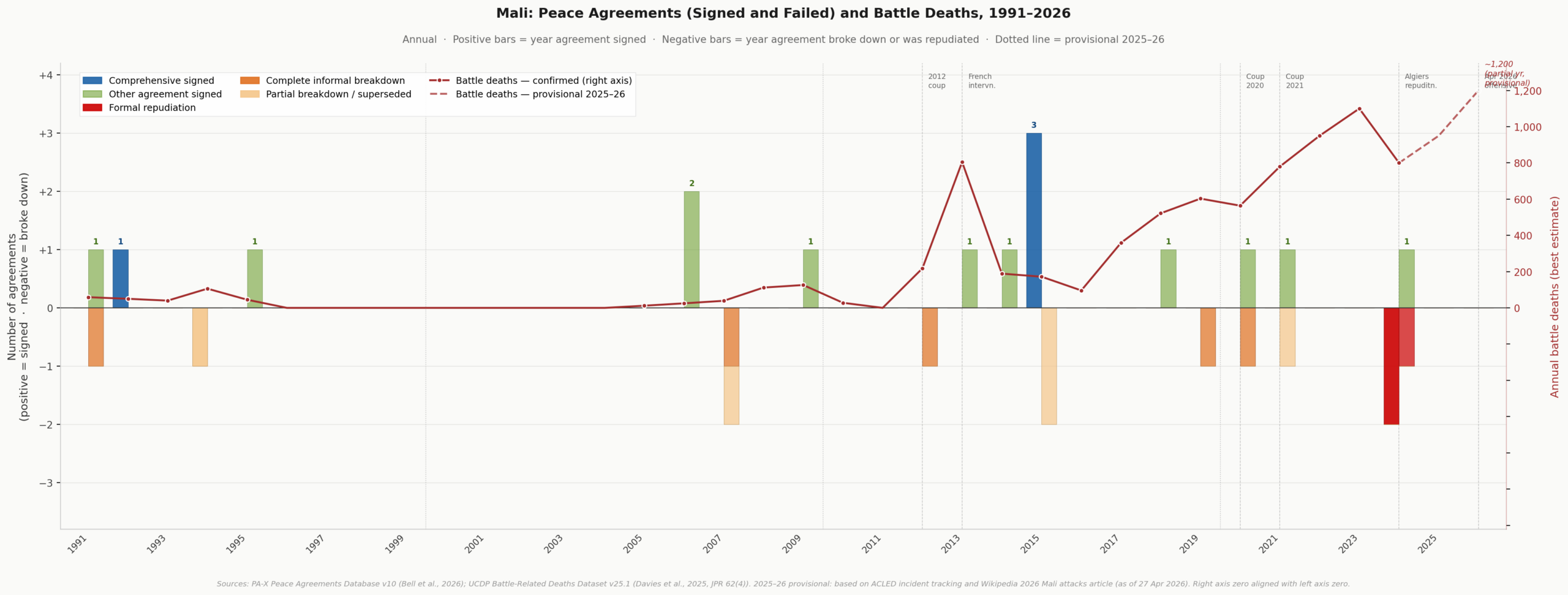
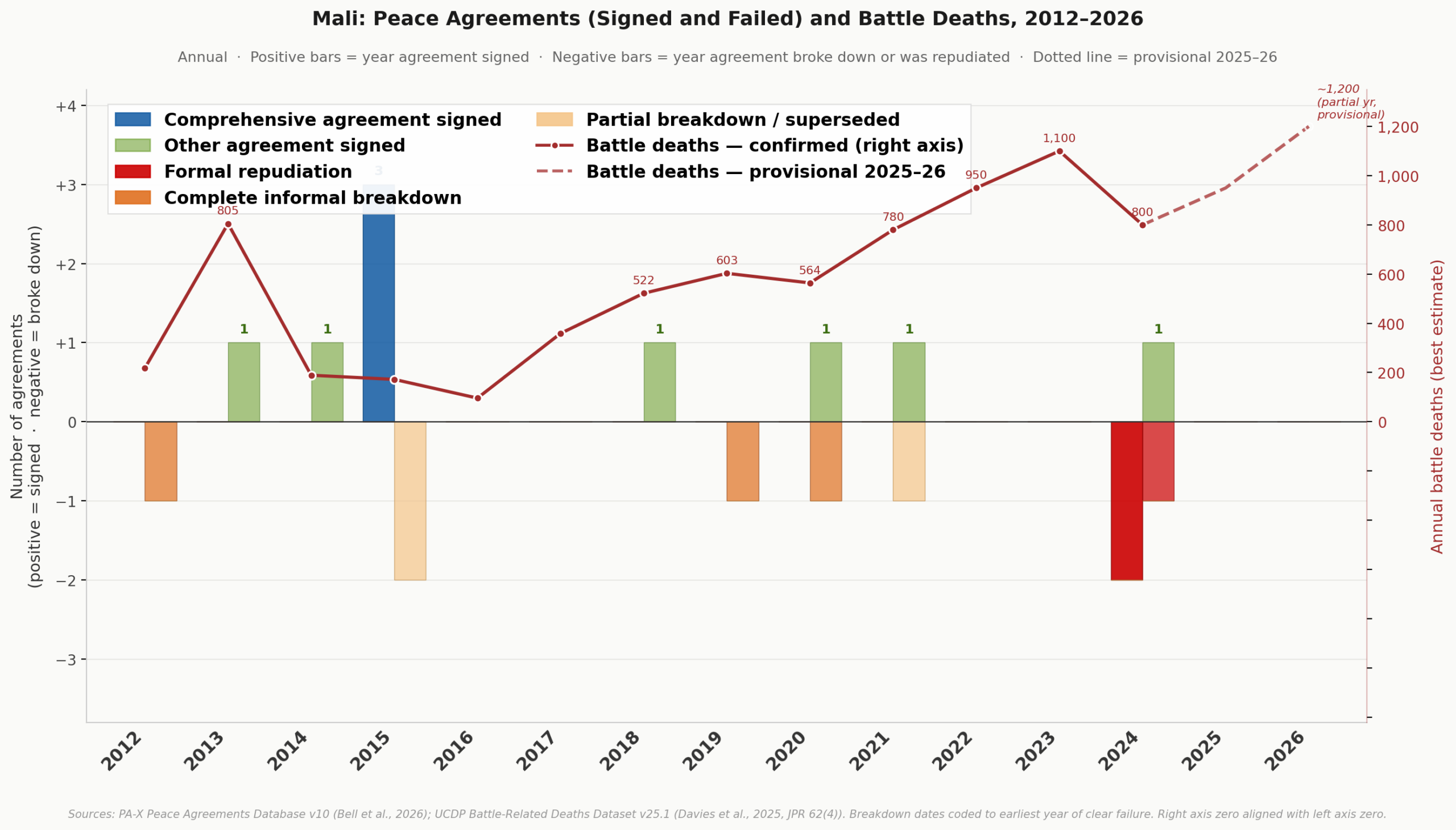
Figure 1 shows this. Comprehensive peace agreements are the blue bars, partial agreements (truces, local pacts) the green ones; failed agreements are the negative orange bars (part failures pale, collapses darker); and repudiated agreements are in red. The red line tracks battle deaths.
Figure 1: Mali Peace Agreements (Signed and Failed) and Battle Deaths, 1991-2026.
In the 1990s, Mali was the poster child for democracy, civil society and peacemaking in Africa. After a non-violent uprising ushered in a civilian government in 1991, headed by the professor and activist Oumar Alpha Konaré, who forged a peace agreement with the Tuareg insurgents, Mali was a beacon of hope. But by the late 2000s, the government of Konaré’s successor, Amadou Toumani Touré (‘ATT’) had become corrupt and ineffectual. When Tuareg fighters and jihadists who had been hosted in Libya were unleashed in 2011, it couldn’t marshal a response. As separatists and militants overran half the country’s territory, junior officers overthrew the constitutional government.
The African Union, the United Nations, the Economic Community of West African States, and—most powerfully—France rushed in. They faced a complex challenge: how to handle secessionism, jihadism, an illegitimate military regime, and transnational organized crime, all at once?
Operation Serval (a French counter-terror and counter-insurgency operation), an African Union force that soon transitioned to the United Nations Multidimensional Integrated Stabilization Mission in Mali (MINUSMA), comprised a striking case of the multilateral liberal peace and security system at its peak. And they duly brought an element of stability. France and the U.S. led the way in identifying the priority threat as jihadi terrorism. Tuareg groups and the Malian government convened for peace talks, signing to the Algiers Agreement in 2015. The jihadis appeared isolated, perhaps on the run.
The putchists stepped back from power. A civilian government, headed by Ibrahim Boubacar Keïta, was elected.
What the international apparatus failed to do was, first, to negotiate a peace deal with the radical Islamists, when they had the cards in their hand. France, the U.S., and the UN made the familiar error of misinterpreting their military upper hand as the gateway to a military victory. As they pressed on, they became more and more unpopular, less and less effective.
Operation Barkhane—France’s successor to Serval—and MINUSMA initially brought down the level of violence. But as the 2010s wore on, insurgencies proliferated.
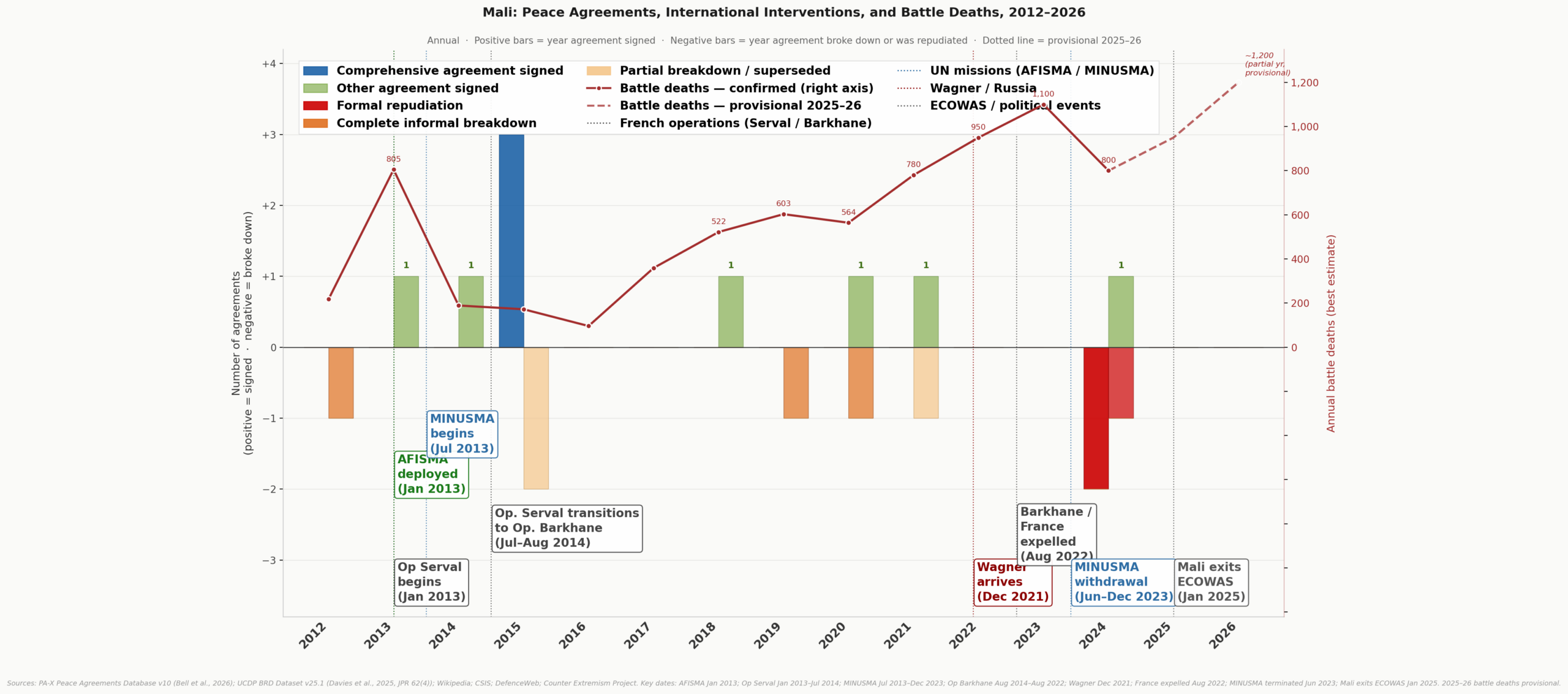
The next figure shows the peace deals of the last 15 years in more detail. The 2015 Algiers Agreement was a comprehensive agreement, the others were partial agreements including truces or local pacts. They fell apart at the same rate that they were hammered out.
Figure 2: Peace Agreements and Battle Deaths, 2012-2026
The deal that really mattered was the Algiers Agreement of 2015. We can see how the preparatory deals and the agreement itself, brought down the level of violence—but then it crept up again.
Figure 3: Peace Agreements, Battle Deaths, and Key Events 2012-2026.
The second big failure of France, the UN and the international order was that they didn’t attend to the kleptocratic vice that was squeezing Mali. Its economy was crumbling; its youth were not finding employment; its public services were collapsing. Meanwhile, more and more money was being funnelled into the security services, and into politics itself. That’s the formula for a turbulent political marketplace driven by short-term power machinations and greed.
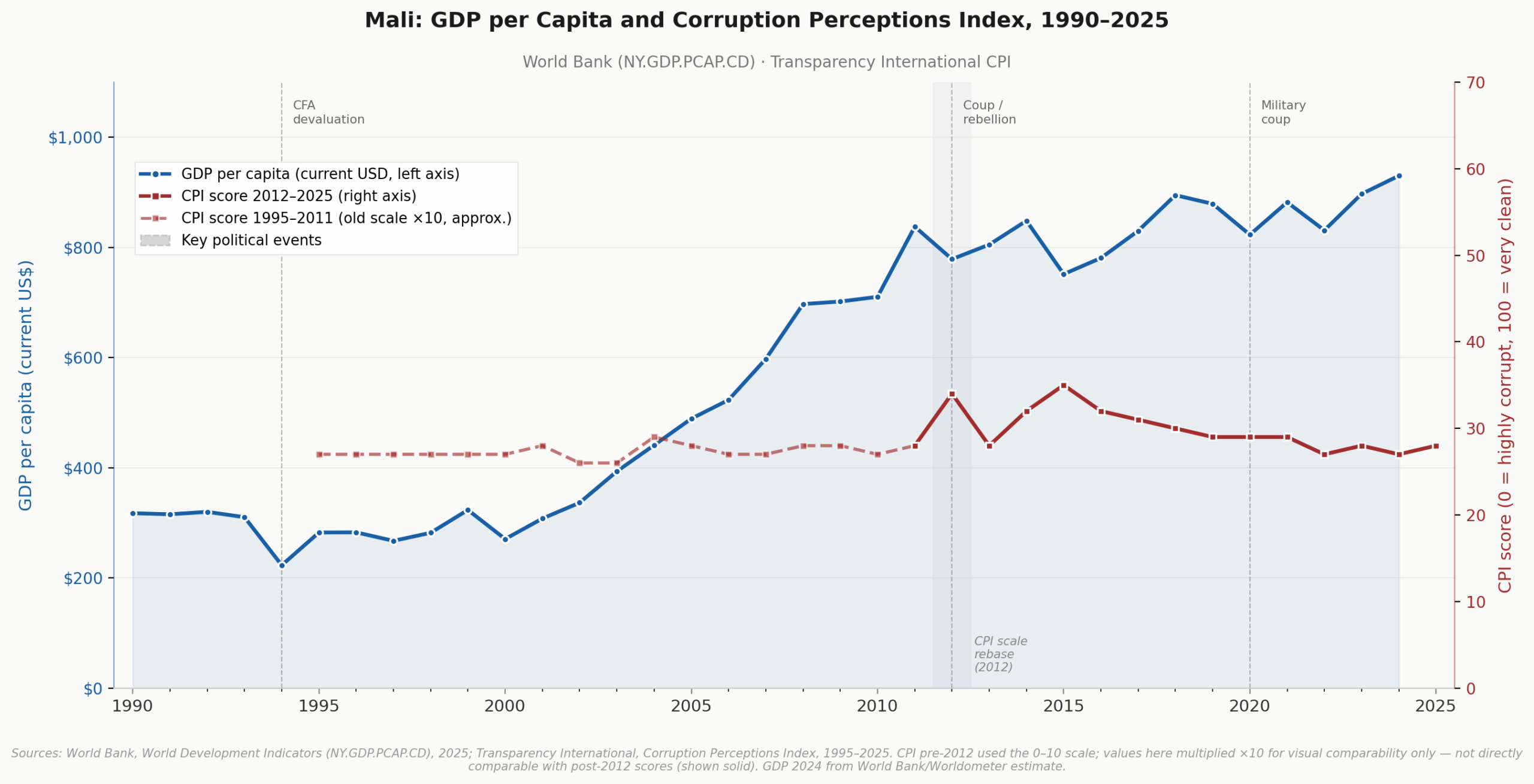
GDP per capita had been rising in the 2000s, but stalled. Corruption, which had been blamed for the regime’s rottenness in 2012, didn’t decrease.
Figure 4: GDP per Capita and Corruption Perception
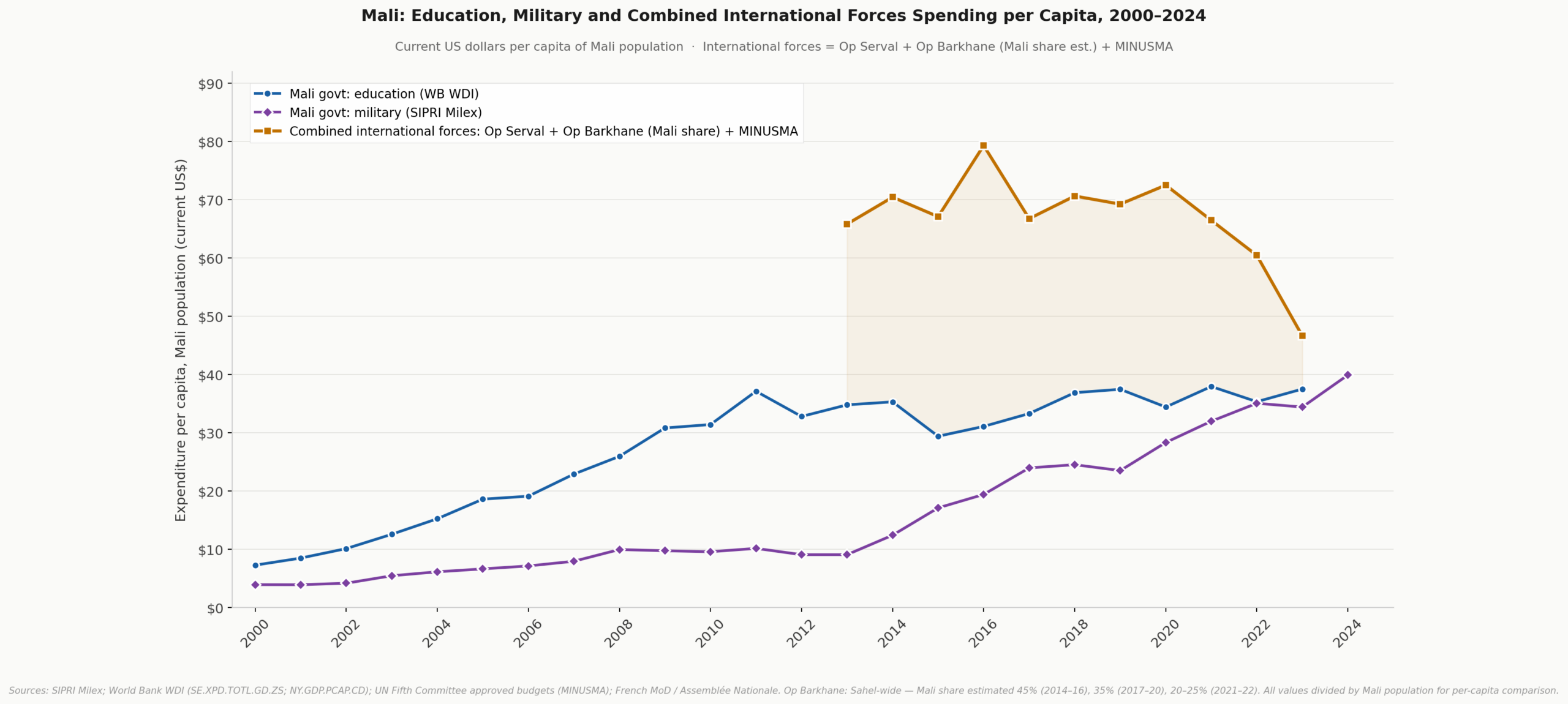
Alongside the violence inflicted by the counter-insurgency operations, another reason why Malians were unhappy with the international presence is clear from the following figure—they saw money being spent that was far in excess of what their government was allocating to basic services. The blue line in the figure is education spending per capita. (Health and agriculture combined are lower than education, and follow roughly the same trend.) Mali’s own military spending—the purple line—is creeping up. But all are overshadowed by the expenditure on the French and UN military presence.
Figure 5: Education, Military, and International Forces Spending per capita
Whenever troops are deployed abroad, they begin with a political goal. Then the political goal becomes supporting the mission. This happened in Mali.
Colonel Assimi Goïta, a special forces commander trained in France and the U.S., overthrew the president Keïta in 2021, and then seized power for himself in 2022. He promised an escape from the country’s malaise. He vowed liberation from the western powers—especially France—that had prevented Malians from setting their own agenda.
The military regime asserted tighter government control over mining contracts. It promised a crackdown on corruption. But the junta did not—could not—address the underlying malaise.
Mali still uses the CFA franc as its currency. It’s deeply in debt. It can’t increase spending on essential services or development.
Goïta’s gamble is an example of what Achille Mbembe has described as ‘neo-sovereigntism’—the assertion of sovereignty even when its substance has disappeared.
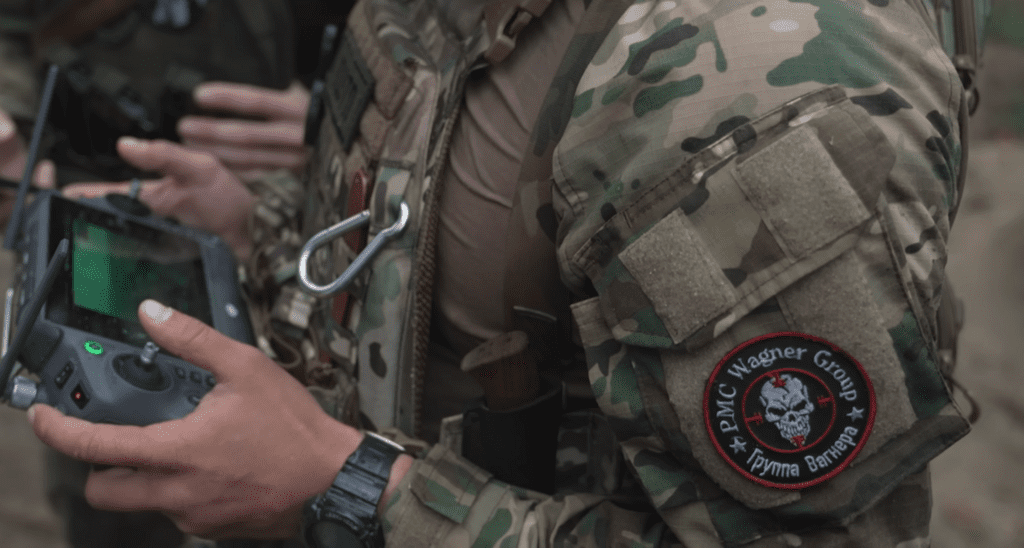
In 2022 and 2023 he expelled the French, terminated MINUSMA, and withdrew from ECOWAS. Instead Mali joined Burkina Faso and Niger in a new bloc, the Alliance of Sahel States (AES). Meanwhile, he invited the Wagner Group to conduct more aggressive military operations. In short, Goïta doubled down on a strategy of force and an alliance with Russia.
His biggest error was repudiating the Algiers Agreement. That pushed the Tuareg armed groups into coalescing into the FLA, and then into alliance with JNIM.
Over last weekend, JNIM and the FLA launched coordinated attacks across the country. The FLA has captured major towns in the north, while JNIM has surrounded the capital, and killed the defense minister. The Malian armed forces (Forces Armées Maliennes, FAMa) are in disarray and full retreat. Despite brave statements from the government that it is in control, the truth is the opposite.
Last weekend, Russia’s Africa Corps accepted the FLA’s offer of safe exit from its northern garrisons. Moscow isn’t going to save its friend. Burkina Faso and Niger, facing similar problems, won’t be any help.
Mali’s former allies in Europe and ECOWAS may be alarmed at the prospect of an al-Qaeda affiliate running the country, but none of them has the appetite for rushing to assist a doomed regime that so recently rejected them.
Mali has tested logics of the violent political marketplace to their limits and shown that they cannot work.
The only option for Mali today is negotiation. The recognized government—while it still clings to office, if not to power—will need to accept that JNIM and FLA will be the ones setting the terms, as did the Taliban in Afghanistan and Ahmad al-Sharaa in Syria. But, like those countries, there is no national solution. Mali will not achieve peace, provide for its citizens, and define its own future while World War X continues unresolved. Hope lies in recognizing this reality.