This interview is one of a series, produced as part of the Future of Peace program, that explores how thinkers and practitioners are making sense of a changing world and what that means for the future of peace. The series aims to surface different ways of thinking about the challenges, tensions, possibilities, and uncertainties that lie ahead.
The below is an edited transcript of a conversation that I had with Roger Mac Ginty on June 22, 2026.
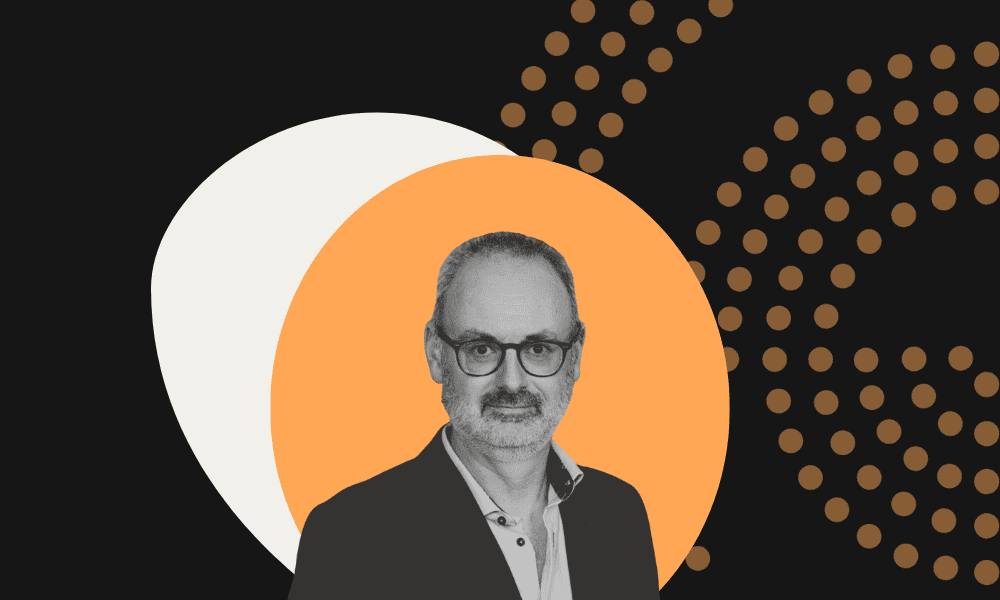
Roger Mac Ginty is Professor at the Durham Global Security Institute, and the School of Government and International Affairs, both at Durham University. He is founding editor of the journal Peacebuilding (with Oliver Richmond) and co-founder of the Everyday Peace Indicators (with Pamina Firchow). In a recent Third World Quarterly article he argues that the liberal peace was over and not coming back.
The transcript was originally generated using Zoom transcription software and has been edited for accuracy and readability. I have added hyperlinks.
Michelle Anderson: Roger, thanks again for making the time. One of the reasons I was interested in speaking with you for this series is your work on everyday peace. For people who aren’t familiar, your work has been a big part of a broader shift towards recognizing that peace can’t be understood or pursued solely through top-down interventions, formal agreements, or externally designed institutions. Instead, you draw attention to the everyday practices through which people negotiate difference and coexistence while examining how those dynamics interact with top-down approaches. But then there’s the current moment, in which many of the international structures that have shaped peacebuilding over recent decades are themselves under pressure as global power dynamics shift, multilateralism faces growing challenges, and assumptions associated with the liberal peace model come under increasing scrutiny. Against that backdrop, how does the concept of peace– however you would choose to define or engage it– function within your work right now, and where does it feel useful, insufficient, constrained, or contested?
Roger Mac Ginty: I think the notion of peace has always been contested. It’s always been dynamic, and it’s always been caught between power and politics and violence. My particular approach or interest in peace over the past number of years has been in bottom-up or community-led approaches to peace. My motivation there is that peace is a verb as much as it is a noun. In other words, it has to be enacted, embodied, and lived through everyday life. Whilst there will be top-down peace accords and the assumption that peace can be trickled down somehow, like trickle-down economics, in actual fact, people have to get on with life. They have to get the kids to school, food on the table. In order to do so, very often they have to come to a series of accommodations: at the family level, at the neighbourhood level, at the community level, at the municipal level. All of that is everyday peace. That’s people trying to get on with everyday life, and in doing so, they’re engaged in a whole series of negotiations, everyday negotiations. This isn’t the peace of diplomatic calls and political elites. It’s the peace of getting on with it, and that’s what everybody has to do.
MA: I appreciate the framing of peace as a verb, that’s something that’s come up for us here too. Given that, what do you think international or even national actors tend to misunderstand about local realities when it comes to peace?
RMG: I think very often political elites aren’t aware of local realities, or they have a very patchy understanding of that. In many ways, that’s understandable. They’re often in compounds, mixing with other elites or in a specific geography, usually a capital city. In a way, it is hard to understand what the everyday and the local look like, because it’s going to be diverse and geographical and socioeconomic and all of those intersectional terms, but they are impediments to how international organisations and political elites see the local. In a way, it has to be lived and experienced to truly understand it. The ways that we have to try to understand it often are conducted remotely or they’re based on aggregated statistics at a national level that iron out peculiarities. Added to that, of course, one way that elites pick up what’s happening at the local level is through storytelling. Like any form of data, storytelling often reflects particular power hierarchies, particular power relationships, so it’s very difficult for political elites, for NGOs, INGOs, to get an accurate understanding of what’s happening on the ground.
That was one of the motivations behind establishing the Everyday Peace Indicators. The unique selling point of the everyday peace indicators is that rather than indicators being imposed from top down, we actually ask individuals and communities, ‘what does peace look like to you? Or what does security, development, or reconciliation look like to you?’. In other words, we community source. We try to get a bottom-up sense of what peace might look like. In order to do that, it requires quite a lot of resources, it requires quite a lot of time. Most of all, it requires losing control of the research process, and that requires a particular sort of bravery that is actually quite rare within the research and the policy world.
MA: That makes great sense. Relatedly then, how do you understand the relationship between everyday forms of peace and the larger political and institutional structures that pursue peace from the top down? I am thinking about it in the context of your everyday peace indicators; what’s the uptake been like? What are the challenges? How are you thinking about that work moving forward?
RMG: That’s a great question, because I do think in virtually every polity, whether it’s conflict-affected or not, there’s a disjuncture between bottom-up dynamics, and a top-down reading of needs. One of the problems is that we have very poor feedback loops or feedback mechanisms in which the concerns, aspirations, and needs of communities can be accurately reflected in the policy practice and political worlds. If you think about representative democracy, it’s based on a pretty shallow transaction between a voter and a potential political leader, and often that happens every four, five years. The whole process usually is monopolized by political parties, and political parties are extraordinarily intolerant devices. They’re very intolerant of dissent, of alternative views, and of innovation. Often we’ve developed systems that are peculiarly unable to read the room– that are very unable to read, for example, a cost of living crisis. They are unable to read the feelings and attitudes of minorities. This happens in all societies, but these problems are going to be particularly acute in conflict-affected societies in which minorities can be marginalized and victimized. They can also be particularly acute in societies that are transitioning from authoritarianism to something less than authoritarianism in which there’s little tradition of sharing power, little tradition of listening and acting on receipt of hearing messages.
MA: You raise a lot of important challenges. Given this disconnect, what assumptions around peace, justice, change, and cooperation do you think shape dominant approaches to peace? The problems you just described get at this a bit by speaking to what’s being obscured, but what assumptions are underlying these approaches, and how do you think we can get around or challenge them?
RMG: I think the principal assumption that is underlying dominant approaches to peace at the moment is stability rather than more expansive versions of peace or notions of justice. One can understand the motivation for stability. Who wouldn’t want stability? The problem is when that is the limit of your ambition, there’s very few more emancipatory places that you can go. If you look across Europe, for example, there is very little political leadership, there is no strategic thinking. All bandwidth has been taken up by the Russian war on Ukraine. In many ways, that is understandable, but what it means is the political and leadership class have very little deep thinking about the future– very little strategic thinking, and crucially, there is no optimism. These are political leaders in the brace position. Say what you want about Clinton or Blair– and we can pick their legacy apart fairly easily– but these were people who had two things. They had strategic vision, and they had optimism. They had a sense that they could change the world for the better. Whether they did or not is a different matter, but if you don’t have optimism, it’s very difficult to imagine how these people can plan or how they can be strategic. They can’t really put their heads above the parapet and think about anything other than the next crisis or emergency that comes down the line.
In an answer to the question, what’s the principal assumption? The principal assumption is, how do we get to stability? Unfortunately, the answer to that is the securitization of everything; whether it’s energy, whether it’s migration or a whole list of public policy issues, the answer seems to be a security one. We’re in a position in which political leaders are congratulating themselves for coming up with 1960’s solutions to 2020’s problems. Listen to political leaders in Europe and you might as well be transported back to the missile gap, discussions that we had during the Cold War. In other words, we’ve got a drone gap, we’ve got an AI gap, we’ve got a ballistic missile gap. But well, hang on, has no one been thinking about some of the lessons from the past 30 years of peacemaking, and how this very narrow, securitized thinking actually, is a means to nothing? It’s a means to a miserable, pessimistic world in which the only people who are successful are authoritarian leaders and those who have shares in defense companies. I’m getting more preachy as this is going on!
MA: But you bring up interesting points- one thing that struck me in that is, you’re pointing to an issue of political leaders not being able to be future-looking, but that part of the issue is that they are also not looking enough to the past. As we talk about the future of peace, I think it’s also important to understand it within a larger continuity of how we got to the place of asking these questions, and facing these challenges, in the first place. You mentioned some past leaders that you see as having been optimistic and who had the ability to imagine possible futures. What conditions do you think make it possible to imagine and work towards those different futures, whether it’s individuals, communities, or institutions and political leaders?
RMG: Well, for sure, people need a minimum level of security. Tatsushi Arai has written about the minimum level of security that communities and individuals need in order to really enjoy the present and thrive in the future. So, security is important, but of course, we need to think about the regulation of that security, how that security doesn’t become a be-all and end-all, how that security can be regulated by some form of representative politics. I think economic growth is useful in freeing up people, giving them a sense of opportunity, whether political elites or people in communities. It’s also worth asking if neoliberalism and peace are compatible, because with neoliberalism, the default circumstance of most people is precarity, is uncertainty. If you live in precarious and uncertain circumstances, it’s very difficult to be optimistic, and it’s very difficult to think beyond the next impending crisis, or bill to be paid. That’s a massive impediment to thinking about a deep future, to thinking beyond the next, 5, 10 years to think about the long term, to think intergenerationally, to think in an optimistic way, and in fact, in a generous way, about what can we give the generations that will follow us.
MA: Given that, how does your thinking about everyday peace change within the context of the various geopolitical crises and conditions of fragmentation we are facing? How are you thinking about the global level of peace alongside everyday peace, and what that means for the future?
RMG: We’re in an interesting moment. It’s a fascinating time to be a scholar of peace and conflict, but it’s an extremely scary time to be a human being. If we survey the peace landscape globally, then there are worrying circumstances. We’re in a world in which ceasefires apparently don’t mean anything, in which invitations to negotiate are accompanied by attempts to kill the people that you should negotiate with. We’re in circumstances in which global arms spending has reached the highest recorded level. We’re in an era in which the casualties of war and the casualties of protest are extremely high, in which states are perfecting remote ways of killing human beings in large numbers. We’re also in a situation in which states have lost so much ability to monopolize power and to deal with situations. We’re dealing with a series of seemingly insurmountable transnational problems. As a species, we haven’t worked out how to deal with climate change, we haven’t worked out how to deal with boom and bust capitalism, nor have we worked out how to deal with a migration of human beings across the planet.
In saying all of that cheery stuff, I really think that for people on the ground, attempts to reach some form of stability, some form of certainty, some form of a more than bare-minimum life are the same in that individuals and communities still have to put food on the table, they still have to get shelter, and they still have to get medicine for granny. All of those everyday peace skills of navigating through the awkwardness or potential violence of life, all of those skills of emotional intelligence, of listening, of reading the room still have to be deployed. The world is on fire, and people still have to put food on the table. The world was on fire in 1945, and people still had to do that, using the amazing human skills of entrepreneurship, of innovation, and everyday diplomacy. So although the global peace scape has changed enormously, I’m not entirely sure that the skill set that people need to negotiate it has changed enormously. People still have to strive to thrive.
MA: You noted the belief that humans still have the skills for navigating everyday peace, but we as a species haven’t figured out how to deal with many of the large-scale challenges we are facing. What conversations, questions or areas of work do you think are currently missing from discussions about peace and its future that could help move us towards better solutions?
RMG: I think one thing that is hugely absent from discussions of the future of peace is the United Nations. We have this body, which is phenomenal as a survivor, and it’s phenomenal as a platform, and it has been deliberately undermined, underfunded, and ignored by the very P5 states that hold the power in it. We need to have a real emergency in relation to the status and the health of the United Nations. We know from research that the fundamentally most important factor in achieving peace agreements and furthering peace are long-standing platforms in which there can be communication. Whether it’s the OSCE, whether it’s the African Union, the European Union, the United Nations, we really need to celebrate and to work very hard for the survival of multilateralism. Mini-lateralism, to use the term associated with Theresa Whitfield, is an elite power stitch-up. It’s about exclusion. It’s about walking away from multilateral agreement, it’s walking away from universal notions linked to very basic human rights, and I think we should be very suspicious of a peace made in dark corners, because it’s usually very elite and interest driven and usually results in a bad peace.
MA: So then, what kinds of institutions, relationships, or forms of cooperation do you think will become more important in the future for peace?
RMG: We’re always going to need some form of multilateralism. We’re always going to need platforms in which states and other stakeholders can get together in a semi-regular way to discuss matters of concern. I think what is happening, though, is that we’re seeing extraterritorial actors emerging. I’m thinking about the billionaire tech bro class who are untethered from states, untethered from responsibility. I thought that one of the major conflicts of the 21st century would be a three-way conflict between big tech states and citizens, but that conflict is largely over, in which states, and particularly the United States, has surrendered to big tech. That raises a fundamental issue, because if states cannot protect citizens from harm, what’s the point of states? In a sense, over the longer term, states have been the authors of their own undoing, and I think in 20, 30, 50 years, maybe sooner, we are going to be in situations in which people are completely disconnected from states, have no loyalty to them, and states will be looking around for some form of justification for their own existence. But the genie that is big tech is already out of the bottle. I know that’s a dystopian image, but, who can control these technological giants? I think we’ve missed that boat.
MA: A little terrifying when you frame it that way. We’ve talked about challenges and now, missed opportunities, but I’ve also heard conversations that say– here’s this moment of disorder– within that, what are the opportunities? Where do you see particularly interesting or generative thinking already happening around these openings, or around questions of peace and collective futures?
RMG: I think there are some forms of optimism, but all of that has to be tempered with everything else I’ve said. A lot of the motive force for peace has moved east, so we see states like Qatar, UAE, China, Kenya, Turkey, Oman, Pakistan, as facilitators or mediators. They have optimism, they have a can-do attitude, and most of all, they have access. You can’t be a mediator if you don’t have access. Very often, Western states have not had access, they forfeited access because of their actions over the past 20 or 30 years. Mediation that stops war is to be welcomed; that’s lives saved, lives improved. But questions arise in terms of what sort of peace is reached in the long term, and where does that peace sit in terms of the peace versus justice continuum. Very often, the sort of peace that emerges is limited to a ceasefire and a securitized peace with very little, if any, emphasis on rights and representation.
We do need to keep our eyes open. This is very difficult for people who were brought up in Western traditions or in the liberal moment in which, yes, we are interested in a series of rights for minorities, for women, for various groups, and yes, we are interested in representation, but where does that fit in forms of peace that are forged using non-Western assumptions? Like everything else, grounds for optimism also must be tempered with critique. I think there’s probably optimism, or room for optimism, in transnational movements in terms of the environment, in terms of support for migration, or support for greener forms of energy, but this seems like a bad moment for those transnational movements. The technology is there, but often those groups are subjugated by arguments of, well, we have to concentrate on security, or we have to concentrate on a cost of living crisis, etc. But I’m scratching around looking for grounds for optimism.
I’m not optimistic that artificial intelligence will bring peace, quite the reverse. It’s useful in analyzing large amounts of data, but I think we fool ourselves if we are convinced that the two warlords presiding over the bloodiest conflict in the world in Sudan will be mollified if we present them with yet another dataset. We cannot data our way out of conflict. AI will not, and data will not, convince authoritarian warlords that they need to negotiate. I think much of the interest in peacetech and AI for peace is supply-led rather than demand-led in the sense that tech savvy academics and policymakers in the Global North are terribly interested in this, and they haven’t realized yet that there’s an arc of disappointment linked to this. Where’s the proof of concept? Where is the peace that AI has made? Come back to us when you’ve got that.
MA: Absolutely. Something I see quite often is a tool is developed, and then people try to find a use for it, rather than looking at the problem and then trying to find or develop the tool that would best support addressing it. Even so, is there anything that you’ve come across that gives you hope that more peaceful futures remain possible?
RMG: I mean, every community is full of life, innovation, and the want to forge a better life for their next generation. Even if you travel around conflict-affected areas, you’ll still see birthday balloons. You’ll still see trampolines in gardens or ropes with tires hanging from a tree and kids playing. It gets back to my notion of everyday peace, that individuals and communities have no choice but to get on, and to try and get the best education for their kids, to try and put food on the table. That everyday optimism, that everyday sense of striving doesn’t change, even in the most terrible of conditions, whether it’s Gaza or Ukraine or Yemen or Myanmar, people try to do their best for family, for their community, so I do get that sense of everyday optimism from my travels and my observations. But the question is, how can political elites, how can INGOs support that? Very often they’re lacking in ideas of how to get those small wins, how to celebrate achievements that are made on the ground, and how to think about scaling out, as opposed to scaling up.
MA: Thank you. That point about scaling out feels connected to something you mentioned earlier about transnational movements, that they’re often doing exactly that kind of work, but they’re also often up against being told that more immediate concerns have to come first. It is not new but feels poignant in a moment that many are calling “polycrisis.” How do we navigate that tension of immediate versus long term views?
RMG: It’s the same old narrative from a lot of political leaders in which, jam tomorrow, but we must suffer today. We’ve seen lots of cases, whether it’s [UN Security Council Resolution] 1325, or environmental initiatives in which people don’t have the patience to wait until the day after tomorrow, in which they’re not fooled by political leaders who are just trying to put them off, and they get on and do it themselves. I think 1325 is a wonderful example of this transnational social movement that just kept going and going and going. It was ignored, ridiculed, put off, but it benefited from very entrepreneurial, very persistent women who just kept on pushing. There have been tangible benefits from 1325, but it took a lot of brave people to put their heads above the parapet, and it took a huge amount of work against the political odds.
MA: I agree, I think there is a lot to be learned from movements and people who are able to find ways to be persistent right now, even against political odds. I’m curious, you’ve been at this for–
RMG: –a long time! As someone described two weeks ago, a veteran researcher.
MA: Do you feel like that’s an accurate description?
RMG: I still have my own hips and nose and my own teeth.
MA: We’ll take it! So, you have been doing this work for, as you say, a long time; how do you see your work developing as you think about the future of peace amidst the global shifts going on?
RMG: I think for those from a Western or liberal tradition, it’s going to be very interesting to consider the assumptions upon which we base our thinking about peace, how those survive in an emerging peace scape, in which very often it’s non-Western states that are forging peace. Myself and people from similar traditions need to think carefully about the concepts that we use, the universality– or not– of those concepts, and we need to understand the motives and mechanisms that non-Western peacemakers use. We need to consider whether the concepts that we have forged and honed over the past 50 years are fit for purpose– in fact, whether the very vocabulary and the epistemologies that we use as researchers are fit for purpose for the sorts of peace that we are seeing emerging. I think it’s very easy to dismiss emerging forms of peace. Rather than dismiss them, we need to engage with them, we need to examine them, we need to think about the motivations, and we need to think about the deep cultural trajectories that have brought all parties to the positions that they’re now in. You know, the US bombing of Iran did not start in February; the US bombing of Iran started over 200 years ago with notions of American exceptionalism, with notions of cultural superiority, of political superiority. We really need to think about how we got here, and the deep cultural basis behind that.
MA: I appreciate that. The need to question grounding assumptions and pay attention to novel or alternative views is very much where we’re coming from with the Future of Peace program. Is there anything I didn’t ask you that you think would be important to add to this conversation as we think about the future of peace?
RMG: First, I think it’s brilliant that you’re thinking about the future of peace. The difficulty with so many projects, including that, is how do we see beyond the immediate crisis? How do we move from the tactical to the strategic? How do we think about the deep future and how that might look? Many of the structures that we assume will go on forever, might actually not go on forever, so can we think about peace in a post-state world? What would that look like? What would the laws of peace look like when you have multinational corporations that are much stronger than many states? Or, what would multilateralism look like in which it has a mix of states and non-state bodies, particularly multilateral corporations? I think you would be better placed than I would to think about the future of peace, but it requires some sort of imagination to look beyond the next generation, and also to realize that the world is moving eastward, whether it’s capital, whether it’s population, whether it’s culture. In order to recognize that, there’s a certain sense of humility involved, but with that humility comes liberation. If we’re liberated, emancipated, to think– hang on– everything’s moving east, I think it frees us up to think in more innovative ways. Because of our assumptions and biases, those might be scary, but that’s life.
MA: Thank you, those are all useful questions to keep in mind as we move this work forward. Just to put one of those back to you, what do you think peace in a post-state world could look like, or how would we pursue it?
RMG: If you think about the fundamental purpose of the state, in the liberal notion, it is to protect its citizens. If we have a post-state world, what other bodies could protect citizens? We’re used to states protecting themselves, or protecting their elites, so in a sense, that’s not new. These are kleptocracies. These are essentially warlords with the trappings of statehood. But, can we think of other institutions and mechanisms that would protect individuals, communities, and their rights? Can we think of bodies that would have some form of representation? It’s difficult to imagine that beyond the current state, so maybe it’s a case of reimagining the state so that versions of statehood do not necessarily look like current versions of statehood.
MA: Thank you. Similarly here we are basing this work in an exploration of the question, what are the institutions, networks, and ideas needed to move towards more peaceful futures?
RMG: Yeah. We need ways to avoid medieval warlordism, basically.
MA: The age-old question.
RMG: Exactly; we’ve been here before.